THEORY
Qi (pronounced "chee") is one of the fundamental concepts in Traditional Chinese Medicine (TCM). It is often translated as "vital energy," "life force," or simply "energy." In TCM, Qi is the force
Traditional Chinese Medicine (TCM) is a holistic system of medicine that has been practiced in China for thousands of years. It is rooted in ancient Chinese philosophy and focuses on achieving
Zhi yong shang method is to use medicines of clearing heat, make carbuncle easy to cure.1.Wai yang therapyOuter sores include carbuncles, ulcer, deep-rooted boil, erysipelas. Cause of ulcer can be the six external factors which cause diseases, seven emotions, or external injuries.The therapies can b
It is to use drugs of eliminating stagnation and promoting the circulation of qi, to tonify spleen and stomach, and a perfect way to disintegrating masses, relieving fullness.1.Xiao shi dao zhi method(Eliminating retention of food)Common drugs such as shan zha, shen qu, gu ya, mai ya, sha ren, ji ne
Kai qiao tong guan method: Use the drugs that clear head and refresh the mind to cure obnubilation. Obnubilation can be subdivided into hot and cold Obnubilation that drugs have cold treatment and warm one as well.1.Liang kai method(cold treatment)It is effective for warm and hot illness, sudden fai
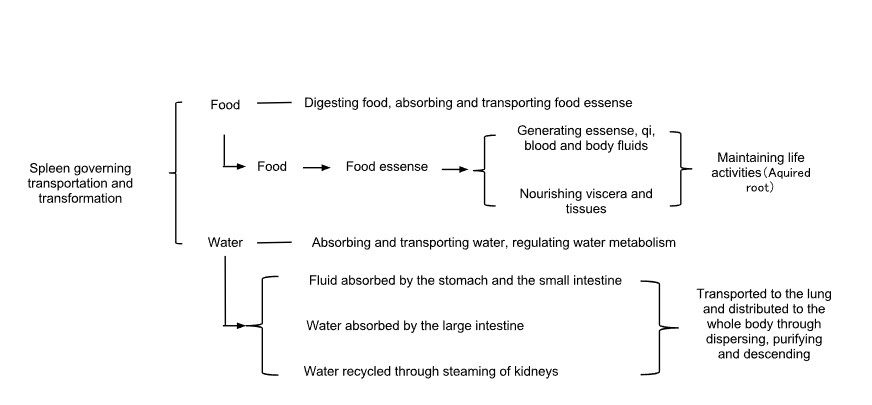
The spleen, located in the abdomen, governs digestion and absorption. As the source of qi, blood and body fluid, the spleen plays a vital role in maintaining life activities. Such a function of the spleen only comes into play after birth. That is why it is said that "the spleen is the acquired base
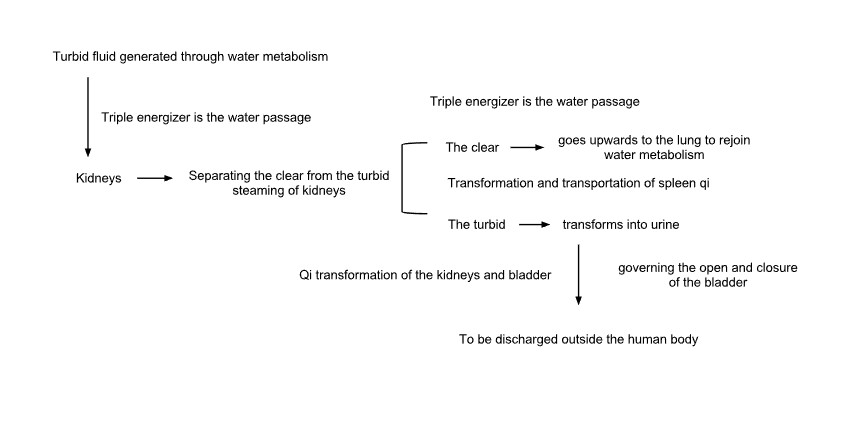
The kidney is located in the waist. That is why it is said in Huangdi Neijing that "the waist is the house of the kidney". The kidney stores essence and the essence transform qi and produces blood. Besides, the kidney is the source of genuine yin and genuine yang. So the kidney is closely related wi
The six fu-organs refer to the gallbladder, the stomach, the small intestine, the large intestine, the bladder and the triple energizer. The common physiological function of the six fu-organs is "to transmit and transform food", i.e. receiving and digesting food, absorbing the nutrients and excretin
The six fu-organs refer to the gallbladder, the stomach, the small intestine, the large intestine, the bladder and the triple energizer. The common physiological function of the six fu-organs is "to transmit and transform food", i.e. receiving and digesting food, absorbing the nutrients and excretin
The extraordinary fu-organs refer to another group of tissues and organs.The characteristics of the extraordinary fu-organsThe extraordinary fu-organs are characterized by hollowness, similar to the six fu-organs in morphology, and storage of essence, similar to the five zang-organs in function. Tha