
Herbs for Toxin-Counteracting, Parasites-Killing and Itch-Relieving
Bai Fan: Chinese Herb Guide
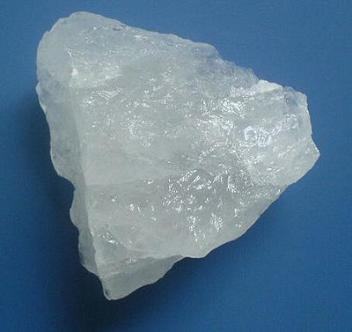
Naming
Bai Fan (Alumen)——Shen Nong Ben Cao Jing (Shen Nong’s Herbal)
The Processing of Alumen
Origin
The extraction of alley-stone of sulfates mineral, mainly containing KAl(SO4)2. •12H2O.
Location
Mainly in Anhui, Zhejiang and Shanxi provinces of China.
Harvest
Mined during whole year.
The actual smell and taste
Light smell, sour, slightly sweet and extremely astringent taste
Best quality
Large, colorless and transparent.
Processing
Unprocessed or calcined; calcined to call Ku Fan.
The Effect of Alumen
Property
Sour, astringent, cold; lung, spleen, liver and large intestine meridians entered.
Actions
Astringe dampness and relieve itching and counteract toxic pathogen and killing parasites for external application, stop bleeding and check diarrhea and resolve phlegm for internal application.
Indications
A. Pruritus of eczema, sores and ulcers, scabies and ringworm
It is good at astringing dampness and relieving itching so it is suitable for treating eczema, manifested as pruritus, wet and rotten surface of sores. For eczema pruritus with pus discharging, it can be indicated singly in powder by dissolving it in cold water to wash topically. It also can be combined with dampness-astringing herbs to obtain the action of clearing heat and drying dampness, healing wound and relieving itching, such as calcined Shi Gao, Bing Pian and Huang Lian, etc. For scabies, ringworm with pruritus, it is often combined with parasites-killing and ringworm-curing herbs to reinforce the action of counteracting toxic pathogen and killing parasites and curing ringworm and relieving itching, such as Liu Huang.
B. Bleeding syndrome
It has the action of stopping bleeding for both external and internal application. It can be indicated for kinds of bleeding syndromes such as hematemsis, epistaxis, hematochezia, metrorrhagia and metrostaxis, traumatic bleeding. It can be used singly or combined with other astringent hemostatics to reinforce the action of stopping bleeding. For epistaxis endlessly, it is applied singly in powder to blow into nose. For chronic hematochezia, it is often combined with Pao Jiang to make into pills. For bleeding due to incised wound, it is often combined with Song Xiang to grind into powder for external application.
C. Chronic diarrhea, chronic dysentery
It can astringe intestines to check diarrhea and counteract toxic pathogen to cure dysentery and stop bleeding for internal application. For chronic dysentery with purulent and bloody stool, it can obtain the action of treating both fundamental and incidental aspect of disease. It is combined with intestine-astringing herbs such as Wu Bei Zi and He Zi, etc. to reinforce the action of astringing intestine to check diarrhea.
D. Wind stroke, phlegm syncope, epilepsy, cough and dyspnea due to phlegm-fluid retention
It is cold in nature and can clear and resolve heat-phlegm. For wind-phlegm syncope, it is combined with other herbs of resolving phlegm for resuscitation to obtain the action of resuscitation. For instance, it is combined with Zhu Ya Zao in Jiu Ji Xi Xian San from Shen Ji Zong Lu. For epilepsy with mania due to phlegm obstruction of heart, it is combined with heart-clearing and stagnation-smoothening herbs. For instance, it is used with Yu Jin in powder to make into pills with Bo He, in Bai Jin Wan from Yi Fang Ji Jie. For phlegm-fluid retention cough and dyspnea with distention and fullness in septum pectorale, it is often combined with phlegm-resolving and qi-regulating herbs to obtain actions of drying dampness and resolving phlegm and regulating qi and soothing chest, such as Ban Xia and Xiang Fu, etc.
In addition, it can be indicated for anal prolapse, prolapse of uterus, leukorrhea and pruritus vulvae.
Dosage and Administrations
Take proper dose for external application, ground into powder for direct use, mixed with other liquid or dissolved in water to wash topically. Take powder or pills 0.6~1.0 g for internal application.
Sources and further reading
We cite classical materia medica and modern reference works. This article is health education, not medical advice.
- Shennong Bencao Jing (The Divine Farmer's Materia Medica), Han dynasty.
- Bencao Gangmu (Compendium of Materia Medica), Li Shizhen, 1578.
- Chinese Pharmacopoeia, current edition — identity, quality and safety monographs.
- NCCIH and WHO reference material on traditional medicine safety.
Spotted an error or a better source? Tell us — corrections are logged on our editorial policy page.
Did this article help you?
Your answer shapes what gets rewritten next.
Keep readingRelated entries
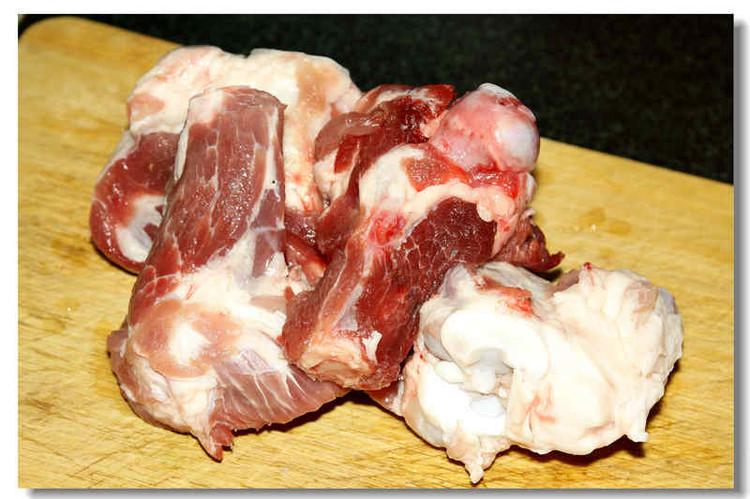 Zhu Gu: Chinese Herb Guide
Zhu Gu (Pig's bone) Astringent, neutral; kidney and large intestine channels
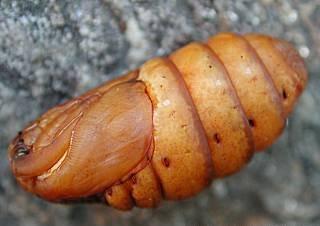 Can Yong: Chinese Herb Guide
Can Yong: kill parasites, treat malnutrition, promote the secretion of saliva and relive thrist.
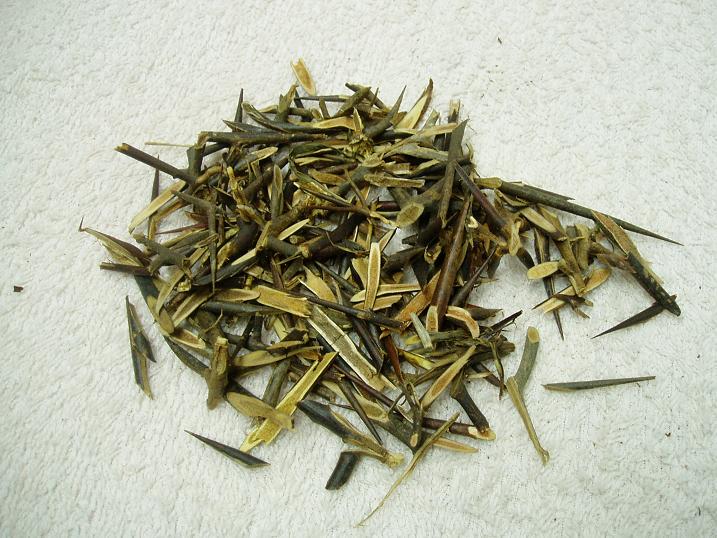 Zao Jiao Ci: Chinese Herb Guide
Zao Jiao Ci: counteract toxic pathogen, expel wind, resolve swelling and expel pus.
Chinese Honeylocust Spine
Chinese Honeylocust Spine: counteract toxic pathogen, expel wind, resolve swelling and expel pus.
Something this article did not cover?
Ask us directly. We reply within two days, and good questions become public articles.
Ask a question →