
Resuscitative Herbs
Bing Pian (Borneolum) in TCM
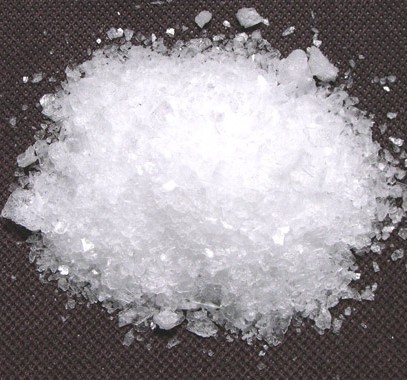
Naming
Bing Pian (Borneolum Syntheticum)——Xin Xiu Ben Cao (Newly Revised Materia Medica)
The Processing of Borneol
Origin
The processed item from resin of Dryobalanops aromatica Gaertn. f. of family Dryobalanops aromatica or processed item from leaves of Blumea balsamifera (L.) DC of family Compositae.
Location
Dryobalanops aromatica Gaertn. f. is mainly in southeast Asia, introduced one is in Taiwan province of China, and Blumea balsamifera (L.) DC. is mainly in Guangdong, Guangxi and Yunnan provinces of China.
The actual smell and taste
Mei Pian with special aromatic smell and cool taste, Ai Pian with light smell and Ji Zhi Bing Pian with fragrant smell and pungent-cool taste.
Best quality
Large and thin, white-colored, loose texture and aromatic smell.
Processing
The processed item from resin of Dryobalanops aromatica Gaertn. f. or the crystal got by distilling the cut-up stock or twigs of Dryobalanops aromatica Gaertn. f. is called Long Nao Bing Pian or Mei Pian. Distillated and then sublimed leaves of Blumea balsamifera (L.) DC is called Ai Pian. The one synthesized from turpentine and camphor, is called Ji Zhi Bing Pian. Ground into powder.
The Effect of Borneol
Property
Pungent, bitter, slightly cold; heart, liver and lung meridians entered.
Actions
Induce resuscitation and refresh mind, clear heat and alleviate pain.
Indications
A. Block pattern of coma
It has a similar but weaker action of inducing resuscitation and refreshing mind with She Xiang. They are often combined with each other to treat both cold block and heat block. For instance, they are indicated for heat block in An Gong Niu Huang Wan, from Wen Bing Tiao Bian, or for cold block in Su He Xiang Wan, from Tai Ping Hui Min He Ji Ju Fang.
B. Blood-shot eyes with swelling and pain, sore throat and sores on the oral mucosa, swelling and pain of sores and ulcers, unhealing of ulceration
It has the actions of clearing heat to alleviate pain and relieving swelling and promoting tissue regeneration for external application, therefore it's suitable for heat-toxin accumulated syndrome, especially widely used in five sense organs and surgical departments. For blood-shot eyes with swelling and pain, it can be singly ground into extremely fine powder then applied to eyes, or in combination with herbs that can clear heat, relieve toxicity and improve vision, such as Xiong Dan and Lu Gan Shi. For swelling and pain in the throat, sores on the oral mucosa and the tongue, it is often combined with heat-clearing and toxicity-relieving herbs. For instance, it is combined with Peng Sha, Zhu Sha and Xuan Ming Fen and ground into fine powder then applied to the afflicted part in Bing Peng San from Wai Ke Zheng Zong. For long time unhealing of ulcerated sores and ulcers, it is often combined with swelling-relieving and tissue-regeneration-promoting herbs. For instance, it is combined with Xue Jie and Ru Xiang and so on. For scald or burn, it can be made into ointment for external application with other heat-clearing and toxicity-relieving herbs and wound-healing and tissue-regeneration-promoting herbs.
C. Chest impediment
It has action of alleviating pain, so it is often combined with Su He Xiang for chest impediment pain.
In addition, it can also be indicated for some other pain syndrome such as toothache and traumatic injury.
Dosage and Administrations
Take pills or powder, 0.03~0.1 g once. Take proper dose for external application. It should not be used in decoction.
Cautions
It should be used with cautions for pregnant women.
Sources and further reading
We cite classical materia medica and modern reference works. This article is health education, not medical advice.
- Shennong Bencao Jing (The Divine Farmer's Materia Medica), Han dynasty.
- Bencao Gangmu (Compendium of Materia Medica), Li Shizhen, 1578.
- Chinese Pharmacopoeia, current edition — identity, quality and safety monographs.
- NCCIH and WHO reference material on traditional medicine safety.
Spotted an error or a better source? Tell us — corrections are logged on our editorial policy page.
Did this article help you?
Your answer shapes what gets rewritten next.
Keep readingRelated entries
Borneol (Borneolum) in TCM
Bing Pian: induce resuscitation and refresh mind, clear heat and alleviate pain.
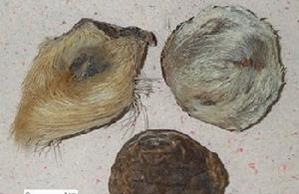 She Xiang Ke: Chinese Herb Guide
She Xiang Ke (Musk Exodermis) Acrid, warm; spleen channel. Actions Dredge meridians, remove toxicity and resolve swelling
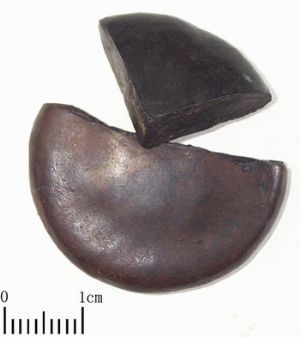 Chan Su: Chinese Herb Guide
Chan Su: induce resuscitation and refresh mind, relieve toxicity, alleviate pain.
Venenum Bufonis: Chinese Herb Guide
Venenum Bufonis: induce resuscitation and refresh mind, relieve toxicity, alleviate pain.
Something this article did not cover?
Ask us directly. We reply within two days, and good questions become public articles.
Ask a question →