
Qi-Moving Herbs
Xie Bai (Longstamen Onion Bulb)
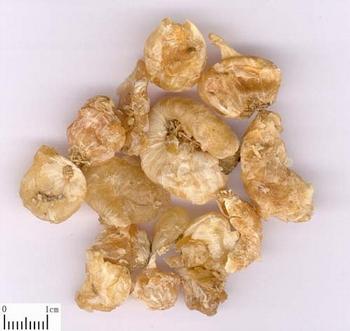
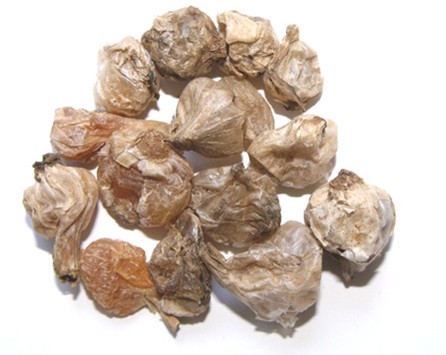
Naming
Xie Bai (Bulbus Allii Macrostemi)——Shen Nong Ben Cao Jing (Shen Nong’s Herbal)
The Processing of Bulbus Allii Macrostemi
Origin
The bulb of Allium macrostemon Bge or Allium chinensis G. Don. of family Liliaceae.
Location
Jiangsu and Zhejiang provinces in China.
Harvest
Collected in summer and autumn.
The true smell and taste
Garlic smell, slightly spicy.
Best quality
Dry, heavy, big, full, translucent without scape.
Processing
Unprocessed.
The Effect of Bulbus Allii Macrostemi
Property
Pungent, bitter, warm; lung, heart, stomach and large intestine meridians entered.
Actions
Activate yang and dissipate nodulation, move qi and relieve stagnation.
Indications
A. Chest impediment
It is the essential herb of chest impediment for its actions of dispersing congealing cold and activating yang. For chest pain and fullness due to cold-phlegm accumulation and chest yang deficiency, it is usually combined with the herbs of moving qi and soothing chest, resolving phlegm and dissipating nodulation, warming and activating heart-yang. For instance it is combined with Gua Lou, Ban Xia, Zhi Shi and Gui Zhi in Gua Lou Xie Bai Bai Jiu Tang, Gua Lou Xie Bai Ban Xia Tang and Zhi Shi Xie Bai Gui Zhi Tang from Jin Kui Yao Lue. For chest impediment due to phlegm accumulation and blood stasis, it should be combined with the qi-moving and chest-soothing, blood-activating and stasis-resolving herbs such as Gua Lou, Dan Shen and Chuan Xiong.
B. Chest and abdominal distension, diarrhea and dysentery with tenesmus
It has the actions of regulating gastrointestinal qi, relieving distension and alleviating pain. For gastroabdominal stuffiness, distension and pain caused by stomach cold and qi stagnation, it is usually combined with the middle-energizer-warming and qi-moving herbs such as Gao Liang Jiang, Mu Xiang and Sha Ren. For diarrhea and dysentery with tenesmus due to damp-heat accumulation and qi stagnation in stomach and intestines, it is combined with herbs of clearing heat and drying dampness, moving qi and regulating middle energizer such as Huang Lian, Huang Bai, Mu Xiang and Zhi Shi.
Dosage and Administrations
Decoct 5~10 g.
Sources and further reading
We cite classical materia medica and modern reference works. This article is health education, not medical advice.
- Shennong Bencao Jing (The Divine Farmer's Materia Medica), Han dynasty.
- Bencao Gangmu (Compendium of Materia Medica), Li Shizhen, 1578.
- Chinese Pharmacopoeia, current edition — identity, quality and safety monographs.
- NCCIH and WHO reference material on traditional medicine safety.
Spotted an error or a better source? Tell us — corrections are logged on our editorial policy page.
Did this article help you?
Your answer shapes what gets rewritten next.
Keep readingRelated entries
Xie Bai Tou (Bulbus Allii Macrostemi)
Xie Bai: activate yang and dissipate nodulation, move qi and relieve stagnation.
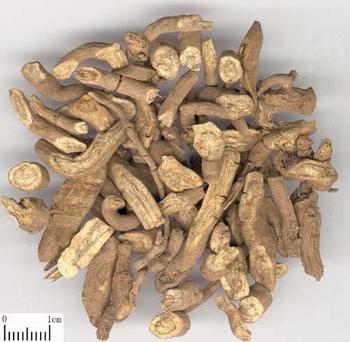 Qing Mu Xiang (Slender Dutchmanspipe Root)
: promote the flow of qi and alleviate pain, clear heat and remove toxicity.
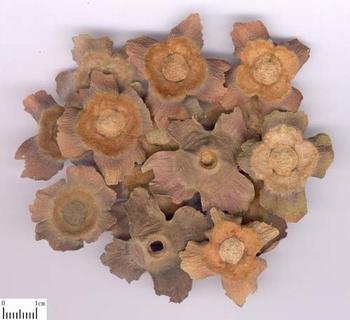 Shi Di (Persimmon Calyx and Receptacle)
Shi Di(Calyx Kaki). The calyces of Diospyros kaki Thunb. Where it is grown Sichuan, Guangdong and Guangxi provinces
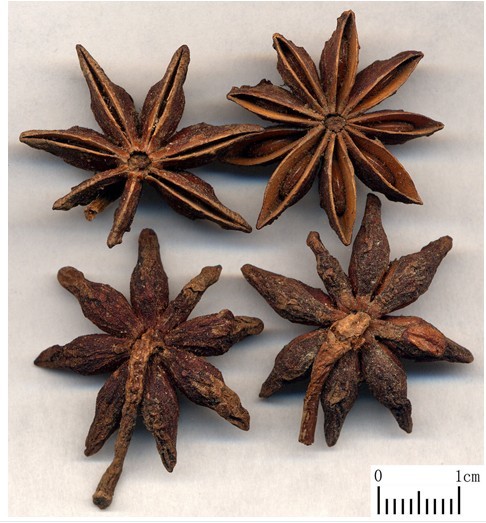 Ba Jiao Hui Xiang: Chinese Herb Guide
Ba Jiao Hui Xiang: warm yang and dissipate cold, regulate qi and alleviate pain.
Something this article did not cover?
Ask us directly. We reply within two days, and good questions become public articles.
Ask a question →