
Stasis-Resolving Hemostatics
Cera Chinensis: Chinese Herb Guide
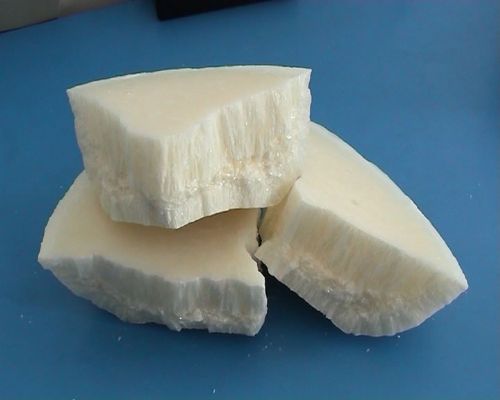
Name
Chong Bai La (Cera Chinensis)
The Effect of Cera Chinensis
Property
Sweet, bland, warm; liver meridian entered.
Actions
Stop bleeding, promote tissue regeneration and alleviate pain.
Indications
Urine with blood, incised wound, unhealing wound, chancre.
Dosage and Administrations
Take the pills or powder, 3~6 g. Proper dosage is for external application, made into ointment.
Reading these properties
The classification line quoted above is classical TCM shorthand, not a dosage or a medical instruction. Expanded, term by term:
- Flavour — Sweet (甘 gān)
- A sweet flavour is described as tonifying, harmonising and moderating. Sweet substances are the ones classically used to support the middle burner and to soften the sharp action of other ingredients.
- Flavour — Bland (淡 dàn)
- A bland flavour is described as percolating and draining, and is associated with promoting urination.
- Nature — Warm (温 wēn)
- Warm is a milder warming quality, used in TCM theory where cold signs are present.
- Meridian — Liver (肝 gān)
- A meridian entry describes where a substance is said to act in TCM theory. Entering the Liver means Liver (肝 gān) refers to the liver, associated with the free movement of qi, the eyes, tendons and the menstrual cycle.
This decodes vocabulary only. It is not a claim that this substance treats any condition, and the entry has not been medically reviewed. See the medical disclaimer and our editorial policy.
Sources and further reading
We cite classical materia medica and modern reference works. This article is health education, not medical advice.
- Shennong Bencao Jing (The Divine Farmer's Materia Medica), Han dynasty.
- Bencao Gangmu (Compendium of Materia Medica), Li Shizhen, 1578.
- Chinese Pharmacopoeia, current edition — identity, quality and safety monographs.
- NCCIH and WHO reference material on traditional medicine safety.
Spotted an error or a better source? Tell us — corrections are logged on our editorial policy page.
Did this article help you?
Your answer shapes what gets rewritten next.
Keep readingRelated entries
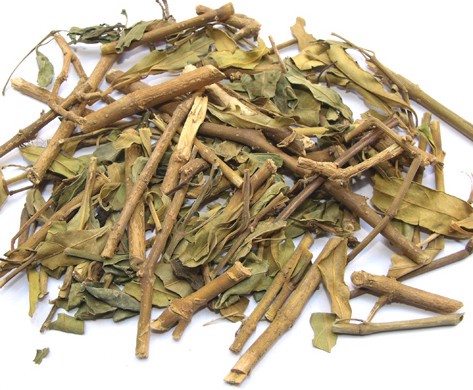 Xiao Bo Gu (Common Gendarussa Herb)
: remove stasis and alleviate pain, reunion the fractured tendons and bones.
Xiao Bo Gu: Chinese Herb Guide
Xiao Bo Gu: remove stasis and alleviate pain, reunion the fractured tendons and bones.
Xiao Bo Gu (Common Gendarussa Herb)
Xiao Bo Gu (Common Gendarussa Herb): remove stasis and alleviate pain, reunion the fractured tendons and bones.
Xiao Bo Gu: Chinese Herb Guide
Xiao Bo Gu: remove stasis and alleviate pain, reunion the fractured tendons and bones.
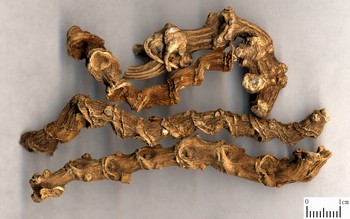 Zhu Jie Shen (Japanese Ginseng)
Zhu Jie Shen: dissipate stasis and stop bleeding, resolve swelling and alleviate pain, eliminate phlegm and relieve cough, strengthen the body.
Zhu Jie Shen (Japanese Ginseng)
Zhu Jie Shen: dissipate stasis and stop bleeding, resolve swelling and alleviate pain, eliminate phlegm and relieve cough, strengthen the body.
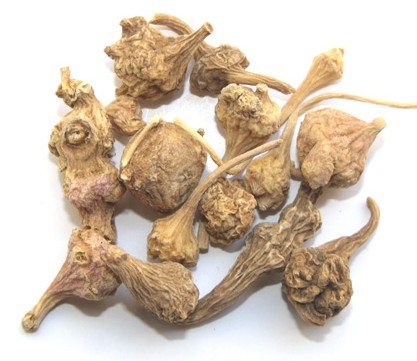 Zhu Zi Shen (Rhizoma Panacis Majoris)
Zhu Zi Shen: tonify the lung to nourish yin, remove stasis and alleviate pain, stop bleeding.
Zhu Zi Shen (Rhizoma Panacis Majoris)
Zhu Zi Shen: tonify the lung to nourish yin, remove stasis and alleviate pain, stop bleeding.
Something this article did not cover?
Ask us directly. We reply within two days, and good questions become public articles.
Ask a question →