
Liver-Pacifying and Yang-Subduing Herbs
Mu Li (Oyster Shell) in TCM
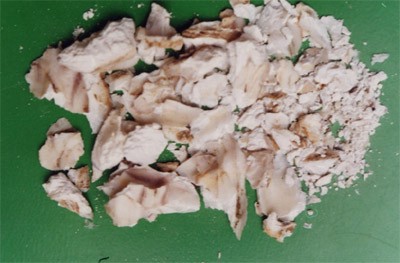
Name
Mu Li (Concha Ostreae), recorded in the Shennong Bencao Jing.
Source and quality
Plant
The shell of Ostrea gigas Thunberg, O. talienwhanensis Crosse or O. rivularis Gould, family Ostreidae.
Where it is grown
O. talienwhanensis comes from the coastal waters of northern China; O. gigas and O. rivularis come from coastal areas of China.
Harvest
Collected throughout the year.
Smell and taste
No unpleasant smell; slightly salty.
Better grade
Large and even, with a clean, smooth inner surface.
Processing
The flesh is removed, the shell washed and dried in the sun; used raw or calcined, then smashed.
Nature and action
Salty, astringent and slightly cold; enters the liver and kidney channels. Pacifies the liver and subdues yang, softens hardness and dissipates nodules, and astringes to arrest discharge.
When it is used
Liver yang hyperactivity
Because it is salty, cold and heavy, it pacifies the liver and subdues yang, and also combines clearing of liver heat with nourishing of liver yin to extinguish wind. Where water fails to nourish wood, that is yin deficiency with yang hyperactivity, marked by dizziness and tinnitus, it is combined with herbs that pacify the liver and subdue yang, together with herbs that nourish yin, such as Gui Jia, Long Gu and Bai Shao in Zhen Gan Xi Feng Tang from Yi Xue Zhong Zhong Can Xi Lu.
For spasm of the limbs after a long warm disease has consumed true yin and stirred deficient endogenous wind, it is combined with herbs that nourish yin and subdue yang, such as Gui Jia, Bie Jia and Bai Shao in Da Ding Feng Zhu from Wenbing Tiaobian.
Phlegm nodules, scrofula and masses
It softens hardness and dissipates nodules. For phlegm nodules and scrofula from stagnation of phlegm-fire it is combined with herbs that resolve phlegm and clear heat, and herbs that soften hardness and dissipate nodules, such as Zhe Bei Mu and Xuan Shen in Xiao Luo Wan from Yi Xue Xin Wu. For masses from stagnation of qi and blood stasis it is combined with herbs that move qi and activate the blood, such as E Zhu, San Leng and Bie Jia.
The various incontinence syndromes
Its astringent action resembles that of calcined Long Gu. It is used for the various incontinence syndromes from deficiency of healthy qi, and the two reinforce each other; it is often combined with tonifying and astringent herbs.
For spontaneous sweating or night sweats it can be used alone as a powder for external application. It is also combined with herbs that nourish qi, firm the exterior and stop sweating, such as Huang Qi, Fu Xiao Mai and Ma Huang Gen. Where the sweating is from yin deficiency it is often combined with herbs that nourish yin and clear heat, such as Sheng Di Huang, Bai Shao and Zhi Mu.
For seminal emission and spermatorrhea from kidney deficiency it is combined with herbs that tonify the kidney and secure essence, such as Sha Yuan Zi and Qian Shi. For enuresis and frequent urination it is combined with herbs that reduce urination, such as Sang Piao Xiao, Jin Ying Zi and Ji Nei Jin. For uterine bleeding and leukorrhea it is combined with herbs that tonify the kidney, arrest metrorrhagia and stop leukorrhea, such as Qian Shi and Hai Piao Xiao.
Separately, the calcined form absorbs acidity and relieves pain. It is indicated for stomach pain with acid regurgitation, combined with Hai Piao Xiao and Zhe Bei Mu as a powder taken by mouth.
Dose
Decoction 15~30 g; smash and decoct first. Taken by mouth as powder or in pills, 1~3 g. Use externally as appropriate. Use the calcined form to astringe discharge, absorb acidity and relieve pain; use the raw herb for its other actions.
Sources and further reading
We cite classical materia medica and modern reference works. This article is health education, not medical advice.
- Shennong Bencao Jing (The Divine Farmer's Materia Medica), Han dynasty.
- Bencao Gangmu (Compendium of Materia Medica), Li Shizhen, 1578.
- Chinese Pharmacopoeia, current edition — identity, quality and safety monographs.
- NCCIH and WHO reference material on traditional medicine safety.
Spotted an error or a better source? Tell us — corrections are logged on our editorial policy page.
Did this article help you?
Your answer shapes what gets rewritten next.
Keep readingRelated entries
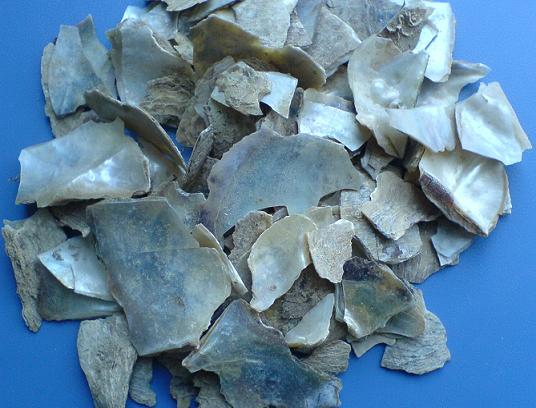 Zhen Zhu Mu: Chinese Herb Guide
Zhen Zhu Mu: pacify liver and subdue yang, clear liver heat and improve vision, suppress heart and induce tranquilization.
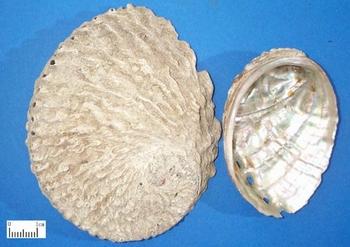 Concha Haliotidis (Abalone Shell)
Shi Jue Ming: pacify liver and subdue yang, clear liver heat and improve vision.
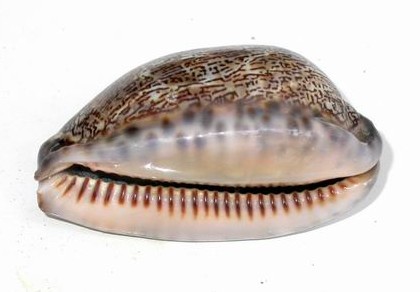 Zi Bei (Arabic Cowry Shell)
Zi Bei Chi: clear heat and soothe the liver, induce tranquilization and improve vision.
Arabic Cowry Shell: Chinese Herb Guide
Arabic Cowry Shell: clear heat and soothe the liver, induce tranquilization and improve vision.
Something this article did not cover?
Ask us directly. We reply within two days, and good questions become public articles.
Ask a question →