
Cold-Phlegm-Warming and Resolving Herbs
Xuan Fu Hua (Inula Flower)
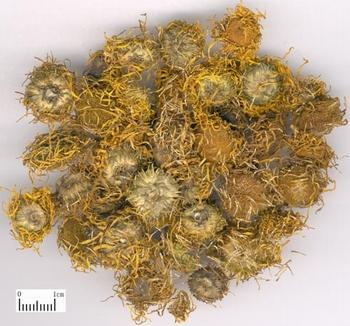
Naming
Xuan Fu Hua (Flos Inulae)——Shen Nong Ben Cao Jing (Shen Nong’s Herbal)
The Processing of Flos Inulae
Origin
The dry capitulum of perennial herbaceous plant Inula japonica Thunb. or I. britannica E. of family Compositae.
Location
Henan, Hebei and Jiangsu provinces in China.
Harvest
Collected in summer and autumn when blooming.
The actual smell and taste
Light smell and lightly bitter taste.
Best quality
Complete flower, yellow and green.
Processing
Unprocessed or processed with honey.
The Effect of Flos Inulae
Property
Bitter, pungent, lightly warm; Lung and stomach meridians entered.
Actions
Direct qi downward and resolve phlegm, check adverse flow of qi and stop vomiting.
Indications
A. Cough and profuse phlegm, phlegm and fluid accumulation, stuffiness and fullness of chest and diaphragm
This herb is good at directing qi downward and resolving phlegm to relieve cough and dyspnea with the action of removing stuffiness and fullness. For cough and dyspnea due to cold-phlegm, it is combined with lung-warming and phlegm-resolving antitussives such as Ban Xia, Bai Jie Zi and Su Zi. For hear phlegm, it is combined with cold and cool herbs such as Zhe Bei Mu, Gua Lou and Zhu Ru to clear heat and resolve phlegm. When accompanied with cough and profuse phlegm caused by wind cold invasion, it is combined withwind-cold dispersing herbs. For instance it is combined with Jing Jie in Jin Fei Cao San from Lei Zheng Huo Ren Shu (Classified Cure Book).
B. Belching and vomiting
This herb is also good at directing stomach qi downward to relieve vomiting and belching. For constant vomiting and belching resulted from turbid phlegm obstruction of middle energizer and adverse rising of stomach qi, it is combined with damp-drying and phlegm-resolving herbs and adverse flow of qi-checking and vomiting-stopping herbs such as Ban Xia and Ju Hong. For middle qi deficiency and turbid phlegm obstruction manifested by stuffiness and hardness of epigastrium and constant belching, it is combined with middle-warming tonics. For instance it is combined with Ban Xia, Sheng Jiang and Ren Shen in Xuan Fu Dai Zhe Tang from Shang Han Lun.
Dosage and Administrations
Decoct with wrapping, 3~10 g.
Cautions
This herb has villi that stimulates throat and causes bucking and vomiting. So it should be decocted with wrapping.
Sources and further reading
We cite classical materia medica and modern reference works. This article is health education, not medical advice.
- Shennong Bencao Jing (The Divine Farmer's Materia Medica), Han dynasty.
- Bencao Gangmu (Compendium of Materia Medica), Li Shizhen, 1578.
- Chinese Pharmacopoeia, current edition — identity, quality and safety monographs.
- NCCIH and WHO reference material on traditional medicine safety.
Spotted an error or a better source? Tell us — corrections are logged on our editorial policy page.
Did this article help you?
Your answer shapes what gets rewritten next.
Keep readingRelated entries
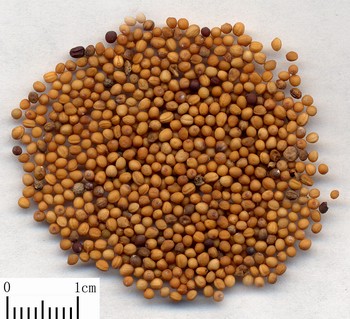 Bai Jie Zi (White Mustard Seed)
Bai Jie Zi: warm lung and dispel phlegm, promote qi flow and dissipate nodulation, resolve swelling and alleviate pain.
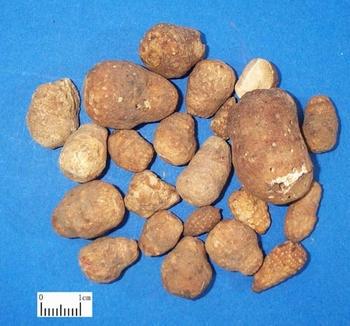 Yu Bai Fu (Giant Typhonium Rhizome)
: dispel wind-phlegm, dry damp-phlegm, stop spasms, alleviate pain, relieve toxicity and dissipate nodulation.
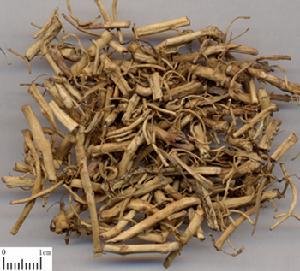 Willowleaf Swallowwort Rhizome (Glaucescent Swallowwort Rhizome)
Bai Qian: direct qi downward and eliminate phlegm, relieve cough and relieve wheezing.
Bai Qian (Willowleaf Swallowwort Rhizome)
Bai Qian (Willowleaf Swallowwort Rhizome): direct qi downward and eliminate phlegm, relieve cough and relieve wheezing.
Something this article did not cover?
Ask us directly. We reply within two days, and good questions become public articles.
Ask a question →