
Wind-Heat-Dispersing Herbs
Niu Bang Zi (Burdock Fruit)
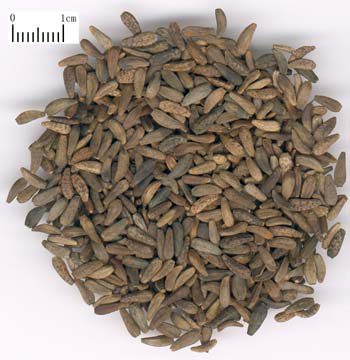
Name
Niu Bang Zi (burdock fruit, Fructus Arctii; also Shu Nian Zi), recorded in the Mingyi Bielu.
Source and quality
Plant
The ripe fruit of biennial Arctium lappa L., family Asteraceae.
Where it is grown
Mainly northeast China, and Zhejiang.
Harvest
Autumn, when the fruit is ripe.
Smell and taste
Bitter, slightly acrid, a little numbing; not foul.
Better grade
Full grains, dusty grey-brown.
Processing
Used raw or dry-fried; crushed before decoction.
Nature and action
Acrid, bitter, cold; enters lung and stomach. Disperses wind-heat; clears heat toxin; eases sore throat; helps a rash surface.
When it is used
Wind-heat exterior pattern, or warm disease at the defense aspect
It does not scatter as strongly as Bo He or Jing Jie; it is better at the throat. Typical use is wind-heat with a swollen sore throat or cough with phlegm, with Bo He and Jie Geng. In early warm disease it both releases the defense aspect and clears toxin, often with Jin Yin Hua.
Heat-toxin: throat, sores, mumps
It clears toxin without clumping, and it moistens the intestines, so it fits those pictures when the stool is also bound from heat. Wind-heat throat: with Bo He. Heat-toxin throat: with Xuan Shen and Ban Lan Gen. Sores and mumps: with Huang Lian and Huang Qin (as in Pu Ji Xiao Du Yin).
Early measles when the rash is stuck
It releases exterior wind-heat and clears interior toxin, so it is used with Bo He and Chan Tui to help the rash come out. That is a classical pediatric use, not home treatment of measles.
Dose
Decoction 6–12 g. Dry-frying takes the edge off the cold bitterness and weakens the bowel-loosening effect.
Cautions
Avoid in deficiency-cold loose stool: it is cold and it lubricates the intestines.
Sources and further reading
We cite classical materia medica and modern reference works. This article is health education, not medical advice.
- Shennong Bencao Jing (The Divine Farmer's Materia Medica), Han dynasty.
- Bencao Gangmu (Compendium of Materia Medica), Li Shizhen, 1578.
- Chinese Pharmacopoeia, current edition — identity, quality and safety monographs.
- NCCIH and WHO reference material on traditional medicine safety.
Spotted an error or a better source? Tell us — corrections are logged on our editorial policy page.
Did this article help you?
Your answer shapes what gets rewritten next.
Keep readingRelated entries
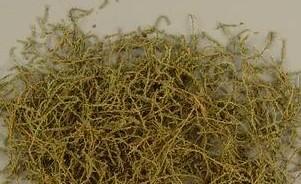 Chinese Tamarisk Twing
: dispel wind, induce diaphoresis, help a rash surface of measles, romove toxicity.
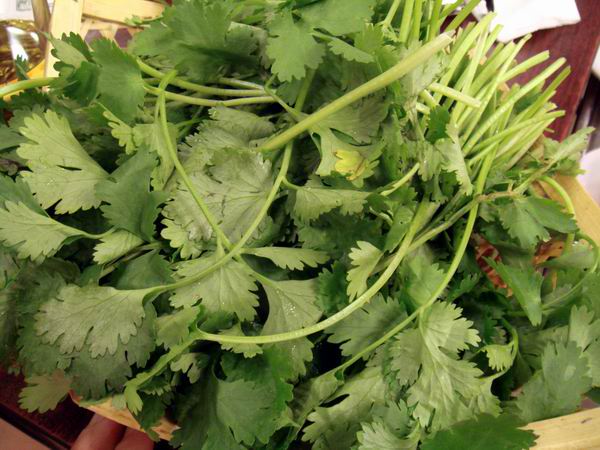 Hu Sui (Coriander herb with root)
Coriander: induce sweating and help a rash surface, promote digestion and direct qi downward.
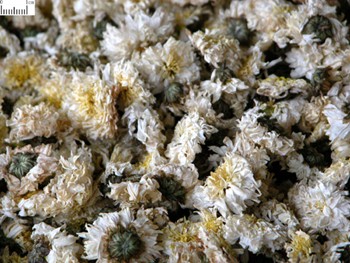 Ju Hua (Florists chrysanthemum flower)
: disperse wind-heat, subdue liver yang, and remove liver heat to improve vision, clear lung heat.
 Man Jing Zi (Vitex Fruit)
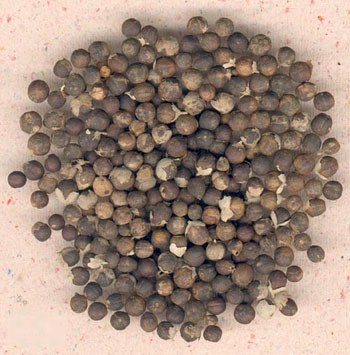
Man Jing Zi (vitex / chastetree fruit, Fructus Viticis ), recorded in the Shennong Bencao Jing . The ripe fruit of Vitex trifolia L. var
Something this article did not cover?
Ask us directly. We reply within two days, and good questions become public articles.
Ask a question →