
Yin Tonics
Nv Zhen Zi (Glossy Privet Fruit)
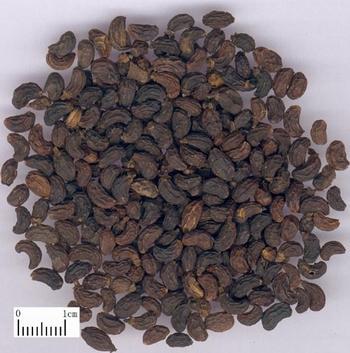
Naming
Nv Zhen Zi (Fructus Ligustri Lucidi)——Shen Nong Ben Cao Jing (Shen Nong’s Herbal)
The Processing of Fructus Ligustri Lucidi
Origin
The ripe fruit of the evergreen tree Ligustrum lucidum Ait. of family Oleaceae.
Location
Zhejiang, Jiangsu and Hunan provinces in China. Main plant is cultivated.
Harvest
Plucked the ripe fruit in winter.
The actual smell and taste
Slight smell, slightly sour and astringent.
Best quality
Big, full and purple-black.
Processing
Unprocessed or stir-baked with liquor.
The Effect of Fructus Ligustri Lucidi
Property
Sweet, bitter, cool; liver and kidney meridians entered.
Actions
Nourish liver and kidney, improve sight.
Indications
Syndromes of liver and kidney yin deficiency
It is indicated for dizziness, blurred vision, dim sight, early white of beard and hair, soreness and limpness of lumbar and knees, spermatorrhea, and diabetes due to yin deficiency of liver and kidney, or tidal fever, restlessness due to yin deficiency with internal heat, because it can nourish yin of liver and kidney, tonifying and clearing spontaneously. Furthermore, it is very indicated for dim and poor vision due to yin deficiency of liver and kidney, for it is skilled in improving sight. It is applied as alcoholic preparation or paste singly; or it is combined with other liver and kidney tonics, for instance, it is used with Mo Han Lian in Er Zhi Wan from Yi Fang Ji Jie. For hypopsia, dim and poor vision due to yin deficicncy of liver and kidney, it is combined with liver and kidney-tonifying and sight-improving herbs, such as Shu Di Huang, Gou Qi Zi. For tidal fever, restlessness due to yin deficiency with internal heat, it is combined with yin-nourishing and internal-heat-eliminating herbs, such as Sheng Di Huang, Qing Hao, and Di Gu Pi. For wasting-thirst due to yin dcficiency of liver and kidney, it is combined with yin-nourishing, kidney-tonifying and fluid-producing and thirst-relieving herbs, such as Sheng Di Huang, Tian Dong, and Shan Yao.
Dosage and Administrations
Decoct 10~15 g. It is better to be made into pill or powder because the important ingredient of it, oleanolic acid, is difficult in dissolving in liquid. Appropriate dosage for external usage. Streamed with millet wine can strengthen the action of nourishing and tonifying liver and kidney, preventing diarrhea through reducing its bitter and cold properties.
Sources and further reading
We cite classical materia medica and modern reference works. This article is health education, not medical advice.
- Shennong Bencao Jing (The Divine Farmer's Materia Medica), Han dynasty.
- Bencao Gangmu (Compendium of Materia Medica), Li Shizhen, 1578.
- Chinese Pharmacopoeia, current edition — identity, quality and safety monographs.
- NCCIH and WHO reference material on traditional medicine safety.
Spotted an error or a better source? Tell us — corrections are logged on our editorial policy page.
Did this article help you?
Your answer shapes what gets rewritten next.
Keep readingRelated entries
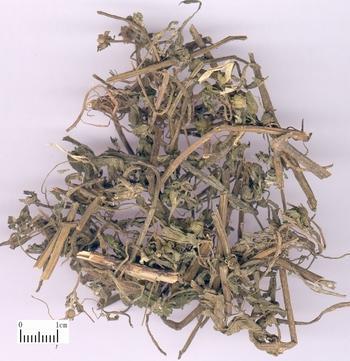 Mo Han Lian (Yerbadetajo Herb)
: nourish liver and kidney, cool blood to stop bleeding.
Han Lian Cao (Yerbadetajo Herb)
Mo Han Lian (Herba Ecliptae). The part above the ground of the annual herbaceous Eclipat prostrate L. of family Asteraceae
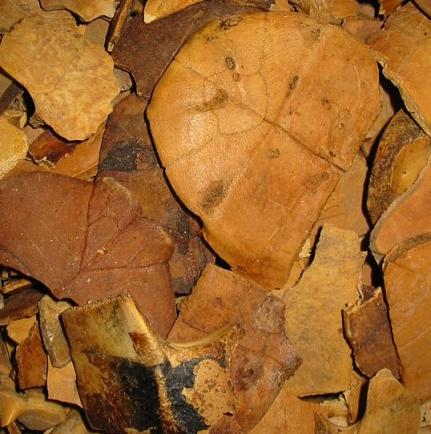 Carapax et Plastrum Testudinis (Tortoise shell)
Gui Jia: nourish yin of liver and kidney, subdue yang, strengthen bone, stop bleeding, nourish blood, and tonify heart.
Gui Jia (Tortoise shell)
Gui Jia (Tortoise shell): nourish yin of liver and kidney, subdue yang, strengthen bone, stop bleeding, nourish blood, and tonify heart.
Something this article did not cover?
Ask us directly. We reply within two days, and good questions become public articles.
Ask a question →