Drastic Hydragogues
Gan Sui (Gansui Root)
Naming
Gan Sui (Euphorbia Kansui)——Shen Nong Ben Cao Jing (Shen Nong’s Herbal)
The Processing of 甘遂
Origin
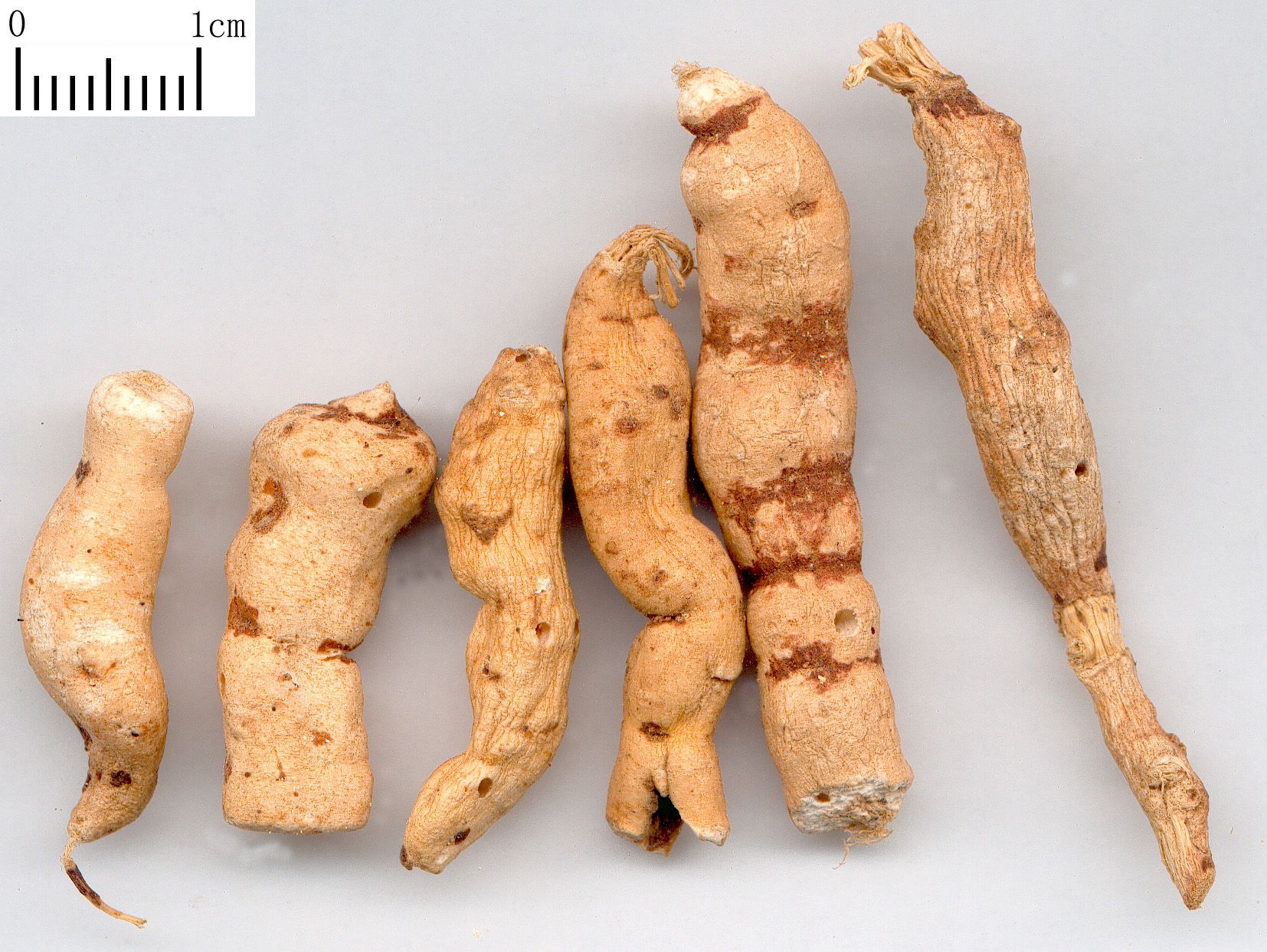
The root tuber of perennial herbaceous plant Euphorbia kansui T. N. Llliou ex T. P. Wang. of family Euphorbiaceae.
Location
Mainly in Shanxi, Shaanxi and Hebei provinces, etc. of China.
Harvest
Dug out in early spring before blossom, or late autumn after leaf and stem withered which is viewed as the better.
The actual smell and taste
Light smell, slightly sweet and spicy taste.
Best quality
Collected in autumn, full, white, enough mealiness.
Processing
Unprocessed or processed with vinegar.
The Effect of 甘遂
Property
Bitter, cold; toxic; lung, kidney, and large intestine meridians entered.
Actions
Drive out accumulated water, relieve swelling and dissipate nodulation in topical application.Indications
A. Edema, tympanites and hydrothorax
Being bitter-cold and descending in property with the strong action of expelling water by catharsis, it can result in serious diarrhea to further discharge accumulated water rapidly. It is indicated for edema, tympanites and hydrothorax without deficiency of healthy qi. It can be used singly in powder or combined with Da Ji and Yuan Hua, known as Shi Zao Tang from Shang Han Lun.
B. Sores and abscess
It has the action of relieving swelling and dissipating nodulation when being used topically. For sores and abscess, the powder of Gan Sui is mixed with water for topical application.
Dosage and Administrations
0.5~1g, used in pills or powder. It is not recommended to be used in decoction because its active component doesn't dissolve in water. Proper dosage is for topical administration. It should be processed with vinegar to weaken its toxins when taking orally.
Cautions
It is contraindicated to the pregnant women and valetudinarian, and antagonistic to Gan Cao.
Sources and further reading
We cite classical materia medica and modern reference works. This article is health education, not medical advice.
- Shennong Bencao Jing (The Divine Farmer's Materia Medica), Han dynasty.
- Bencao Gangmu (Compendium of Materia Medica), Li Shizhen, 1578.
- Chinese Pharmacopoeia, current edition — identity, quality and safety monographs.
- NCCIH and WHO reference material on traditional medicine safety.
Spotted an error or a better source? Tell us — corrections are logged on our editorial policy page.
Did this article help you?
Your answer shapes what gets rewritten next.
Keep readingRelated entries
Euphorbia Kansui (Gansui Root)
Gan Sui: drive out accumulated water, relieve swelling and dissipate nodulation in topical application.Indications.
Gan Sui (Euphorbia Kansui)
Gan Sui (Euphorbia Kansui): drive out accumulated water, relieve swelling and dissipate nodulation in topical application.Indications.
 Jing Da Ji: Chinese Herb Guide
Jing Da Ji: drive out accumulated water, relieve swelling and dissipate nodulation in topical application.
Jing Da Ji (Radix Euphorbiae Pekinensis)
Peking Euphorbia Root: drive out accumulated water, relieve swelling and dissipate nodulation in topical application.
Jing Da Ji: Chinese Herb Guide
Jing Da Ji: drive out accumulated water, relieve swelling and dissipate nodulation in topical application.
Jing Da Ji (Radix Euphorbiae Pekinensis)
Peking Euphorbia Root: drive out accumulated water, relieve swelling and dissipate nodulation in topical application.
Something this article did not cover?
Ask us directly. We reply within two days, and good questions become public articles.
Ask a question →