
Heat-Clearing and Fire-Purging Herbs
Shi Gao: Chinese Herb Guide
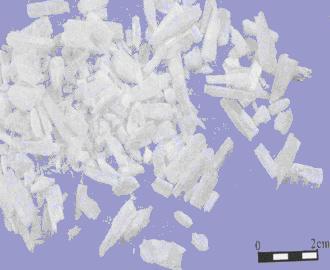
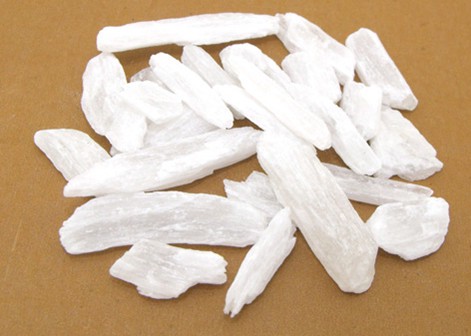
Name
Shi Gao (Gypsum Fibrosum), recorded in the Shennong Bencao Jing.
Source and quality
Plant
A mineral of fibrous crystallized calcium sulfate dihydrate.
Where it is grown
Mainly in Hubei, Gansu and Sichuan provinces.
Harvest
Collected at any time.
Smell and taste
Bland, with no smell.
Better grade
Large and white with a loose texture, translucent, with a silky cross-section.
Processing
Used crude or calcined; smashed, with impurities removed.
Nature and action
Acrid and sweet, and very cold; enters the lung and stomach channels. Clears heat and purges fire, clearing qi-level excess heat as well as excess heat in the lung and stomach. The calcined form is used externally to dry dampness and heal sores.
When it is used
Excess heat at the qi level in a warm disease
Shi Gao is extremely cold and clears qi-level excess heat: it expels exterior heat and purges the interior fire of the lung and stomach, and it is particularly good at clearing pathogenic heat and restraining hyperactivity of yang.
It is used mainly for the qi-system stage of warm disease, where warmth has penetrated inward and accumulated, with lingering high fever, sweating, restlessness, thirst, and a surging, large pulse. In this pattern it is combined with Zhi Mu in Bai Hu Tang to clear qi-level excess heat. Where warm disease is due to epidemic warmth invading inward, it is combined with Jin Yin Hua and Lian Qiao for a better effect. Where qi and fluids are consumed and thirst comes on suddenly, it is combined with qi-tonifying and yin-nourishing herbs so that heat is cleared while yin is nourished and qi is replenished: in Bai Hu Jia Ren Shen Tang from Shanghan Lun, the heat-clearing herbs are combined with Ren Shen and others.
Dyspnea and cough from lung heat
For severe wheezing caused by heat accumulating in the lung, its own action at relieving wheezing is comparatively weak, so it is combined with herbs that relieve wheezing. In Ma Huang Xing Ren Gan Cao Shi Gao Tang from Shanghan Lun, it is combined with Ma Huang and Xing Ren. For cough from phlegm-heat it is combined with herbs that clear the lung and resolve phlegm, together with cough-relieving herbs.
Flaring stomach fire
For red, swollen, painful gums or bleeding gums, rancid ulcers with foul breath, or a sore mouth, pain in the face, headache, sore throat and thirst caused by accumulated heat rising along the channel, it is combined with herbs that clear the stomach, remove toxicity and relieve the throat.
In Qing Wei San from Lan Shi Mi Chang, for a carious tooth, bleeding gums, and a sore mouth with foul breath caused by stomach fire and toxicity, it is combined with Huang Lian and Sheng Ma. In Xiong Zhi San from Ren Zhai Zhi Zhi Fang, for pain and distension of the head, it is combined with pain-relieving herbs such as Chuan Xiong and Bai Zhi. In Qing Yan Li Ge Tang from Bai Hou Quan Sheng Ji, for sore throat, it is combined with herbs that clear the throat such as Niu Bang Zi and Bo He. In Yu nv Jian from Jing Yue Quan Shu, for diabetes, it is combined with herbs that nourish yin and generate fluids, such as Shu Di Huang, Mai Dong and Zhi Mu.
Unhealing sores, eczema and burns
Applied externally, calcined Shi Gao heals sores by drying dampness, reducing discharge and promoting wound healing, and is indicated for persistent unhealing sores, eczema and burns. It may be used alone, or combined with other herbs that clear heat and remove toxicity, or that dry dampness and heal sores. It is commonly used as an excipient or filler when other external herbs are made up. It appears, for example, in Jiu Yi Dan from Yi Zong Jin Jian.
Dose
Smash before use; decoct 15~60 g. For oral use the crude form is preferable. Calcined Shi Gao in powder is suitable for external application.
Sources and further reading
We cite classical materia medica and modern reference works. This article is health education, not medical advice.
- Shennong Bencao Jing (The Divine Farmer's Materia Medica), Han dynasty.
- Bencao Gangmu (Compendium of Materia Medica), Li Shizhen, 1578.
- Chinese Pharmacopoeia, current edition — identity, quality and safety monographs.
- NCCIH and WHO reference material on traditional medicine safety.
Spotted an error or a better source? Tell us — corrections are logged on our editorial policy page.
Did this article help you?
Your answer shapes what gets rewritten next.
Keep readingRelated entries
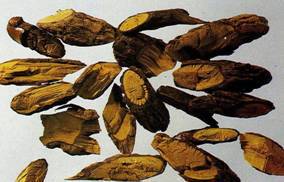 Gong Lao Mu (Leatherleaf Mahonia Stem)
: clear heat and eliminate dampness, purge fire and remove toxicity.
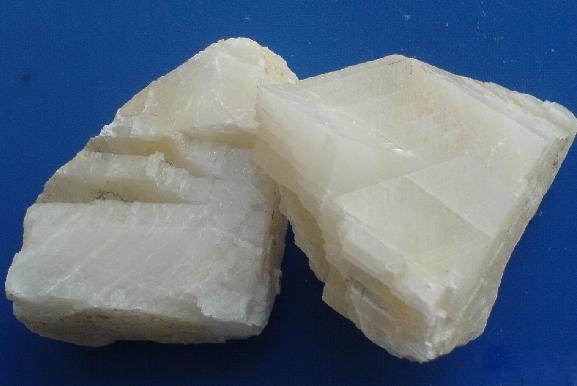 Han Shui Shi (Mirabilite crystal)
: clear heat and reduce pathogenic fire, resolve swelling.
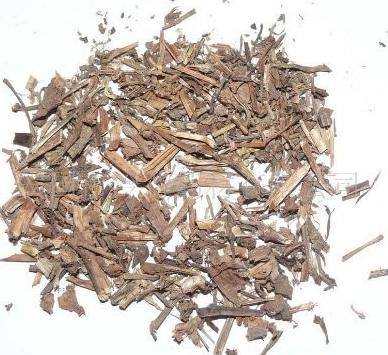 Ya Zhi Cao (Herba Commelinae)
Common Dayflower Herb: clear heat and promote diuresis, cool blood and remove toxicity.
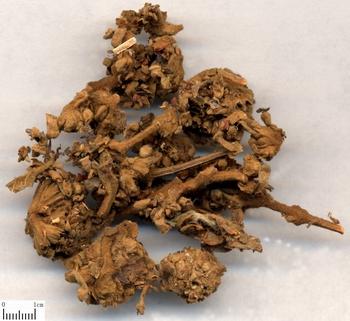 Mi Meng Hua (Pale Butterflybush Flower)
: clear heat and nourish liver, improve vision and remove nebula.
Something this article did not cover?
Ask us directly. We reply within two days, and good questions become public articles.
Ask a question →