
TCM therapies
Harmonizing Method (He Jie)
Harmonizing (he jie) is a treatment strategy that neither only purges nor only tonifies. It is used to settle a conflict between exterior and interior, to regulate liver and spleen, or to settle a stomach that is mixing cold and heat.
1. Harmonizing shaoyang
This is for a pathogen sitting in shaoyang — half-exterior, half-interior. Common signs are alternating chills and fever, chest or rib-side discomfort, irritability, a tendency to vomit, little desire to speak or eat, a bitter taste, dry throat and dizziness.
Because the pathogen is not fully exterior and not fully interior, forcing a sweat or forcing a vomit is usually the wrong move. Harmonizing is the usual approach. Typical herbs include Bupleurum (Chai Hu), sweet wormwood (Qing Hao), Pinellia (Ban Xia) and Scutellaria (Huang Qin). The representative formula is Xiao Chai Hu Tang.
2. Regulating liver and spleen
This is for liver-spleen disharmony: low mood, chest tightness, and mixed cold, heat, pain or diarrhea. Common herbs are Bupleurum (Chai Hu), white peony (Bai Shao), licorice (Gan Cao) and Atractylodes (Bai Zhu). Representative formulas are Si Ni San and Xiao Yao San.
3. Harmonizing the stomach and intestines
This is for a stomach pattern that mixes cold and heat: abdominal pain, vomiting, a sense that the middle is “at odds with itself.” Common herbs include dried ginger (Gan Jiang), Coptis (Huang Lian) and Pinellia (Ban Xia). The representative formula is Ban Xia Xie Xin Tang.
These are textbook patterns, not a self-prescription. A practitioner still has to decide whether the case is actually shaoyang, liver-spleen, or a mixed stomach pattern.
Sources and further reading
We cite classical materia medica and modern reference works. This article is health education, not medical advice.
- Shennong Bencao Jing (The Divine Farmer's Materia Medica), Han dynasty.
- Bencao Gangmu (Compendium of Materia Medica), Li Shizhen, 1578.
- Chinese Pharmacopoeia, current edition — identity, quality and safety monographs.
- NCCIH and WHO reference material on traditional medicine safety.
Spotted an error or a better source? Tell us — corrections are logged on our editorial policy page.
Did this article help you?
Your answer shapes what gets rewritten next.
Keep readingRelated entries
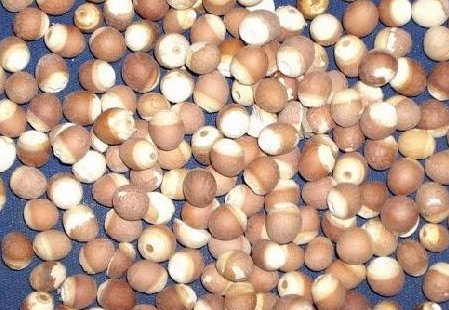 Gu Se method: TCM Concept Guide
This method is mainly used for spontaneous perspiration, night sweat, chronic cough, diarrhea, urinary incontinence, metrorrhagia and metrostaxis.
Jie Biao: Releasing the Exterior
Pungent herbs that promote a light sweat are used while a pathogen is still in the exterior, so it is not trapped deeper in the body.
Yong Tu method: TCM Concept Guide
Emetic remedies Emetic remedies, is to Use the drugs of emetic properties to remove hazardous substances in throat, chest, diaphragm and stomach, functions.
Something this article did not cover?
Ask us directly. We reply within two days, and good questions become public articles.
Ask a question →