
Ai Di Cha (Japanese Ardisia Herb)
Ai Di Cha: relieve cough and dispel phlegm, clear heat and remove dampness, activate blood and resolve stasis.
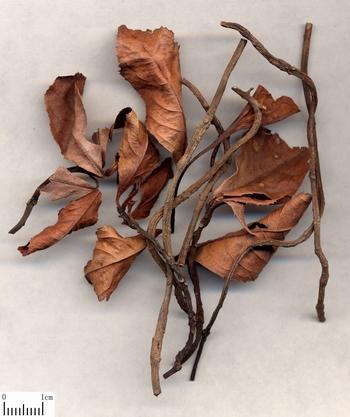
Naming
Ai Di Cha (Herba Ardisiae Japonicae)——Ben Cao Tu Jing (Illustrated Manual of Materia Medica)
The Processing of Herba Ardisiae Japonicae
Origin
The dry aerial parts of Ardisia japonica (Thunb) Blume of family myrsinaceae.
Location
South provinces of the Yangtze River in China.
Harvest
Collected during whole year.
The actual smell and taste
Light smell, slightly astringent taste.
Best quality
Reddish brown stem and green leaf.
Processing
Cleaned, sliced, dried in the sun, unprocessed.
The Effect of Herba Ardisiae Japonicae
Property
Bitter, pungent, slightly cold; lung and liver meridians entered.
Actions
Relieve cough and dispel phlegm, clear heat and remove dampness, activate blood and resolve stasis.
Indications
A. Cough and dyspnea with phlegm
With good actions of relieving cough and resolving phlegm, also with combining action of relieving dyspnea, it excels at treating cough and dyspnea with phlegm due to heat. For lung heat cough and dyspnea with phlegm, it could be used singly or combined with herbs to reinforce actions of clearing heat, relieving cough and dyspnea and resolving phlegm, such as Pi Pa Ye and Sang Bai Pi, etc. For cold phlegm cough and dyspnea, it is combined with Ma Huang and Xi Xin to warm lung, relieve cough and dyspnea and resolve phlegm.
B. Damp-heat induced jaundice, edema
It has actions of clearing heat and removing for anti-icterus, draining dampness and alleviating edema. For jaundice due to damp-heat, it is often combined with damp-draining herbs and bile-excreting anti-icteric herbs, such as Yin Chen and Hu Zhang and so on. For edema and dysuria, it is often combined with edema-alleviating diuretics, such as Fu Ling and Ze Xie and so on.
C. Stagnant blood syndrome
With the actions of activating blood and resolving stasis, also unblocking meridians and collaterals to alleviate pain, it can be widely indicated for various stagnant blood syndromes such as traumatic injury, wind-damp arthralgia and amenorrhea, etc. For traumatic injury, it is combined with blood-activating, trauma-curing and pain-stopping herbs, such as Hong Hua and Su Mu and so on. For wind-damp arthralgia, it is combined with wind-damp-dispelling herbs, such as Wei Ling Xian and Du Huo, etc. For dysmenorrhea and amenorrhea due to blood stasis, it is combined with blood-activating, liver-soothing and menstruation-regulating herbs, such as Xiang Fu, Dang Gui and Chuan Xiong and so on.
Dosage and Administrations
Decoct 10~30 g.
Did this article help you?
Your answer directly shapes how this article gets rewritten. Several sections on this site exist because readers asked for them.
Keep readingRelated for you
Ai Di Cha (Japanese Ardisia Herb)
矮地茶: relieve cough and dispel phlegm, clear heat and remove dampness, activate blood and resolve stasis.
Ai Di Cha
Ai Di Cha: relieve cough and dispel phlegm, clear heat and remove dampness, activate blood and resolve stasis.
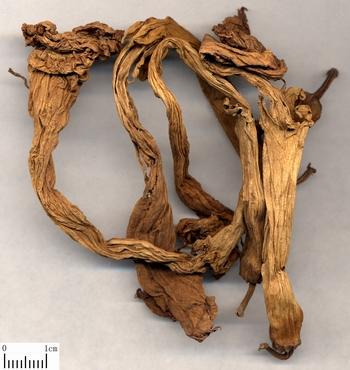 Yang Jin Hua
Name Yang Jin Hua (Flos Daturae) — Bencao Gangmu Source and quality Plant The dry flower of Datura metel L. of family solanaceae.
Yang Jin Hua
Name Yang Jin Hua (Flos Daturae) — Bencao Gangmu Source and quality Plant The dry flower of Datura metel L. of family solanaceae.
Something this article didn't cover?
Ask us directly — we reply within 2 days. Great questions become public articles.
Ask a question →