
Yin Tonics
Shi Hu: Chinese Herb Guide
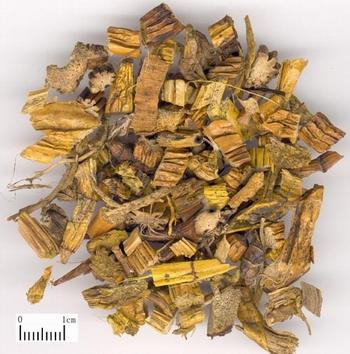
Name
Shi Hu (Herba Dendrobii), from Shen Nong Ben Cao Jing (Shen Nong's Herbal)
Source and quality
The stem of the perennial herbaceous plants Dendrobium loddigesii Rolfe, D. fimbriatum Hook. var. oculatum Hook., D. chrysanthum Wall., D. candidum Wall. ex Lindl., or D. nobile Lindl. of the family Orchidaceae. It is mainly cultivated in Sichuan, Yunnan and Guizhou provinces, and collected all year round, though autumn is the better season.
It is slightly bitter. The best grade is golden, lustrous and pliable.
It is used unprocessed.
Nature and action
Sweet and slightly cold. It enters the stomach and kidney meridians.
It nourishes the yin of the stomach and kidney, clears stomach heat and directs kidney fire downward.
Indications
Stomach yin deficiency syndromes
It is indicated for low fever, thirst, dryness of the mouth and throat, discomfort, and slight or burning pain in the stomach and abdomen due to stomach yin deficiency with heat, because it nourishes stomach yin, generates fluids to relieve thirst and clears stomach heat. It is usually combined with herbs that nourish yin and generate fluids.
- For dry thirst and a dry tongue with a dry coating due to fluids injured by heat, it is combined with Tian Hua Fen, Sheng Di Huang and Mai Dong in Qing Re Bao Jin Tang from Shi Bing Lun.
- For dryness of the mouth and throat, and a red tongue with little coating due to stomach yin deficiency, it is decocted on its own and used instead of tea, or combined with Mai Dong and Yu Zhu.
Kidney yin deficiency syndromes
It is indicated for bone-steaming and tidal fever due to yin deficiency with effulgent fire, and for dim and poor vision and atrophy and flaccidity of the tendons and bones due to kidney yin deficiency, because it nourishes kidney yin and directs deficient fire downward. It should be combined with herbs that nourish yin, tonify the kidney and relieve symptoms.
- For bone-steaming and tidal fever due to yin deficiency with effulgent fire, it is commonly combined with herbs that nourish yin and clear deficiency heat, such as Sheng Di Huang, Gou Qi Zi, Huang Bai and Hu Huang Lian.
- For dim and poor vision due to kidney yin deficiency, it is combined with herbs that nourish the kidney and liver and improve vision, such as Gou Qi Zi, Shu Di Huang and Tu Si Zi in Shihu Yeguang Wan from Yuan Ji Qi Wei (Introduction to the Essence of Medicine).
- For atrophy and flaccidity of the tendons and bones due to kidney yin deficiency, it is combined with herbs that nourish the kidney and liver and strengthen the tendons and bones, such as Shu Di Huang, Shan Zhu Yu, Du Zhong and Niu Xi.
Dosage and administration
Decoct 10~15 g;15~30 g for the fresh herb.
Sources and further reading
We cite classical materia medica and modern reference works. This article is health education, not medical advice.
- Shennong Bencao Jing (The Divine Farmer's Materia Medica), Han dynasty.
- Bencao Gangmu (Compendium of Materia Medica), Li Shizhen, 1578.
- Chinese Pharmacopoeia, current edition — identity, quality and safety monographs.
- NCCIH and WHO reference material on traditional medicine safety.
Spotted an error or a better source? Tell us — corrections are logged on our editorial policy page.
Did this article help you?
Your answer shapes what gets rewritten next.
Keep readingRelated entries
Shi Hu (Herba Dendrobii) in TCM
Nourish yin of stomach and kidney, clear heat of stomach and descend kidney fire. Sweet, slightly cold; stomach and kidney meridians entered.
Human Milk: Chinese Herb Guide
Ren Ru Zhi (Human Milk) Sweet, salty, neutral; heart, lung and stomach channels
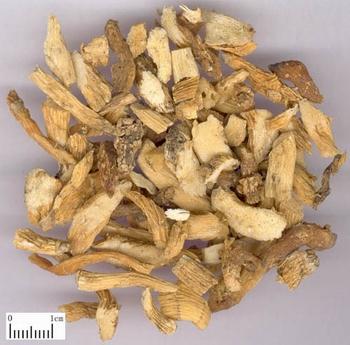 Wei Rui (Fragrant Solomonseal Rhizome)
Yu Zhu (Rhizoma Polygonati Odorati). The rhizome of the perennial Polygonatum odoratum (Mill.) Druce of family Liliaceae
Yu Zhu (Fragrant Solomonseal Rhizome)
Yu Zhu (Fragrant Solomonseal Rhizome) nourishes the yin of the lung and stomach and clears heat from both. It is used for lung and stomach yin deficiency.
Something this article did not cover?
Ask us directly. We reply within two days, and good questions become public articles.
Ask a question →