
Damp-Resolving Herbs
Pei Lan (Fortune Eupatorium Herb)
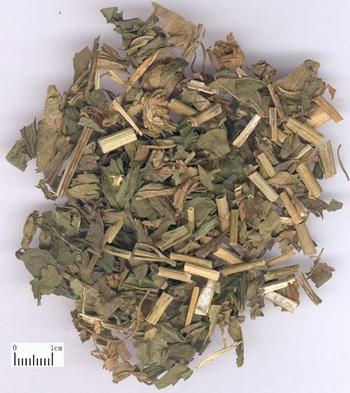
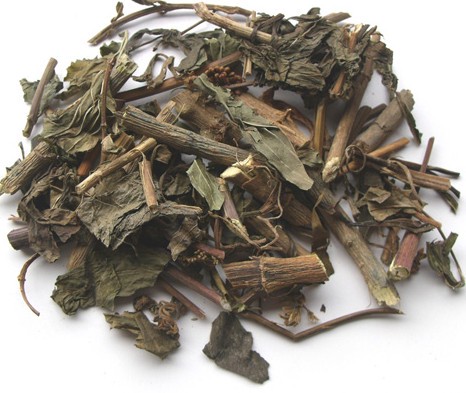
Naming
Pei Lan (Herba Eupatorii) ——Shen Nong Ben Cao Jing (Shen Nong’s Herbal)
The Processing of Herba Eupatorii
Origin
The aerial part of Eupatorium fortunei Turcz. of family Compositae.
Location
Jiangsu, Zhejiang, Hebei provinces, etc. in China.
Harvest
Collected in summer and autumn.
The true smell and taste
Fragrant, slightly bitter.
Best quality
Dry, a lot of leave, green color, tender with strong fragrant.
Processing
Dried in shade or sun, unprocessed or use the fresh one.
The Effect of Herba Eupatorii
Property
Pungent, neutral; spleen, stomach and lung meridians entered.
Actions
Resolve dampness, release exterior.
Indications
A.Syndrome of damp obstruction of middle energizerIt is fragrant and usually combined with Guang Huo Xiang for the syndrome of damp obstruction of middle energizer because they are similar in the actions of resolving dampness and harmonizing middle energizer. It also can be combined with Cang Zhu, Hou Po and Kou Ren. It is mild, not warm, and not dry in property and good at curing damp-heat in spleen meridian manifested as sweetness and greasiness in mouth, plenty of saliva and halitosis; it can be decocted alone or with the heat-clearing and damp-resolving herbs such as Huang Qin and Yi Yi Ren.
B.The early stage of summer-damp syndrome and damp-warm syndrome
It is aromatic and its actions are similar to Guang Huo Xiang. It can dispel summer-heat from exterior and resolve damp-turbidity from interior, but its actions of warming and dispersing are mild because it is neutral in property.
For the early stage of summer-damp syndrome and damp-warm syndrome manifested as chills with fever, headache, chest fullness, and greasy tongue coating, it is usually combined with the herbs for resolving dampness, clearing summer and releasing exterior such as Guang Huo Xiang, Hou Po, He Ye and Bo He.
Dosage and Administrations
Decoct 5~10 g, the dosage of the fresh is doubled.
Sources and further reading
We cite classical materia medica and modern reference works. This article is health education, not medical advice.
- Shennong Bencao Jing (The Divine Farmer's Materia Medica), Han dynasty.
- Bencao Gangmu (Compendium of Materia Medica), Li Shizhen, 1578.
- Chinese Pharmacopoeia, current edition — identity, quality and safety monographs.
- NCCIH and WHO reference material on traditional medicine safety.
Spotted an error or a better source? Tell us — corrections are logged on our editorial policy page.
Did this article help you?
Your answer shapes what gets rewritten next.
Keep readingRelated entries
Pei Lan: Chinese Herb Guide
Pei Lan (Herba Eupatorii). The aerial part of Eupatorium fortunei Turcz. of family Asteraceae
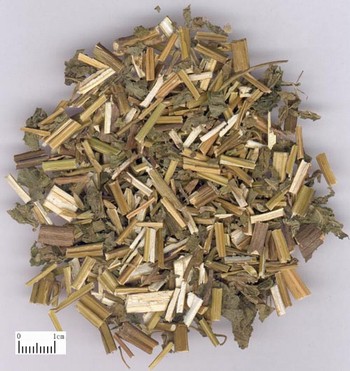 Guang Huo Xiang (Cablin Potchouli Herb)
: resolve dampness, arrest vomiting, release exterior.
Guang Huo Xiang (Cablin Potchouli Herb)
Guang Huo Xiang (Cablin Potchouli Herb): resolve dampness, arrest vomiting, release exterior.
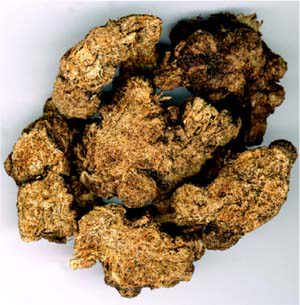 Cang Zhu: Chinese Herb Guide
Cang Zhu: dry dampness and invigorate spleen, dispel wind-dampness, release exterior.
Cang Zhu (Swordlike Atractylodes Rhizome)
Cang Zhu (Swordlike Atractylodes Rhizome): dry dampness and invigorate spleen, dispel wind-dampness, release exterior.
Cang Zhu: Chinese Herb Guide
Cang Zhu: dry dampness and invigorate spleen, dispel wind-dampness, release exterior.
Cang Zhu (Swordlike Atractylodes Rhizome)
Cang Zhu (Swordlike Atractylodes Rhizome): dry dampness and invigorate spleen, dispel wind-dampness, release exterior.
Something this article did not cover?
Ask us directly. We reply within two days, and good questions become public articles.
Ask a question →