
Heat-Clearing and toxicity-Removing Herbs
Yu Xing Cao (Heartleaf Houttuynia Herb)
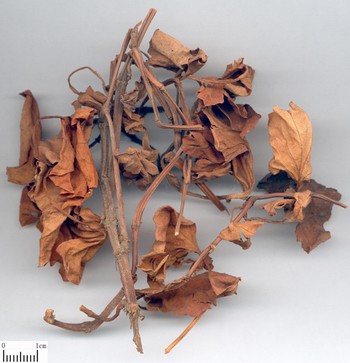


Name
Yu Xing Cao (Herba Houttuyniae), from Ming Yi Bie Lu (Miscellaneous Records of Famous Physicians)
Source and quality
The aerial parts of Houttuynia cordata Thunb. of the family Saururaceae. It grows mainly south of the Yangtze River and is collected in summer, when the stems and leaves are flourishing and the spikes are plentiful.
It has a fishy odor and a slightly astringent taste. The best grade has complete stems and leaves with spikes, is grayish green in color, and has a strong fishy odor.
It is used unprocessed.
Nature and action
Pungent and cold. It enters the lung, liver, bladder and large intestine meridians.
It clears heat and removes toxicity, cures abscesses and discharges pus, clears lung heat, and clears heat and removes dampness.
Indications
Sores and abscesses due to heat-toxin, and cough due to lung heat
It excels at clearing lung heat to dispel phlegm and stop cough, and at clearing heat and removing toxicity to cure abscesses and discharge pus, so it is the essential herb for treating pulmonary abscess caused by accumulation of heat-toxin in the lung.
- For pulmonary abscess in its initial stage, marked by fever with chills, cough and chest pain, it is effective when its pounded juice is taken on its own, as recorded in Ben Cao Jing Shu (Classic Theory of Materia Medica). The effect becomes much better when it is combined with herbs that clear heat, remove toxicity and disperse wind-heat, such as Jin Yin Hua, Lian Qiao and Huang Qin.
- For pulmonary abscess in the ulcerative stage with pus, and cough with vomiting of purulent sputum, it should be combined with herbs that clear lung heat and discharge pus, such as Lu Gen, Yi Yi Ren and Jie Geng.
- It is also commonly used to treat dermal sores and abscesses with swelling and pain. For red swelling with burning pain in the initial stage, or where pus is forming due to excessive heat, it can be taken orally on its own, or the fresh herb can be applied topically after being pounded, or it can be combined with herbs that remove toxicity and cure abscesses, such as Zi Hua Di Ding, Lian Qiao and Pu Gong Ying.
- For cough due to lung heat, it works well on its own, or combined with other herbs that clear lung heat, dispel phlegm and stop cough, to enhance the effect.
Various syndromes of damp-heat
It also clears damp-heat, induces diuresis and relieves stranguria, and is indicated for various damp-heat syndromes, such as stranguria, leucorrhea, diarrhea and dysentery, and jaundice. It is often combined with herbs that induce diuresis and relieve stranguria, herbs that clear heat and dry dampness, or herbs that expel dampness and relieve jaundice, according to the pattern.
Dosage and administration
Decoct 15~30 g, or 60~100 g of the fresh product. A proper dose is used for topical administration.
Cautions
Prolonged decocting is not appropriate, because it contains essential oil.
Sources and further reading
We cite classical materia medica and modern reference works. This article is health education, not medical advice.
- Shennong Bencao Jing (The Divine Farmer's Materia Medica), Han dynasty.
- Bencao Gangmu (Compendium of Materia Medica), Li Shizhen, 1578.
- Chinese Pharmacopoeia, current edition — identity, quality and safety monographs.
- NCCIH and WHO reference material on traditional medicine safety.
Spotted an error or a better source? Tell us — corrections are logged on our editorial policy page.
Did this article help you?
Your answer shapes what gets rewritten next.
Keep readingRelated entries
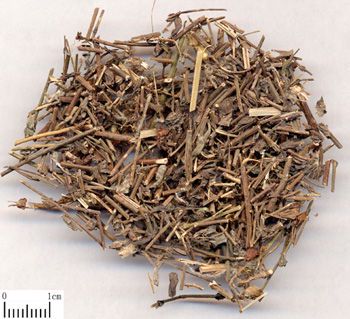 Liu Yue Xue (Snow of June Herb)
: expel wind and promote diuresis, clear heat and remove toxicity.
 Guan Zhong (Rhizoma Cyrtomii)
Cyrtomium Rhizome: clear heat and remove toxicity, cool blood and stopping bleeding.
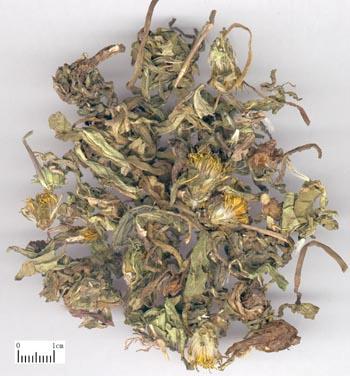 Pu Gong Ying (Mongolian Dandelion Herb)
: clear heat and remove toxicity, clear heat from liver, stomach and lung, clear heat and remove dampness.
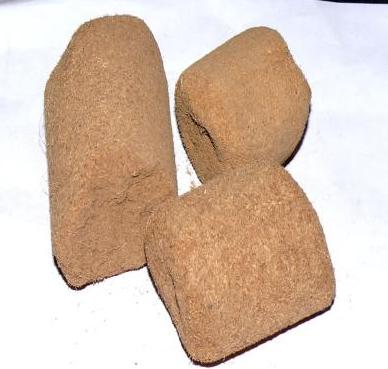 Rulvis Glycyrrhizae Extractionis Sedilis
: clear heat, cool blood and remove toxicity.
Something this article did not cover?
Ask us directly. We reply within two days, and good questions become public articles.
Ask a question →