
Dan Ye Xue Pen Cao (Unileaf Sage)
Dan Ye Xue Pen Cao (unileaf sage): slightly bitter and cool; used to stop bleeding and clear damp-heat.
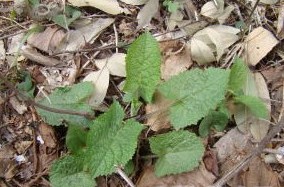
Name
Dan Ye Xue Pen Cao (Herba Salviae Simplicifoliae)
Sources
The drug is the dried root or whole herb of Salvia cavaleriei Lévl. var. simplicifolia Stib. (family Labiatae), growing in shrubs and woods, on hillslopes and gully sides, distributed in Sichuan, Guizhou, Hubei, Yunnan, Hunan, Jiangxi, Guangdong, Guangxi.
The Effect of Herba Salviae Simplicifoliae
Property
Slightly bitter, cool.
Actions
The whole herb is used to stop bleeding and eliminate damp-heat; for the treatment of cough, hematemesis, metrorrhagia, dysentery with bloody stool, traumatic bleeding.
Dosage and Administrations
Decoct 15~30 g. Proper dosage is for external application, pounded into powder for applying on the affected area.
Did this article help you?
Your answer directly shapes how this article gets rewritten. Several sections on this site exist because readers asked for them.
Keep readingRelated for you
单叶血盆草
Name Dan Ye Xue Pen Cao (Herba Salviae Simplicifoliae) Sources The drug is the dried root or whole herb of Salvia cavaleriei Lévl. var. simplicifolia Stib.
Dan Ye Xue Pen Cao
Dan Ye Xue Pen Cao: the whole herb is used to stop bleeding and eliminate damp-heat; for the treatment of cough, vomiting blood, metrorrhagia, dysentery with bloody stool, traumatic bleeding.
 Di Yu
Name Di Yu (Radix Sanguisorbae) — Shennong Bencao Jing Source and quality Plant The root of perennial herb Sanguisorba officinalis L. or root of S. officinalis L. var.
Di Yu
Name Di Yu (Radix Sanguisorbae) — Shennong Bencao Jing Source and quality Plant The root of perennial herb Sanguisorba officinalis L. or root of S. officinalis L. var.
Something this article didn't cover?
Ask us directly — we reply within 2 days. Great questions become public articles.
Ask a question →