
Heat-Clearing and toxicity-Removing Herbs
Shan Hai Luo (Radix Codonopsis Lanceolatae)
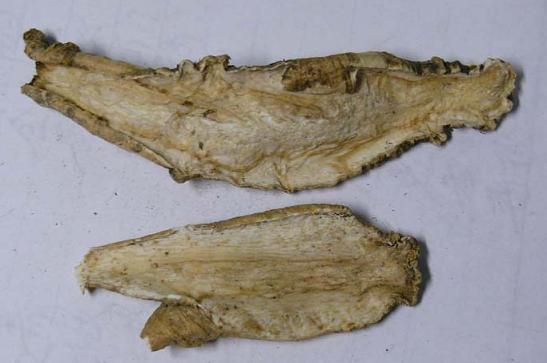
Name
Shan Hai Luo (Lance Asiabell Root)
Sources
The drug is the dried root of Codonopsis lanceolata (Sieb. et Zucc.) Trautv. (family Campanulaceae), growing in woods, damp soils along creeks, and distributed in Northeast China, Northern China, Eastern China and Henan, Hubei, Guangdong, Guangxi.
The Effect of Lance Asiabell Root
Property
Sweet, pungent, neutral; spleen and lung meridians entered.
Actions
Resolve swelling, remove toxicity, discharge pus, eliminate phlegm and promote milk-secretion.
Indications
Scrofula, leucorrhea, boils, pulmonary abscess, acute mastitis, appendicitis, oligogalactia, tonsillitis.
Dosage and Administrations
Decoct 15~60 g, 45~120 g with fresh product. Proper dosage is for external application, pounded for applying with fresh product.
Cautions
It is contraindicated for the early stage of external pathogens and people without sweat. It is antagonistic to Li Lu.
Sources and further reading
We cite classical materia medica and modern reference works. This article is health education, not medical advice.
- Shennong Bencao Jing (The Divine Farmer's Materia Medica), Han dynasty.
- Bencao Gangmu (Compendium of Materia Medica), Li Shizhen, 1578.
- Chinese Pharmacopoeia, current edition — identity, quality and safety monographs.
- NCCIH and WHO reference material on traditional medicine safety.
Spotted an error or a better source? Tell us — corrections are logged on our editorial policy page.
Did this article help you?
Your answer shapes what gets rewritten next.
Keep readingRelated entries
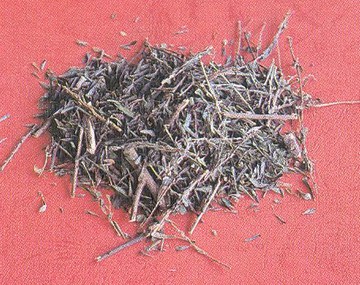 Qian Li Guang (Herba Senecionis Scandentis)
Climbing Groundsel Herb: clear heat and remove toxicity, kill parasites and improve vision.
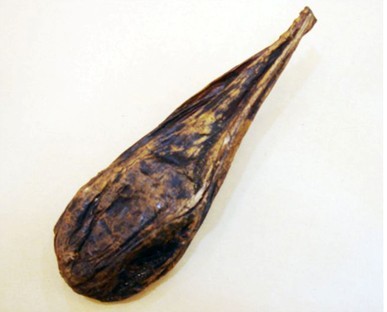 Bear Gall: Chinese Herb Guide
Bear Gall: clear heat and relieve spasm, improve the eyesight and kill parasites.
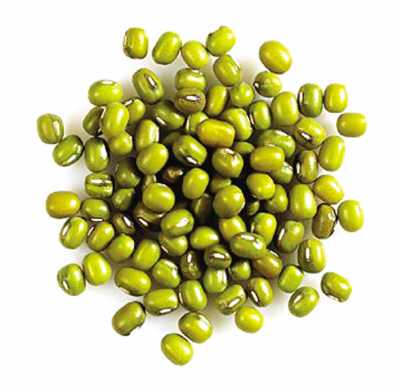 Mung Bean: Chinese Herb Guide
Mung Bean: clear heat and remove toxicity, relieve summer-heat and promote diuresis.
 Bai Ying (Herba Solani Lyrati)
Bittersweet Herb: clear heat, eliminate dampness, expel wind and remove toxicity.
Something this article did not cover?
Ask us directly. We reply within two days, and good questions become public articles.
Ask a question →