
Offensive Purgatives
Lu Hui: Chinese Herb Guide
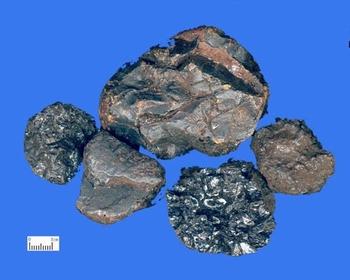
Naming
Lu Hui (Aloe)——Yao Xing Lun (Treatise on Herb Property)
The Processing of Lu Hui
Origin
The concentrated juice exsiccation of Aloe barbadensis Miller. or A. ferox Miller of family Lily. The former is called Lao Lu Hui, while the latter is known as Xin Lu Hui.
Location
Mainly in Africa, also produced in Yunnan, Guangdong and Guangxi provinces of China.
Harvest
The juice of plant can be gathered and then decocted into dense paste all over the year.
The actual smell and taste
Special stink smell, extremely bitter taste.
Best quality
Dark green or dark brown, crisp, strong smell.
The Effect of Lu Hui
Property
Bitter, cold; large intestine, liver and stomach meridians entered.
Actions
Relax bowels with purgative, clear liver fire, expel ascarid.
Indications
A. Constipation due to heat accumulation
Being bitter and cold with the action of purgation and heat clearing, it can both relax bowels with purgative and clear heat, which is similar to that of Da Huang. Since it also excels at clearing liver fire and relieving feverish dysphoria, it is much suitable for treating heat constipation accompanied with hyperactivity of liver fire manifested as restless and insomnia, and often combined with heat-clearing and tranquilizing herbs, for example, Zhu Sha in Geng Yi Wan from Yi Xue Guang Bi Ji (Comprehensive Medical Notes).
B. Excess fire in liver meridian
It excels at clearing liver fire and is indicated for excess fire in liver meridian manifested as constipation, yellow urination, dizziness and headache, irritable, convulsion. It is often combined with liver fire-purging herbs, for example, Long Dan, Zhi Zi, Qing Dai, etc. , as in Dang Gui Lu Hui Wan from Yi Xue Liu Shu (Six Books of Medicine).
C. Children's malnutrition
It can resolve accumulation with purgative as well as expel ascarid and cure malnutrition. For children's malnutrition manifested as abdominal pain, yellowish complexion, emaciation and feeble constitution, it is often combined with ascarid-expelling, accumulation-resolving and spleen-invigorating herbs, such as Shi Jun Zi, Bing Lang, Shan Yao, etc.
Dosage and Administrations
Used in pills 1~2 g.
Cautions
It is contraindicated in cases of patients with hypo-function of stomach and spleen, poor appetite, diarrhea as well as pregnant women.
Sources and further reading
We cite classical materia medica and modern reference works. This article is health education, not medical advice.
- Shennong Bencao Jing (The Divine Farmer's Materia Medica), Han dynasty.
- Bencao Gangmu (Compendium of Materia Medica), Li Shizhen, 1578.
- Chinese Pharmacopoeia, current edition — identity, quality and safety monographs.
- NCCIH and WHO reference material on traditional medicine safety.
Spotted an error or a better source? Tell us — corrections are logged on our editorial policy page.
Did this article help you?
Your answer shapes what gets rewritten next.
Keep readingRelated entries
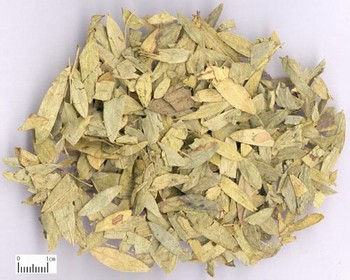 Fan Xie Ye: Chinese Herb Guide
Fan Xie Ye (Folium Sennae) — Yin Pian Xin Can (New Reference of Cut-Crude-Herb) The leaf of C. angustifolia Vahl or C
Fan Xie Ye: Chinese Herb Guide
Fan Xie Ye (Folium Sennae) — Yin Pian Xin Can (New Reference of Cut-Crude-Herb) The leaf of C. angustifolia Vahl or C
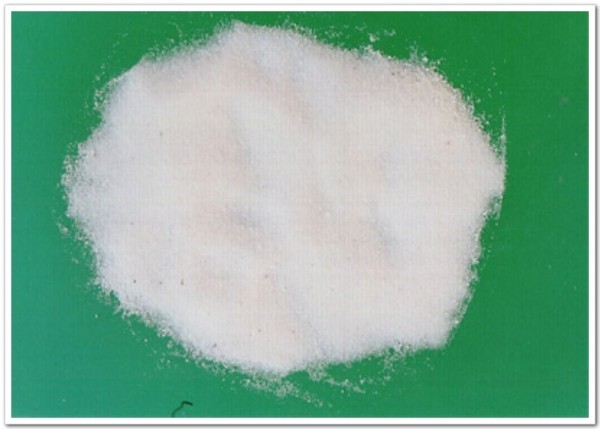 Xuan Ming Fen: Chinese Herb Guide
Xuan Ming Fen (Weathered Sodium Sulfate) Pungent, salty, cold; stomach, heart, lung and large intestine channels
Xuan Ming Fen: Chinese Herb Guide
Xuan Ming Fen (Weathered Sodium Sulfate) Pungent, salty, cold; stomach, heart, lung and large intestine channels
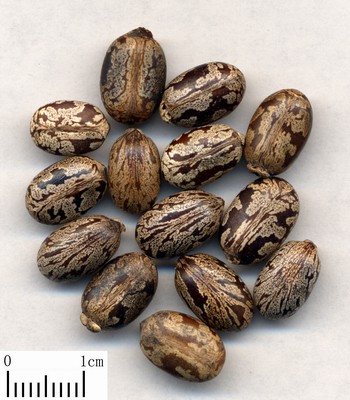 Bi Ma Zi: Chinese Herb Guide
Bi Ma Zi: resolve swelling and draw out poison, unblock stagnation with purgative.
What Aloe vera Does in TCM, and How to Use It Well
Ask a TCM practitioner about Aloe vera and you usually get two answers at once.
Bi Ma Zi: Chinese Herb Guide
Bi Ma Zi: resolve swelling and draw out poison, unblock stagnation with purgative.
What Aloe vera Does in TCM, and How to Use It Well
Ask a TCM practitioner about Aloe vera and you usually get two answers at once.
Something this article did not cover?
Ask us directly. We reply within two days, and good questions become public articles.
Ask a question →