
Yang Tonics
Lu Rong (Cornu Cervi Pantotrichum)
Name
Lu Rong (Cornu Cervi Pantotrichum, velvet antler), from Shen Nong Ben Cao Jing (Shen Nong's Herbal)
Source and quality
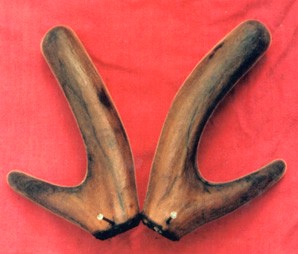
This herb is the hairy, non-ossifying young antler of the male deer or stag of Cervus nippon Temminck or C. elaphus Linnaeus, vertebrae of the family Cervidae. The former is commonly called Hua Lu Rong, the pilose antler from Cervus nippon Temminck, and the latter Ma Lu Rong, that from C. elaphus Linnaeus.
It is produced in northeast, northwest and southwest China, and is sawn and processed in summer or autumn.
Hua Lu Rong has a slight stench and is slightly salty; Ma Lu Rong has a stinking odor and is salty in flavor.
Good Hua Lu Rong is thick and strong, straight and round, with a well-developed tip and soft, red-yellow hair, and a smooth, shiny red-brown fur. Good Ma Lu Rong is plump but light, with grey-black or grey-yellow hair and no ridges at the lower part.
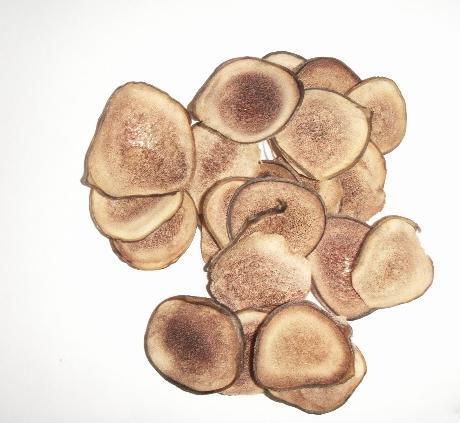
It is cut into thin pieces and smashed into a powder.
Nature and action
Sweet and salty, and warm. It enters the kidney and liver meridians.
It tonifies the kidney and liver, supplements essence and blood, strengthens the tendons and bones, reinforces the Chong Mai and the Ren Mai, and promotes healing by expelling pus through strengthening the vital qi.
Indications
Kidney yang deficiency syndrome
This herb can supplement the liver and kidney, and it is an important herb that tonifies kidney yang, essence and blood, because it strongly warms kidney yang and reinforces essence and blood. It is indicated for kidney yang deficiency syndrome and for insufficiency of essence and blood, which usually appear as aversion to cold with cold extremities, impotence and spermatorrhea, sterility caused by a cold uterus, frequent urination, soreness and pain in the lumbar region and knees, vertigo and tinnitus, fatigue and mental fatigue.
It is applied on its own or together with other herbs.
- Lu Rong is applied with Ren Shen and Shu Di Huang in Shen Rong Gu Ben Wan from Si He Ting Ji Fang (Collected Prescriptions from the Sihe Pavilion).
- It is used with Ren Shen, Huang Qi, Shu Di Huang, Rou Cong Rong and other herbs in Lu Rong Wan from Sheng Hui Fang.
Deficiency of the liver and kidney, insufficiency of essence and blood
Lu Rong can tonify the liver and kidney, supplement essence and blood, and strengthen the tendons and bones.
- For deficiency of both the liver and kidney with insufficiency of essence and blood, marked by weak extremities, poor growth, delayed closure of the fontanel and the five retardations in children, it is often combined with other herbs that tonify the liver and kidney and supplement essence and blood, such as Shu Di Huang, Shan Yao and Shan Zhu Yu in Jia Wei Di Huang Wan from Yi Zong Jin Jian.
- For fracture, it is combined with Gu Sui Bu, Xu Duan, Zi Ran Tong and other herbs that promote blood circulation, so as to promote healing.
Deficiency cold in the Chong Mai and the Ren Mai, weakness of the Dai Mai, and menorrhagia, metrostaxis and leukorrhagia
It not only tonifies the liver and kidney and supplements essence and blood, but also regulates the function of the Chong Mai, the Ren Mai and the Dai Mai. It is therefore indicated for menorrhagia and metrostaxis caused by weakness of the Chong Mai, the Ren Mai and the Dai Mai due to deficiency of the liver and kidney.
- For menorrhagia or metrostaxis, it is combined with herbs that nourish blood and stop bleeding, such as Dang Gui, E Jiao, Hai Piao Xiao and Pu Huang from Qian Jin Fang.
- For thin, watery leukorrhagia, it is used with herbs that astringe leukorrhagia by reinforcing the kidney, such as Gou Ji, Lian Zi and Hai Piao Xiao.
Deteriorated or chronic ulcers that will not heal
Lu Rong can expel toxin by warming kidney yang and tonifying essence and blood. For a deteriorated or chronic ulcer caused by deficiency of yang, essence and blood, it is often used with herbs that tonify qi and blood, warm yang, smooth the blood vessels and activate the blood, such as Huang Qi, Dang Shen and Rou Gui.
Dosage and administration
1~3 g, ground into a fine powder to be swallowed. Three times a day, or prepared in boluses, as a compound powder, or as medicated wine.
Cautions
It is contraindicated in cases of yin deficiency with effulgent fire, heat in the blood system, excessive stomach fire, phlegm-heat in the lung, and attack by an external pathogen.
Because of its warm, ascending nature and its action of tonifying yang and heat, it should be used from a small dose up to the treatmental dose. If a large amount is used suddenly, it may result in vertigo, blood-shot eyes and syncope due to yang ascending and wind stirring, or in epistaxis, hematemesis and hematuria due to excessive fire.
Sources and further reading
We cite classical materia medica and modern reference works. This article is health education, not medical advice.
- Shennong Bencao Jing (The Divine Farmer's Materia Medica), Han dynasty.
- Bencao Gangmu (Compendium of Materia Medica), Li Shizhen, 1578.
- Chinese Pharmacopoeia, current edition — identity, quality and safety monographs.
- NCCIH and WHO reference material on traditional medicine safety.
Spotted an error or a better source? Tell us — corrections are logged on our editorial policy page.
Did this article help you?
Your answer shapes what gets rewritten next.
Keep readingRelated entries
Velvet antler (Cornu Cervi Pantotrichum)
Lu Rong: tonify kidney and liver, supplement essence and blood, strengthen tendons and bones, reinforce thoroughfare and conception vessels, and promote healing by expelling pus through strengthening vital qi.
Lu Rong (Cornu Cervi Pantotrichum)
Velvet antler: tonify kidney and liver, supplement essence and blood, strengthen tendons and bones, reinforce thoroughfare and conception vessels, and.
 Xue Lian Hua (Snow Lotus Herb)
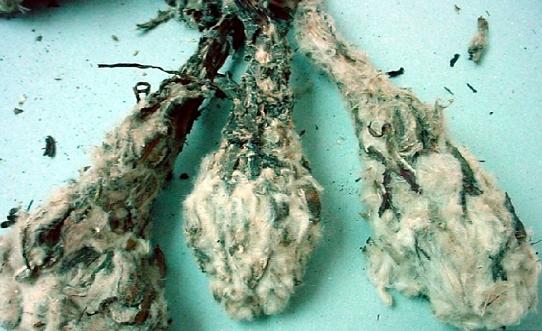
Xue Lian Hua: dispel cold and tonify yang, regulate menstruation and stop bleeding.
 Xia: Chinese Herb Guide
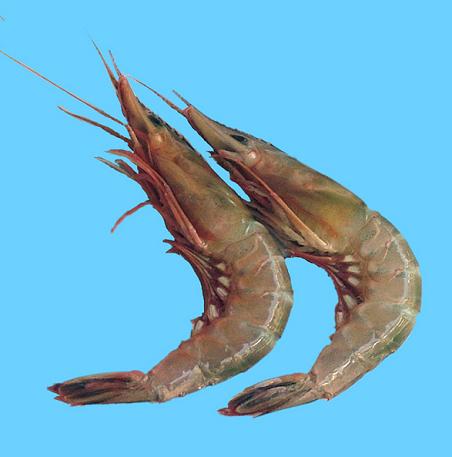
Xia (Shrimp) Sweet, warm; liver and kidney channels. Actions Tonify the kidney and strengthen yang, promote lactation and remove toxicity
Something this article did not cover?
Ask us directly. We reply within two days, and good questions become public articles.
Ask a question →