
Qian Hu (Whiteflower Hogfennel Root)
Name Qian Hu (Radix Peucedani) — Mingyi Bielu Source and quality Plant The dry root of perennial Peucedanum praeruptorum Dunn. of family Apiaceae (Umbelliferae).
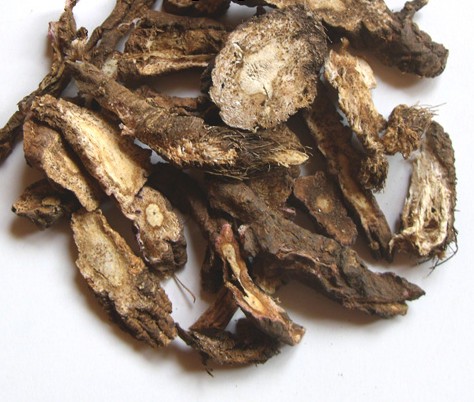
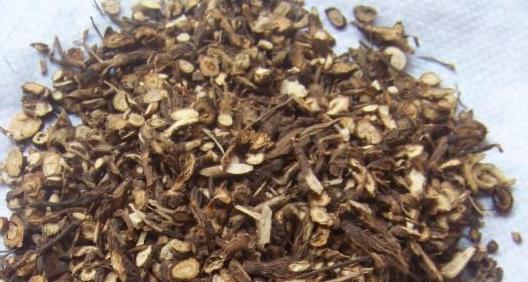
Name
Qian Hu (Radix Peucedani) — Mingyi Bielu
Source and quality
Plant
The dry root of perennial Peucedanum praeruptorum Dunn. of family Apiaceae (Umbelliferae).
Where it is grown
Zhejiang, Henan and Hunan provinces .
Harvest
Collected in autumn and winter when stem and leaves wither or in early spring before stem sprouts.
Smell and taste
Fragrant, slightly bitter and pungent.
Better grade
Thick root, thick peel, soft, oily spot on the cross section, dense fragrance.
Processing
Unprocessed or processed with honey.
Nature and action
Nature
Bitter, acrid, slightly cold; lung channel.
Actions
Dispel phlegm and direct qi downward, disperse wind-heat.
When it is used
A. Cough and wheezing due to phlegm-heat
This herb can clear heat because of its cold nature and is good at dispelling phlegm and sputum to direct lung qi downward, indicated for phlegm-heat accumulation of lung and lung failure of dispersing and descending manifested by cough, wheezing and chest fullness, unsmooth expectoration, yellow and sticky phlegm as well. For phlegm-heat accumulation of lung, it is combined with heat-clearing and phlegm-resolving herbs, as well as lung-ventilating and qi-descending herbs. For instance it is combined with Xing Ren, Sang Bai Pi and Bei Mu in Qian Hu San from Sheng Hui Fang. For the syndrome of cold-phlegm and damp-phlegm, it is combined with herbs with warm nature such as Bai Qian and Ban Xia because it is slightly but not obviously cold in nature.
B. Cough due to wind-heat
This herb is pungent in flavor and lightly cold in nature. It can not only dispel wind-heat but ventilate lung qi with the combining actions of resolving phlegm and stopping cough. For external contraction of wind-heat and profuse phlegm, it is combined with wind-heat-dispelling herbs and lung-ventilating and phlegm-eliminating herbs. For instance it is combined with Bo He and Niu Bang Zi from Shi Bing Lun (Treatise on Seasonal Diseases) with the treatment of releasing exterior by pungent-cool property. For cough due to wind-cold, it is combined with pungent-warm dispersing herbs. For instance it is combined with Sheng Jiang and Zi Su in Xing Su San from Wenbing Tiaobian.
Dose
Decoction 6~10 g, or make pill and powder. The dispersing action is obvious when used raw indicated for cough due to external contraction. The cold nature decreases when processed with honey with the mild action of moistening lung. It is mostly indicated for the syndrome of long-term cough leading to lung deficiency or dry cough with scanty phlegm.
Did this article help you?
Your answer directly shapes how this article gets rewritten. Several sections on this site exist because readers asked for them.
Keep readingRelated for you
Common Hongfennel Root (Whiteflower Hogfennel Root)
Name Qian Hu (Radix Peucedani) — Mingyi Bielu Source and quality Plant The dry root of perennial Peucedanum praeruptorum Dunn. of family Apiaceae (Umbelliferae).
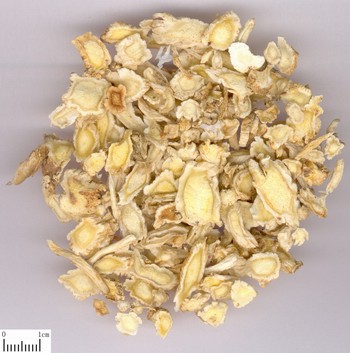 Jie Geng (Platycodon Root)
: ventilate lung, dispel phlegm, relieve sore throat, expel pus.
Qian Hu (Common Hongfennel Root)
Qian Hu (Common Hongfennel Root): dispel phlegm and direct qi downward, disperse wind-heat.
Jie Geng (Platycodon Root)
Jie Geng (Platycodon Root): ventilate lung, dispel phlegm, relieve sore throat, expel pus.
Qian Hu (Common Hongfennel Root)
Qian Hu (Common Hongfennel Root): dispel phlegm and direct qi downward, disperse wind-heat.
Something this article didn't cover?
Ask us directly — we reply within 2 days. Great questions become public articles.
Ask a question →