
Heat-Clearing and Dampness-Drying Herbs
Qin Pi: Chinese Herb Guide
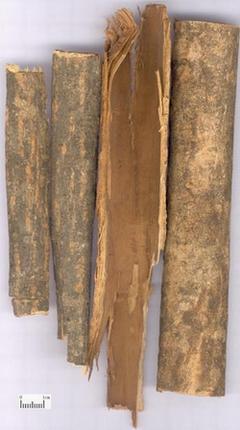
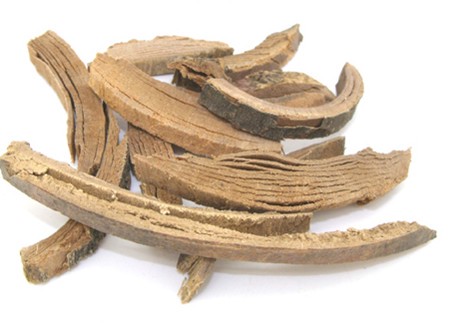
Naming
Qin Pi (Cortex Fraxini)——Shen Nong Ben Cao Jing (Shen Nong’s Herbal)
The Processing of Qin Pi
Origin
The twig skin or trunk bark of arbor plant of oleaceae-Fraxinus rhynchophylla Hance or F. chinensis Roxb.
Location
Mainly from Jilin, Liaoning and Hebei provinces in China.
Harvest
In spring and autumn.
The actual smell and taste
Non-smell and bitter taste.
Best quality
Long strip with thin, slick crust, hard texture, fabric cross section in white-yellowish color.
Processing
Unprocessed.
The Effect of Qin Pi
Property
Bitter and cold; large intestine, liver and gallbladder meridians entered.
Actions
Clear heat and dry dampness, clear the liver to improve vision, clear heat and remove toxicity.
Indications
A. Dysentary and leukorrhagia due to damp-heat
This herb is bitter in flavor and cold in nature, mainly enters large intestine to clear heat and dry dampness and has actions of slightly clearing heat and removing toxicity. For the actions of clearing heat and removing toxicity is not that strong, it is usually used as an assistant herb for herbs good at clearing heat and drying dampness and herbs good at removing toxicity and checking dysentary. For instance, it is used for checking dysentery with difficulty in emptying bowels, purulent and bloody stool, tenesmus, combined with Bai Tou Weng, Huang Lian, Huang Bai, etc. , as in Bai Tou Weng Tang from Shang Han Lun. For treating leukorrhagia due to damp-heat, it is often combined with dampness-dispelling and relieving leukorrhagia herbs such as Huang Bai and Ku Shen, which can be taken internally or applied externally. It can also be used for treating metrorrhagia, leucorrhea with reddish discharge. For instance, it is combined with Mu Dan Pi, Dang Gui in Ben Cao Hui Yan.
B. Eye Diseases due to liver heat
Being able to enter liver to clear liver heat, it is either taken internally or applied externally for treating bloodshot eyes with pain, nebula due to liver fire flaming up. When taking orally, it is often combined with other liver-clearing and vision-improving herbs. For instance, combined with Jing Jie, Zhi Zi and Chi Shao in Qing Pi San from Yong Lei Ling Fang (Sealed by Yong Lei Prescription), it is used to treat sudden bloodshot eyes with pain due to liver heat and wind heat, the decoction or the juice extraction can be used to wash eves or as eye drops. For instance, its juice extraction was used as eye drops to treat bloodshot eyes and eye sores recorded in Jin Xiao Fang (Prescription of Approaching Good Effect).
In addition, this herb can clear lung heat, relieve dyspnea and dispel wind-damp. The modern research showed that it can be used to treat cough and wheezing with profuse sputum due to lung heat, downpour of damp-heat, red, swollen, hot and pain joints.
Dosage and Administrations
Decoct 6~12g, and proper dose is for external application.
Sources and further reading
We cite classical materia medica and modern reference works. This article is health education, not medical advice.
- Shennong Bencao Jing (The Divine Farmer's Materia Medica), Han dynasty.
- Bencao Gangmu (Compendium of Materia Medica), Li Shizhen, 1578.
- Chinese Pharmacopoeia, current edition — identity, quality and safety monographs.
- NCCIH and WHO reference material on traditional medicine safety.
Spotted an error or a better source? Tell us — corrections are logged on our editorial policy page.
Did this article help you?
Your answer shapes what gets rewritten next.
Keep readingRelated entries
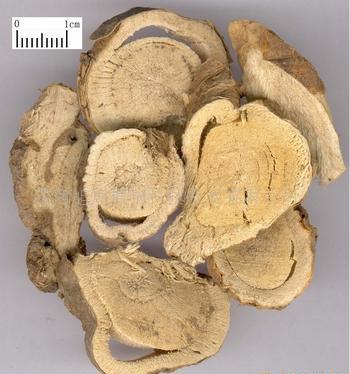 Ku Shen: Chinese Herb Guide
Ku Shen: clear heat and dry dampness, purge fire and remove toxicity, kill parasites and promote urination.
Ku Shen: Chinese Herb Guide
Ku Shen: clear heat and dry dampness, purge fire and remove toxicity, kill parasites and promote urination.
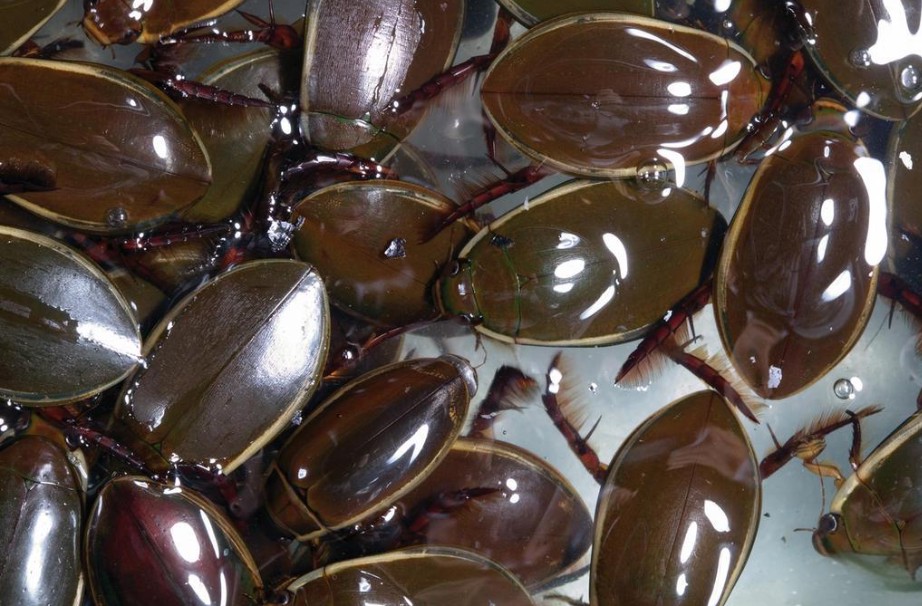 Shui Bie: Chinese Herb Guide
Shui Bie: whole herb is used as emmenagogue, for the treatment of leukorrhea with reddish discharge.
Shui Bie: Chinese Herb Guide
Shui Bie: whole herb is used as emmenagogue, for the treatment of leukorrhea with reddish discharge.
 Bai Xian Pi: Chinese Herb Guide
Nature and action Nature Bitter, slightly pungent, cold ; liver, gallbladder, spleen, stomach, lung channels. Actions Clear heat and dry dampness, remove toxicity and dispel wind.
Bai Xian Pi: Chinese Herb Guide
Nature and action Nature Bitter, slightly pungent, cold ; liver, gallbladder, spleen, stomach, lung channels. Actions Clear heat and dry dampness, remove toxicity and dispel wind.
 Ma Wei Lian: Chinese Herb Guide
Ma Wei Lian (Meadowrue Root and Rhizome) Bitter, cold; liver, heart and large intestine channels
Ma Wei Lian: Chinese Herb Guide
Ma Wei Lian (Meadowrue Root and Rhizome) Bitter, cold; liver, heart and large intestine channels
Something this article did not cover?
Ask us directly. We reply within two days, and good questions become public articles.
Ask a question →