
Radix Pulsatillae Chinensis
NamingBai tou Weng (Radix Pulsatillae Chinensis)——Shen Nong Ben Cao Jing (Shen Nong’s Herbal)The Processing of Radix Pulsatillae ChinensisOriginThe root ofPulsatilla chinensis (Bge.) Regel of family Ranunculaceae.LocationMainly in northeast areas, and Hebei, Shaanxi provinces of China.HarvestCollect
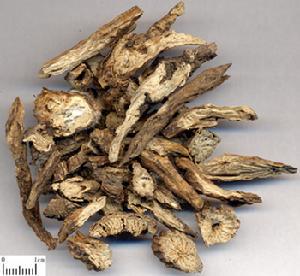
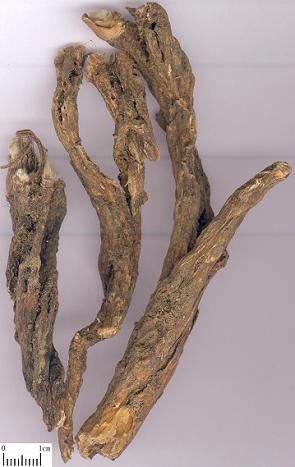
Naming
Bai tou Weng (Radix Pulsatillae Chinensis)——Shen Nong Ben Cao Jing (Shen Nong’s Herbal)
The Processing of Radix Pulsatillae Chinensis
Origin
The root ofPulsatilla chinensis (Bge.) Regel of family Ranunculaceae.
Location
Mainly in northeast areas, and Hebei, Shaanxi provinces of China.
Harvest
Collected in spring and autumn.
The actual smell and taste
Light smell and slightly bitter and astringent taste.
Best quality
Thick and long root in regularity, grayish yellow of superficial, white villus at the top of root.
Processing
Sliced, and unprocessed.
The Effect of Radix Pulsatillae Chinensis
Property
Bitter, cold; large intestine, liver and stomach meridians entered.
Actions
Clear heat and remove toxicity, cool blood and check dysentery.
Indications
A. Dysentery with blood stool due to heat-toxicity
It excels in eliminating damp-heat from stomach and intestines and clearing heat-toxicity in blood system, and is effective in treating dysentery due to damp-heat or dysentery with blood due to heat-toxicity, so it is regarded as a good herb for treating dysentery. For dysentery due to damp-heat, dysentery due to heat-toxicity, tenesmus and dysentery with bloody pus, it is often combined with heat-clearing, dampness-drying, and dysentery-checking herbs, such as Huang Lian, Huang Bai and Qing Pi, as in Bai Tou Weng Tang from Shang Han Lun. For paroxysmal dysentery with blood, abdominal pain and diarrhea, stool with blood in dark red or purplish red color, or bright red blood within white mucus, paroxysmal onset, difficult healing for a long time which is called recurrent dysentery or amebic dysentery, it can be decocted alone for oral taking or be applied by retention enema, and can also be combined with E Jiao and Chi Shi Zhi, etc.
B. Sores and abscess
With the actions of clearing heat and removing toxicity, it is also used to treat heat-toxicity syndrome such as sores, abscess, and hemorrhoids with swelling pain, etc. It is effective when the pounded products being taken orally or applied topically. It is often combined with heat-clearing and toxicity-removing, abscess-curing and nodulation-dissipating herbs so as to mutually take effect of clearing heat, cooling blood and relieving swelling such as Pu Gong Ying and Lian Qiao, etc.
In addition, it also has actions of killing worms and checking malaria, and can be used to treat pruritus vulvae, leucorrhoea seen in trichomoniasis vaginitis and malaria. For pruritus vulvae and leucorrhoea, it can be used alone or combined together with Ku Shen and Bai Bu, etc. for vaginal douche in decoction. For malaria, it is combined with Huang Qin and Chai Hu, etc.
Dosage and Administrations
Decoct 9~15g. 15~30g for treating amebic dysentery, seven days make one course; when using the fresh one, decoct 15~30g. Proper dosage is for topical applying; 30~100 g used in retention enema.
Did this article help you?
Your answer directly shapes how this article gets rewritten. Several sections on this site exist because readers asked for them.
Keep readingRelated for you
白头翁
NamingBai tou Weng (Radix Pulsatillae Chinensis)——Shen Nong Ben Cao Jing (Shen Nong’s Herbal)The Processing of 白头翁OriginThe root ofPulsatilla chinensis (Bge.) Regel of family Ranunculaceae.LocationMainly in northeast areas, and Hebei, Shaanxi provinces of China.HarvestCollected in spring and autumn.
 Herba Portulacae
NamingMa Chi Xian (Herba Portulacae)——Ben Cao Jing Ji Zhu (Explanation Collection of Materia Medica)The Processing of Herba PortulacaeOriginThe aerial parts of Portolaca oleracea L. of family Portulacaceae.LocationMost parts of China.HarvestCollected in summer and autumn.The actual smell and tasteLi
Herba Portulacae
NamingMa Chi Xian (Herba Portulacae)——Ben Cao Jing Ji Zhu (Explanation Collection of Materia Medica)The Processing of Herba PortulacaeOriginThe aerial parts of Portolaca oleracea L. of family Portulacaceae.LocationMost parts of China.HarvestCollected in summer and autumn.The actual smell and tasteLi
 山银花
NameShan Yin Hua (Flos Lonicerae Confusae)The Effect of 山银花PropertySweet, cold; lung, heart and stomach meridians entered.ActionsClear heat and remove toxicity, dispel wind and heat.IndicationsSores and boils, erysipelas, fever due to warm disease, cold due to wind-heat, pharyngitis, dysentery with
山银花
NameShan Yin Hua (Flos Lonicerae Confusae)The Effect of 山银花PropertySweet, cold; lung, heart and stomach meridians entered.ActionsClear heat and remove toxicity, dispel wind and heat.IndicationsSores and boils, erysipelas, fever due to warm disease, cold due to wind-heat, pharyngitis, dysentery with
Something this article didn't cover?
Ask us directly — we reply within 2 days. Great questions become public articles.
Ask a question →