
Stranguria-Relieving Diuretics
Bi Xie (Hypoglaucous Collett Yam Rhizome)
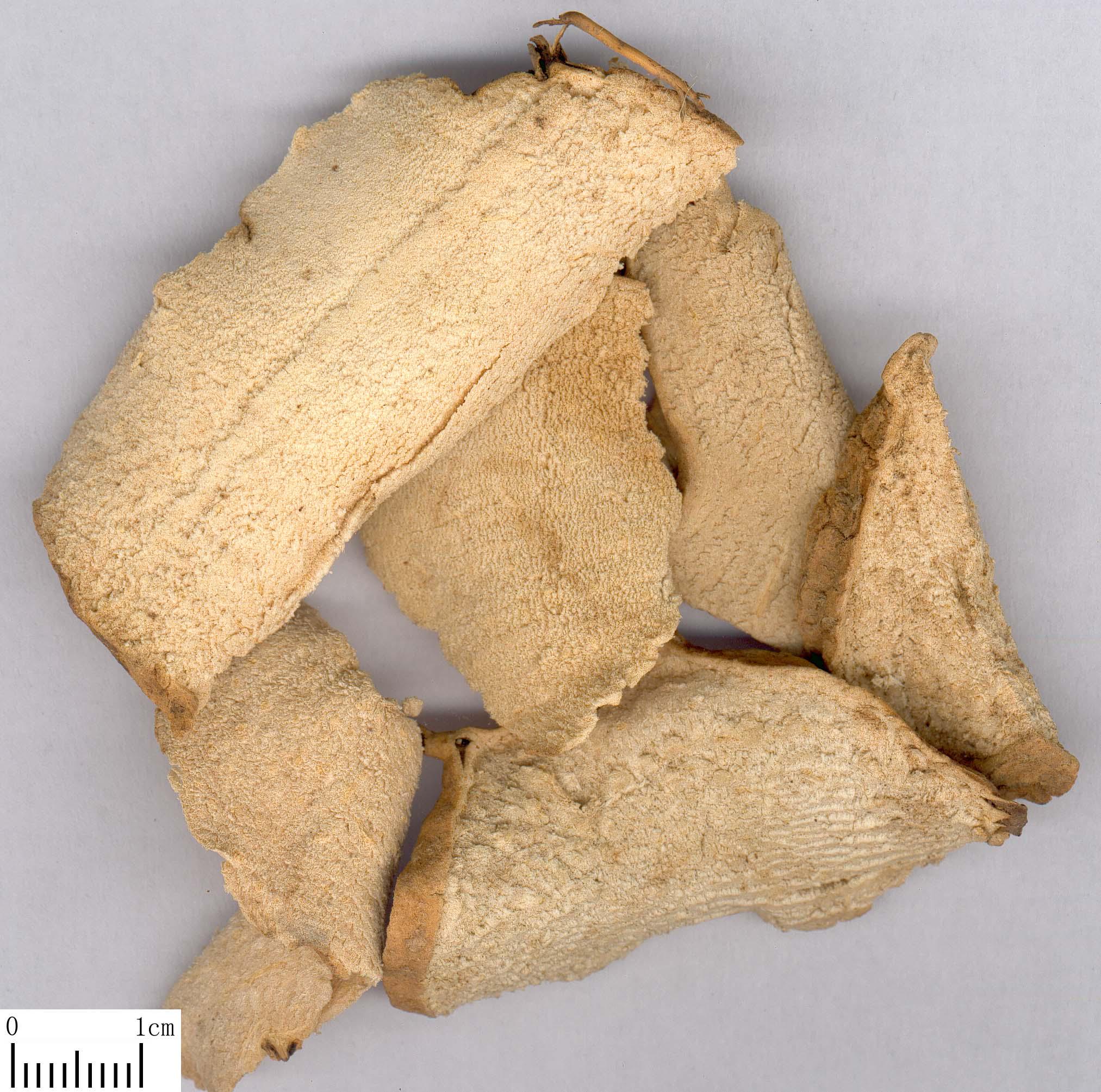
Naming
Bi Xie (Rhizoma Dioscoreae Hypoglaucae)——Shen Nong Ben Cao Jing (Shen Nong’s Herbal)
The Processing of Rhizoma Dioscoreae Hypoglaucae
Origin
The rhizome of perennial herbaceous plant Dioscorea septemloba Thunb., D. futschauensis Uline ex R. Kunth or D. hypoglauca Palibin. of family Dioscoreaceae.
Location
The first two are called Mian Bi Xie, and produced in Zhejiang and Fujian provinces. While the latter one is called Fen Bi Xie, and produced in Zhejiang, Anhui and Hunan provinces, etc.
Harvest
Dug and collected in autumn and winter.
The true smell and taste
Mian Bi Xie is slight smell and bitter. Fen Bi Xie is slight smell, pungent and slightly bitter.
Best quality
Dry, white and equal thickness of leaves.
Processing
Unprocessed.
The Effect of Rhizoma Dioscoreae Hypoglaucae
Property
Bitter, bland; kidney and stomach meridians entered.
Actions
Excrete damp-turbidity, dispel wind-damp.
Indications
A. Chylous stranguria, turbid and milky urine, leukorrhagia
It has the actions of removing dampness from yangming meridians to consolidate lower energizer, so it can separate lucidity from turbidity. It is the essential herb of chylous stranguria. As main herb it is usually indicated for chylous stranguria, turbid and milky urine. For turbid and milky urine due to deficiency-cold, it is usually combined with the herbs of warming kidney and dispersing cold, resolving turbidity and removing dampness. For instance it is combined with Wu Yao and Yi Zhi Ren in Bi Xie Fen Qing Yin from Dan Xi Xin Fa. For turbid and milky urine and dripping urine due to damp-heat, it is usually combined with the heat-clearing, dampness-drying and dampness-excreting herbs. For instance, it is combined with Huang Bai, Che Qian Zi and Shi Chang Pu in Bi Xie Fen Qing Yin from Yi Xue Yin Wu.
It has the actions of excreting dampness and resolving turbidity, so it is also indicated for leukorrhagia due to excessive dampness; it is usually combined with the dampness-excreting herbs such as Zhu Ling, Bai Zhu and Ze Xie.
B. Wind-damp arthralgia
It has the actions of dispelling wind and removing dampness, relaxing tendons and unblocking collaterals. It is good at treating lumbar and knee pain, limitation of bent and extend of limbs. For cold-damp dominance, it should be combined with the cold-damp-dispelling herbs. For instance, it is combined with Fu Zi and Niu Xi in Bi Xie Wan from Sheng Ji Zong Lu. For damp-heat dominance, it should be combined with the damp-heat-clearing herbs such as Huang Bai, Ren Dong Teng and Fang Ji.
Dosage and Administrations
Decoct 5~10 g.
Sources and further reading
We cite classical materia medica and modern reference works. This article is health education, not medical advice.
- Shennong Bencao Jing (The Divine Farmer's Materia Medica), Han dynasty.
- Bencao Gangmu (Compendium of Materia Medica), Li Shizhen, 1578.
- Chinese Pharmacopoeia, current edition — identity, quality and safety monographs.
- NCCIH and WHO reference material on traditional medicine safety.
Spotted an error or a better source? Tell us — corrections are logged on our editorial policy page.
Did this article help you?
Your answer shapes what gets rewritten next.
Keep readingRelated entries
Bi Xie: Chinese Herb Guide
Name Bi Xie (Rhizoma Dioscoreae Hypoglaucae) — Shennong Bencao Jing Source and quality Plant The rhizome of perennial Dioscorea septemloba Thunb., D. futschauensis Uline ex R.
 Shi Wei: Chinese Herb Guide
Shi Wei: promote urination to treat strangury, clear lung-heat to relieve cough, cool blood to stop bleeding.
 Spora Lygodii: Chinese Herb Guide
Hai Jin Sha (Spora Lygodii) — Jia You Ben Cao (Jia You Materia Medica) The mature spore of the perennial climbing fern Lygodium japonicum (Thunb.) sw
 Dianthus Superbus (Herba Dianthi)
Induce diuresis to treat stranguria, activate blood and induce menstruation. Bitter, cold; heart, small intestine and bladder meridians entered.
Something this article did not cover?
Ask us directly. We reply within two days, and good questions become public articles.
Ask a question →