
Ting Li Zi (Tansymustard Seed)
Ting Li Zi (Tansymustard Seed) purges the lung to relieve dyspnea and induces diuresis to alleviate edema. Its action is strong, so use with caution in lung qi deficiency and spleen deficiency.
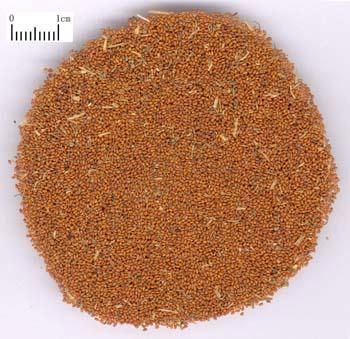
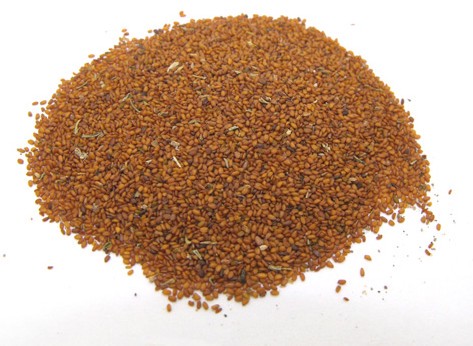
Name
Ting Li Zi (Semen Lepidii), from Shen Nong Ben Cao Jing (Shen Nong's Herbal)
Source and quality
The dry ripe seed of Descurainia sophia (L.) Webb ex Prantl. or Lepidium apetalum Wild. of the family Cruciferae.
The Descurainia from Jiangsu, Anhui and Zhejiang provinces is called Nan Ting Li; the Lepidium from Hebei, Liaoning and Inner Mongolia Autonomous Region is called Bei Ting Li.
The plant is collected in summer once the seed is ripe, dried in the sun to release the seed, and the impurities are removed. It is used raw or stir-baked.
Nan Ting Li has a slight odor and is slightly pungent with a sticky taste. Bei Ting Li has no unpleasant odor and is slightly bitter and pungent, with a strongly sticky taste. The best grade is even, full, yellowish-brown and free from impurities.
Nature and action
Bitter, pungent and extremely cold. It enters the lung and bladder meridians.
It purges the lung to relieve dyspnea, and induces diuresis to alleviate edema.
Indications
Cough and dyspnea due to phlegm congestion in the lung
Because it is bitter and cold, and descending, purging, dispersing and clearing heat, it is the key herb for cough and dyspnea with lung heat and phlegm, and it is especially good at purging the lung to relieve dyspnea. It is indicated for phlegm congesting the lung and disrupting its purifying and descending function, with symptoms of cough and dyspnea, a feeling of fullness in the chest, and inability to lie down.
It is often assisted with herbs that moderate its bitter and cold nature, and it is combined with Da Zao in Tingli Dazao Xiefei Tang from Jin Kui Yao Lue. For cough and dyspnea due to lung heat with water retention, it is combined with herbs that clear the lung and relieve dyspnea, such as Sang Bai Pi and Xing Ren.
Edema, pleural and peritoneal fluid
Because it induces diuresis and directs qi downward to regulate the passage of fluid and disperse dampness, it is indicated for edema and dysuria, and it is a strong herb for inducing diuresis and alleviating edema. It suits edema, pleural and peritoneal fluid, and dysuria caused by obstruction of lung qi, disturbed qi function and blockage of the passage of fluid.
- For peritoneal fluid due to damp-heat, it is combined with Fang Ji, Jiao Mu and Da Huang in Fang Ji Jiao Mu Ting Li Da Huang Wan to strengthen the diuretic action.
- For thoracic accumulation syndrome with swelling of the chest and hypochondria due to combined phlegm and heat, it is combined with herbs that clear heat and induce diuresis, such as Xing Ren, Da Huang and Mang Xiao in Daxianxiong Tang from Shang Han Lun.
- For deficiency-cold edema, it is combined with herbs that tonify qi and yang, such as Ren Shen, Fu Zi and Huang Qi.
Dosage and administration
Decoct 3~10 g. As a powder, take 3~6 g.
Cautions
Its action is strong and it can damage the healthy qi, so it suits excess syndromes. Use with caution in cough due to lung qi deficiency and in edema due to spleen deficiency.
Did this article help you?
Your answer directly shapes how this article gets rewritten. Several sections on this site exist because readers asked for them.
Keep readingRelated for you
Ting Li Zi
Name Ting Li Zi (Semen Lepidii) — Shennong Bencao Jing Source and quality Plant The dry ripe seed of Descurainia sophia (L.) Webb ex Prantl. or Lepidium apetalum Wild.
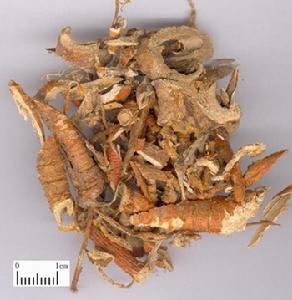 Sang Bai Pi (White Mulberry Root-bark)
: purge lung to relieve wheezing, promote urination to ease edema.
Ting Li Zi (Tansymustard Seed)
Ting Li Zi (Tansymustard Seed): purge lung to relieve wheezing, promote urination to ease edema.
Sang Bai Pi (White Mulberry Root-bark)
Sang Bai Pi (White Mulberry Root-bark): purge lung to relieve wheezing, promote urination to ease edema.
Ting Li Zi (Tansymustard Seed)
Ting Li Zi (Tansymustard Seed): purge lung to relieve wheezing, promote urination to ease edema.
Something this article didn't cover?
Ask us directly — we reply within 2 days. Great questions become public articles.
Ask a question →