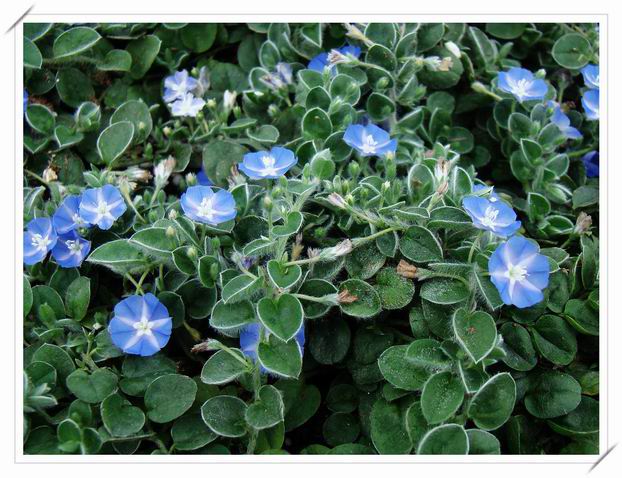
土丁桂
Name Tu Ding Gui (Common evolvulus herb) Sources The drug is the dried or fresh whole herb of Evolvulus alsinoides L.
Name
Tu Ding Gui (Common evolvulus herb)
Sources
The drug is the dried or fresh whole herb of Evolvulus alsinoides L. (Family Convolvulaceae), growing on grass slopes, in scrubs or along roadsides, and distributed in Southern China.
The Effect of 土丁桂
Property
Pungent, bitter, cool; liver, spleen and kidney meridians entered.
Constituents
Whole contains flavonoid glycosides, phenols, amino acids, saccharides, sitosterol, betaine, etc.
Actions
Whole herb is used as antiasthma, antipyretic, diuretic, antioncotic and analgesic, for the treatment of jaundice, dysentery, stranguria with turbid urine, leukorrhea, indigestion, urinic system infection, hematuria, asthma, cough, externally for scabies and traumatic injury.
Dosage and Administrations
Decoct 3~10 g, or 30~60 g of the fresh, or pounded into juice for drinking. Proper dosage is for external application, pounded for applying or decocted for washing.
Did this article help you?
Your answer directly shapes how this article gets rewritten. Several sections on this site exist because readers asked for them.
Keep readingRelated for you
Tu Ding Gui
Tu Ding Gui: whole herb is used as antiasthma, antipyretic, diuretic, antioncotic and analgesic, for the treatment of jaundice, dysentery, strangury with turbid urine, leukorrhea, indigestion, urinic system.
 Shui Lian Suo
: clear heat, eliminate dampness, resolve phlegm, relieve cough, stop bleeding and alleviate pain.
Tu Ding Gui (Common evolvulus herb)
Tu Ding Gui (Common evolvulus herb): whole herb is used as antiasthma, antipyretic, diuretic, antioncotic and analgesic, for the treatment of jaundice, dysentery, strangury with turbid urine, leukorrhea, indigestion,.
Shui Lian Suo
Shui Lian Suo: clear heat, eliminate dampness, resolve phlegm, relieve cough, stop bleeding and alleviate pain.
Tu Ding Gui (Common evolvulus herb)
Tu Ding Gui (Common evolvulus herb): whole herb is used as antiasthma, antipyretic, diuretic, antioncotic and analgesic, for the treatment of jaundice, dysentery, strangury with turbid urine, leukorrhea, indigestion,.
Something this article didn't cover?
Ask us directly — we reply within 2 days. Great questions become public articles.
Ask a question →