
Intestine-Astringing and Diarrhea-Checking Herbs
Wu Wei Zi (Chinese Magnoliavine Fruit)
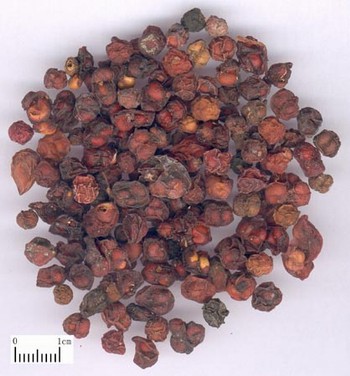
Name
Wu Wei Zi (Fructus Schisandrae), recorded in the Shennong Bencao Jing.
Source and quality
Plant
The ripe fruits of two closely related climbing plants: Schisandra chinensis (Turcz.) Baill., and Schisandra sphenanthera Rend. et Wills, both family Magnoliaceae. The first is Bei Wu Wei Zi (Northern Fructus Schisandrae), the second Nan Wu Wei Zi (Southern Fructus Schisandrae).
Where it is grown
Bei Wu Wei Zi comes mainly from the northeast; Nan Wu Wei Zi from the southwest and the southern stretches of the Yangtze valley.
Harvest
Ripe fruits are collected in autumn and dried.
Smell and taste
Bei Wu Wei Zi: faintly scented, sour, and fragrant once the seeds are crushed, with a bitter and acrid finish.
Nan Wu Wei Zi: smaller, with a reddish-brown to dark-brown wrinkled peel; the fruits and seeds are shriveled. Bei Wu Wei Zi is the better grade.
Better grade
Red, large and thick-fleshed, oily and glossy.
Processing
Used unprocessed, or steamed with vinegar or honey and then dried in the sun.
Nature and action
Sour, sweet and warm; enters the lung, heart and kidney channels. Astringes the lung and the intestines, secures essence, replenishes qi and nourishes the kidney, generates fluid to relieve thirst, and calms the mind.
When it is used
Chronic cough and wheezing of deficiency type
A key herb when lung and kidney deficiency underlie a long cough. Its sour and sweet nature lets it astringe the lung and stop coughing while also tonifying lung qi and nourishing kidney yin. For lung-deficiency cough it is decocted in plaster, sliced and used alone, or combined with other lung-astringing and cough-relieving herbs. With cough, shortness of breath and fatigue it is paired with qi tonics: Ren Shen, Huang Qi and Zi Wan in Bu Fei Tang from Yong Lei Qian Fang. When both lungs and kidneys are deficient it is combined with herbs that nourish both, as with Shan Zhu Yu, Shu Di Huang and Shan Yao in Du Qi Wan from Yi Zong Ji Ren Bian.
It is equally good at astringing the lung, and when coughing comes from retained fluid it is combined with herbs that warm the lung and move fluid, such as Xi Xin and Gan Jiang in Ling Gan Wu Wei Jiang Xin Tang from Jingui Yaolue.
Chronic diarrhea
It astringes the intestines and stops diarrhea. With spleen-deficiency diarrhea it is combined with herbs that tonify the spleen, drain dampness, warm the middle and astringe, such as Bai Zhu, Sha Ren and Rou Dou Kou; with Rou Dou Kou and Chi Shi Zhi in Dou Kou Yin from Shi Yi De Xiao Fang. For chronic diarrhea from cold deficiency of kidney and spleen it is paired with herbs that warm yang and disperse cold, as with Bu Gu Zhi, Rou Dou Kou and Wu Zhu Yu in Si Shen Wan from Nei Ke Zhai Yao.
Seminal emission and spermatorrhea
It tonifies the kidney, astringes essence and checks emission, so it is a standard choice when kidney deficiency leaves the essence gate insecure. It may be decocted into plaster alone or combined with kidney-warming and essence-astringing herbs, such as Sang Piao Xiao, Fu Zi and Long Gu in Sang Piao Xiao Wan from Shi Yi De Xiao Fang.
Spontaneous sweating and night sweats
A commonly used herb for sweating of deficiency, because it tonifies lung and heart qi and firms the exterior. With qi-deficiency spontaneous sweating it is paired with qi tonics such as Ren Shen; with yin-deficiency night sweats it is paired with yin tonics, as with Shu Di Huang, Shan Zhu Yu and Mai Dong in Mai Wei Di Huang Wan from Yi Ji.
Thirst from fluid injury and diabetes
It nourishes yin to relieve thirst and tonifies qi to help the body generate fluids. Where heat has injured both qi and yin it is combined with tonics for both, as with Ren Shen and Mai Dong in Sheng Mai San from Nei Wai Shang Bian Huo Lun. For diabetes marked by thirst and a desire to drink, where the heat arises from yin deficiency, it is combined with herbs that clear heat, nourish yin and generate fluids: Shan Yao, Zhi Mu, Tian Hua Fen and Huang Qi in Yu Ye Tang from Yi Xue Zhong Zhong Can Xi Lu.
Palpitations, insomnia and dream-disturbed sleep
It tonifies heart and kidney and calms the mind. For restlessness, palpitations, insomnia and dream-disturbed sleep arising from yin-blood deficiency with a disturbed heart and mind, or from disharmony between heart and kidney, it is combined with herbs that nourish yin, clear the heart and settle the mind, as with Mai Dong, Dan Shen, Sheng Di Huang and Suan Zao Ren in Tian Wang Bu Xin Dan from She Sheng Mi Pou.
Separately, powdered and taken orally, it is used to bring down elevated transferase levels.
Dose
Decoction 3~6 g; powder, 1~3 g a time.
Cautions
Contraindicated when an external pathogen is present, with internal excess heat, in acute cough, and in the early stage of measles.
Sources and further reading
We cite classical materia medica and modern reference works. This article is health education, not medical advice.
- Shennong Bencao Jing (The Divine Farmer's Materia Medica), Han dynasty.
- Bencao Gangmu (Compendium of Materia Medica), Li Shizhen, 1578.
- Chinese Pharmacopoeia, current edition — identity, quality and safety monographs.
- NCCIH and WHO reference material on traditional medicine safety.
Spotted an error or a better source? Tell us — corrections are logged on our editorial policy page.
Did this article help you?
Your answer shapes what gets rewritten next.
Keep readingRelated entries
Wu Wei Zi: Chinese Herb Guide
Wu Wei Zi: astringe lung and intestines, secure essence, replenish qi and nourish kidney, promote the generation of fluid to relieve thirst, calm heart and.
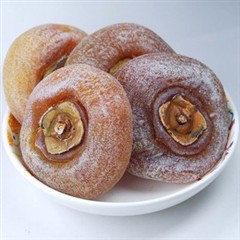 Shi Bing: Chinese Herb Guide
Shi Bing (Dried Persimmon) Sweet, neutral, slightly warm. Actions Moisten the lung, astringe the intestines, stop bleeding
Wu Wei Zi (Chinese Magnoliavine Fruit)
Wu Wei Zi (Chinese Magnoliavine Fruit): astringe lung and intestines, secure essence, replenish qi and nourish kidney, promote the generation of fluid to relieve thirst, calm heart and induce tranquilization.
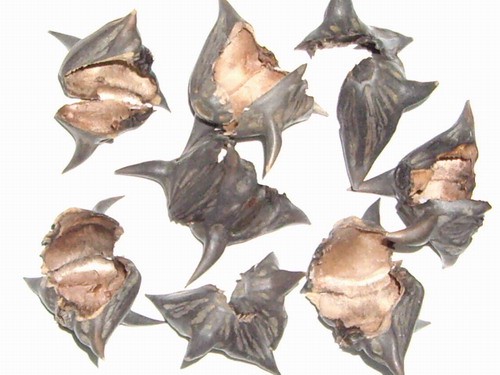 Ling Ke: Chinese Herb Guide
Ling Ke: astringe intestines to check diarrhea, stop bleeding, astringe wound and remove toxicity.
Something this article did not cover?
Ask us directly. We reply within two days, and good questions become public articles.
Ask a question →