
Interior-Warming Herbs
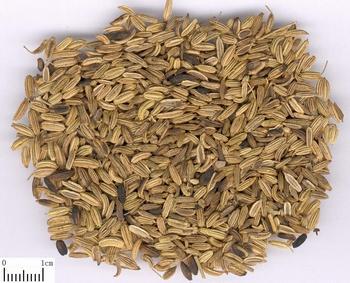
Xiao Hui Xiang (Fennel Fruit)
Naming
Xiao Hui Xiang (Fructus Foeniculi)——Xin Xiu Ben Cao (Newly Revised Materia Medica)
The Processing of 小茴香
Origin
The mature fruit of the perennial herbaceous plant Foeniculum vulgare Mill. of family Umbelliferae.
Location
All parts in China.
Harvest
Collected in autumn when the fruits begin to be ripe.
The true smell and taste
Special aroma, slightly sweet, pungent.
Best quality
Big, yellow-greenish, thick aroma.
Processing
Unprocessed or stir-baked with salty water.
The Effect of 小茴香
Property
Pungent, warm; liver, kidney, spleen and stomach meridians entered.
Actions
Dispel cold and alleviate pain, regulate qi and harmonize stomach.
Indications
A. Hernia with abdominal pain
It is the essential herbs for hernia of cold type with abdominal pain because of its actions of warming kidney and liver, promoting qi flow to alleviate pain. For hernia due to congealing cold and qi stagnation, it can be stir-baked alone and wrapped in cloth for local iron, or decocted with other qi-moving and cold-dispersing and pain-alleviating herbs. For instance it is combined with Wu Yao, Qing Pi, Mu Xiang and Gao Liang Jiang in Tian Tai Wu Yao San from Yi Xue Fa Ming. For orchidoptosis due to liver-qi stagnation, it is usually combined with the qi-moving, nodulation-dissipating and pain-alleviating herbs. For instance it is combined with Ju He and Li Zhi He in Xiang Ju San from Zhang Shi Yi Tong.
B. Dysmenorrhea
It has the actions of dispersing cold from liver meridian and promoting qi flow to alleviate pain and is indicated for abdominal cold pain due to cold in liver meridian or dysmenorrhea due to deficiency-cold of thoroughfare and conception vessels, qi stagnation and blood stasis. It is usually combined with the meridian-warming and blood-activating, qi-moving and pain-alleviating herbs. For instance it is combined with Dang Gui, Chuan Xiong, Rou Gui and Yan Hu Suo in Shao Fu Zhu Yu Tang from Yi Lin Gai Cuo.
C. Congealing cold and qi stagnation in middle energizer
It has the actions of warming middle energizer and alleviating pain, regulating spleen-stomach qi to increase appetite and arrest vomiting. For gastro-abdominal distending pain due to stomach cold and qi stagnation, it is usually combined with the middle-energizer warming herbs and qi-moving analgesics such as Gao Liang Jiang, Xiang Fu and Wu Yao. For gastro-abdominal distension, poor appetite and vomiting due to deficiency-cold of spleen-stomach, it is combined with the middle-energizer-warming, spleen-invigorating and vomiting-arresting herbs such as Bai Zhu, Chen Pi and Sheng Jiang.
Dosage and Administrations
Decoct 3~6 g. Proper dosage is for external application.
Sources and further reading
We cite classical materia medica and modern reference works. This article is health education, not medical advice.
- Shennong Bencao Jing (The Divine Farmer's Materia Medica), Han dynasty.
- Bencao Gangmu (Compendium of Materia Medica), Li Shizhen, 1578.
- Chinese Pharmacopoeia, current edition — identity, quality and safety monographs.
- NCCIH and WHO reference material on traditional medicine safety.
Spotted an error or a better source? Tell us — corrections are logged on our editorial policy page.
Did this article help you?
Your answer shapes what gets rewritten next.
Keep readingRelated entries
Hui Xiang (Fennel Fruit) in TCM
Xiao Hui Xiang: dispel cold and alleviate pain, regulate qi and harmonize stomach.
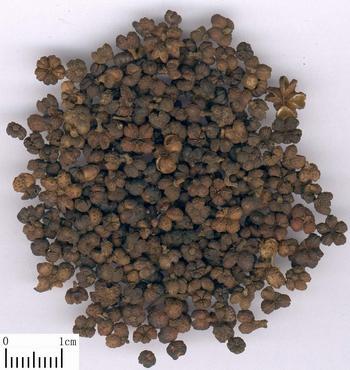 Wu Zhu Yu: Chinese Herb Guide
Wu Zhu Yu: dispel cold and alleviate pain, check adverse rise of qi and arrest vomiting, dry dampness.
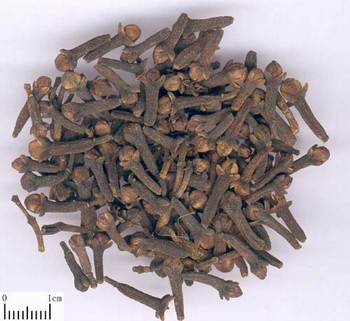 Clove (Flos Caryophylli) in TCM
Ding Xiang: warm middle burner and check adverse flow of qi, dispel cold to alleviate pain, warm kidney and reinforce yang.
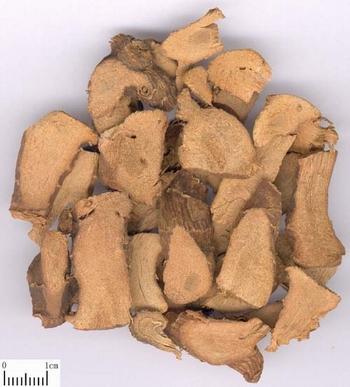 Gao Liang Jiang (Lesser Galangal Rhizome)
Gao Liang Jiang (Rhizoma Alpiniae Officinarum). The rhizome of the perennial herb Alpinia of ficinarum Hance. of family Zingiberaceae
Something this article did not cover?
Ask us directly. We reply within two days, and good questions become public articles.
Ask a question →