
Wind-Cold-Dispersing Herbs
Xin Yi (Biond Magnolia Flower)
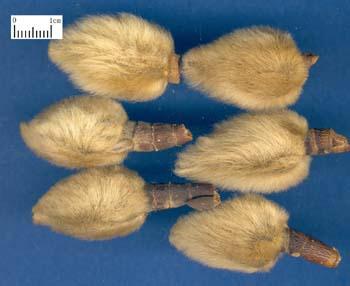
Name
Xin Yi (Flos Magnoliae)——Shen Nong Ben Cao Jing (Shen Nong’s Herbal)
The Processing of 辛夷
Origin
Bud of magnoliaceae arbors including Magnolia biondii pamp, M. denudata Desr. and M. sprengeri Pamp of family Magnoliaceae.
Location
Henan, Hubei and Sichuan provinces of China.
Harvest
Collected at the end of winter and beginning of spring before blooming.
The real smell and taste
Fragrant smell, pungent, cool and slightly bitter taste.
Best quality
Bud without blooming, dry and complete, firm inner valve, green color without twig and stalk, densely fragrant smell.
Processing
Unprocessed.
The Effect of 辛夷
Property
Pungent and warm; lung meridian entered.
Actions
Disperse wind-cold, relieve nasal obstruction.
Indications
A. Wind-cold exterior syndrome
It has similar action to that of Cang Er Zi and it also has inferior action to release exterior therefore it is not commonly used for common cold due to wind-cold without nasal stuffiness and discharge. But because of the action to relieve stuffy nose, it is often used for wind-cold syndrome, obstruction of lung orifice, fever and aversion to cold, nasal stuffiness and headache together with Cang Er Zi and Bai Zhi. For the common cold with nasal stuffiness and headache due to wind-heat, it can be used with wind-heat-dispersing herbs as Bo He and Jin Yin Hua to strengthen the effect of relieving nasal obstruction and dispelling exterior pathogens.
B. Nasal stuffiness and discharge
It has similar effect to that of Cang Er Zi to free nasal obstruction and relieve nasal stuffiness. It is the important herb to treat sinusitis, headache, nasal stuffiness and discharge. It assists wind-cold-dispersing herbs as Cang Er Zi and Bai Zhi to relieve wind-cold and free nasal cavity; it also goes with wind-heat-dispersing and lung-heat-clearing herbs as Bo He, Ju Hua, Shi Gao and Huang Qin. It's also frequently used for other rhinopathy such as acute rhinitis, chronic rhinitis and allergic rhinitis.
Dosage and Administrations
Decoct 3~10g. It has floss which stimulates throat, therefore it should be wrapped with gauze in decoction. Appropriate dosage should be applied for external application.
Sources and further reading
We cite classical materia medica and modern reference works. This article is health education, not medical advice.
- Shennong Bencao Jing (The Divine Farmer's Materia Medica), Han dynasty.
- Bencao Gangmu (Compendium of Materia Medica), Li Shizhen, 1578.
- Chinese Pharmacopoeia, current edition — identity, quality and safety monographs.
- NCCIH and WHO reference material on traditional medicine safety.
Spotted an error or a better source? Tell us — corrections are logged on our editorial policy page.
Did this article help you?
Your answer shapes what gets rewritten next.
Keep readingRelated entries
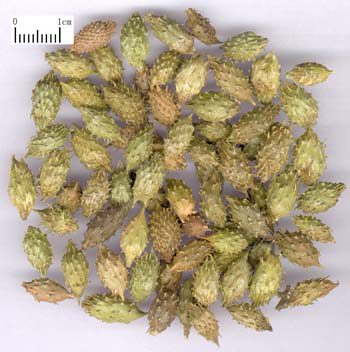 Cang Er Zi: Chinese Herb Guide
Cang Er Zi (Fructus Xanthii). Mature involucral fruit of annual Xanthium sibiricum Patr. of family Asteraceae
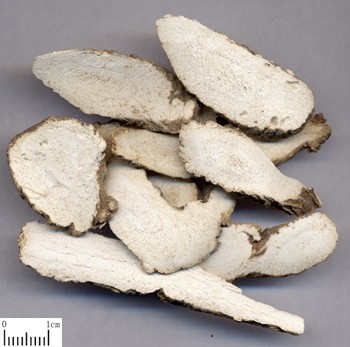 Dahurian Angelica Root (Lemonfragrant Angelica Root)
Bai Zhi: expel wind and release exterior, alleviate pain, open a stuffy nose, dry dampness and stop leukorrhea.
Is Ginger Safe? What the Evidence and TCM Tradition Say
Safety guide to Ginger in Traditional Chinese Medicine: research findings, traditional contraindications, dosing sense and who should avoid it.
How to Take Ginger: Tea, Decoction and Extract Forms Explained
How to prepare and take Ginger at home: forms, timing, classic pairings and what to look for when buying.
Something this article did not cover?
Ask us directly. We reply within two days, and good questions become public articles.
Ask a question →