
Blood-Activating Analgesics
Yan Hu Suo (Rhizoma Corydalis)
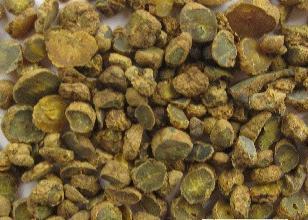
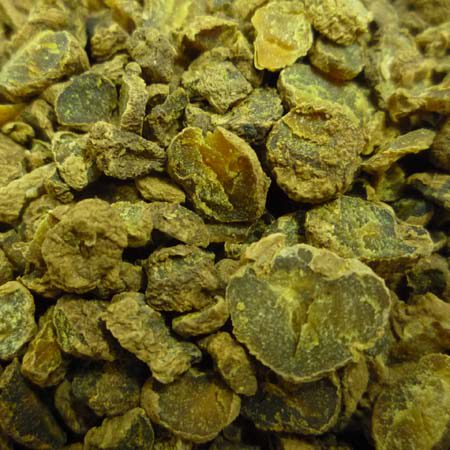
Name
Yan Hu Suo (Rhizoma Corydalis), from Lei Gong Pao Zhi Lun (Lei's Treaties on Preparation of Drugs)
Source and quality
The dry tuber of the perennial herbaceous plant Corydalis yanhusuo W. T. Wang of the family Papaveraceae. It is produced in Zhejiang, Jiangsu and Hubei provinces, and collected in early summer when the stems and leaves have withered.
It has a slight odor and a bitter taste. The best grade is large, full and firm, with a yellow cross section.
It is crushed or cut into thick slices and used raw or processed with vinegar.
Nature and action
Pungent, bitter and warm. It enters the liver, spleen and heart meridians.
It activates blood, promotes the flow of qi and relieves pain.
Indications
Yan Hu Suo unblocks blood vessels, dissolves stasis and relieves pain, which makes it a remarkable herb for activating blood, moving qi and stopping pain. It is indicated for pain of every kind when used in combination, and it is especially effective for pain in the internal Zang organs.
- Intractable stomachache: given on its own as a powder taken with wine.
- Stomachache of cold pattern: combined with interior-warming analgesics such as Gui Zhi, Hua Jiao and Gao Liang Jiang.
- Stomachache from qi stagnation: combined with qi-moving analgesics such as Xiang Fu, Mu Xiang and Sha Ren.
- Stomachache from blood stasis: combined with blood-activating analgesics such as Dan Shen and Wu Ling Zhi.
- Stomachache from middle deficiency: combined with Dang Shen, Bai Zhu and Bai Shao.
- Chest and hypochondriac pain from liver depression and qi stagnation: combined with Chai Hu and Yu Jin to strengthen the ability to soothe the liver and relieve pain.
- Gastric pain radiating to both hypochondria, when depressed liver qi turns into heat: combined with liver-soothing and heat-purging herbs and qi-moving analgesics, for example Chuan Lian Zi in Jin Ling Zi San from Su Wen Bing Ji Qi Yi Bao Ming Ji.
- Abdominal pain from hernia of cold pattern: combined with liver-soothing and qi-moving herbs and cold-dispelling analgesics such as Xiao Hui Xiang and Wu Zhu Yu.
- Dysmenorrhea, irregular menstruation and postpartum abdominal pain from stasis, when caused by qi stagnation and blood stasis: combined with blood-activating and blood-nourishing herbs and menstruation-regulating analgesics such as Dang Gui, Hong Hua and Xiang Fu.
- Traumatic injury, and swelling and pain from stasis: combined with stasis-dissolving analgesics such as Ru Xiang and Mo Yao.
- Wind-damp arthralgia: combined with wind-damp-dispelling herbs such as Qin Jiao and Wei Ling Xian.
Dosage and administration
Decoct 3~10 g. For powder use, take 1~3 g. Processing with vinegar strengthens its pain-relieving action.
Sources and further reading
We cite classical materia medica and modern reference works. This article is health education, not medical advice.
- Shennong Bencao Jing (The Divine Farmer's Materia Medica), Han dynasty.
- Bencao Gangmu (Compendium of Materia Medica), Li Shizhen, 1578.
- Chinese Pharmacopoeia, current edition — identity, quality and safety monographs.
- NCCIH and WHO reference material on traditional medicine safety.
Spotted an error or a better source? Tell us — corrections are logged on our editorial policy page.
Did this article help you?
Your answer shapes what gets rewritten next.
Keep readingRelated entries
Yuan Hu (Rhizoma Corydalis)
Yan Hu Suo (Rhizoma Corydalis). (Lei’s Treaties on Preparation of Drugs) The dry tuber of perennial Corydalis yanhusuo W. T
 Bai Hua Cai Zi (Spiderflower seed)
: expel wind-cold, activate blood and alleviate pain.
Yan Hu Suo: Chinese Herb Guide
Yan Hu Suo (Rhizoma Corydalis): activates blood, promotes the flow of qi and relieves pain. It is regarded as a remarkable herb for pain of every kind.
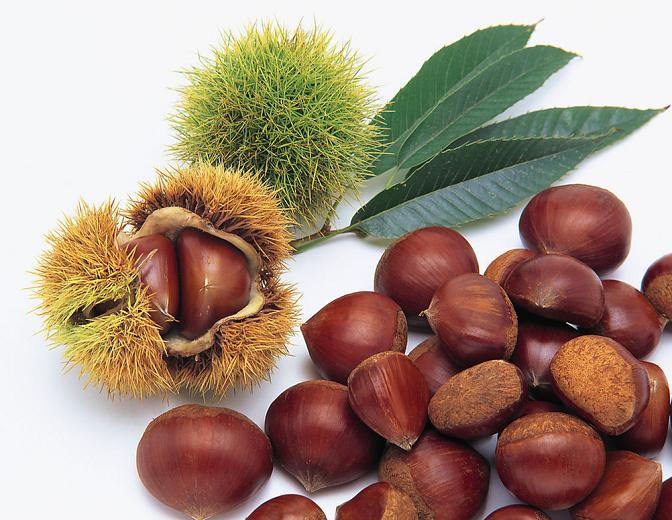 Li Zi: Chinese Herb Guide
Li Zi: nourish the stomach, strengthen the spleen, tonify the kidney and strengthen the tendons, activate blood and resolve swelling, stop bleeding.
Something this article did not cover?
Ask us directly. We reply within two days, and good questions become public articles.
Ask a question →