
Heat-Clearing and Fire-Purging Herbs
Zhi Zi (Cape Jasmine Fruit)
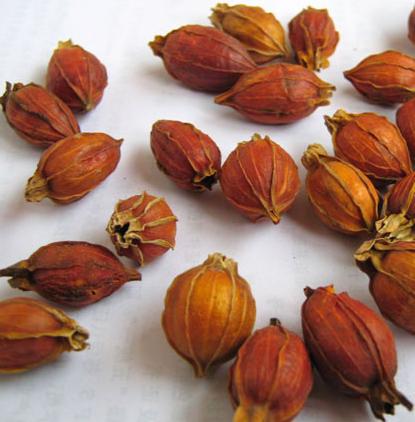
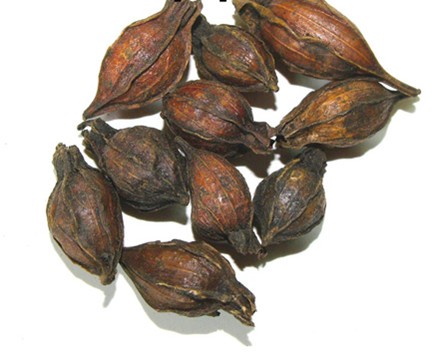
Name
Zhi Zi (Fructus Gardeniae), from Shen Nong Ben Cao Jing (Shen Nong's Herbal)
Source and quality
The ripe fruits of Gardenia jasminoides Ellis. It is produced mainly south of the Yangtze River in China, and is harvested from September to November when the fruits ripen.
It has a slight odor and a slightly sour, bitter taste. The best grade is small, full and plump, with a thin skin and a reddish-yellow color.
It is used raw or stir-baked until brown.
Nature and action
Bitter and cold. It enters the heart, liver, stomach and lung meridians.
It purges fire and eliminates irritability, cools the blood and stops bleeding, clears heat and relieves toxicity, and clears and excretes damp-heat.
Indications
Irritability and restlessness due to exuberant heat at the qi system in warm diseases
Because it is bitter in flavor and cold in nature, with strong actions of clearing and purging excess heat at the qi system, it is indicated for lingering high fever due to exuberant heat at the qi system. Because it is good at clearing heart heat and removing toxicity so as to dispel irritability, it is commonly indicated for stuffiness in the chest with irritability, depression and restlessness.
- In mild cases this herb alone can achieve good results, as in Zhizi Chi Tang from Shang Han Lun.
- In severe cases it should be combined with herbs that purge fire and relieve toxicity: Qingwen Baidu Yin from Yi Zhen Yi De (Experience on Treating Pestilence and Rashes), in which Zhi Zi is combined with Shi Gao, Zhi Mu, Huang Lian, Lian Qiao and others.
Excess heat syndromes of the heart, liver and stomach
Although it can purge fire from the triple energizer, it is especially good at clearing heat from the heart, liver and stomach meridians, so it is often indicated for heat syndromes of these three organs.
- For restlessness and delirium due to heat suppressed in the heart, it is often combined with herbs that clear heart heat, as in Qing Xin Tang from Jin Yue Quan Shu, where it is combined with Huang Lian and Lian Qiao.
- For bloodshot and swollen eyes, irritability and moodiness, and infantile convulsions due to liver heat, it is often combined with herbs that purge liver fire, as in Xieqing Wan from Xiao Er Yao Zheng Zhi Jue (Key to the Therapeutics of Children's Diseases), where it is combined with Long Dan Cao and Da Huang.
- For epigastric pain due to stomach heat it can be used on its own; for instance, it is recorded in Dan Xi Zhuan Yao (Synopsis Edition of Zhu Danxi) that it is mixed with the juice of Sheng Jiang and taken as a decoction.
- For mouth ulcers, and for sore throat and swollen gums due to up-flaring of stomach fire, it is combined with herbs that clear stomach fire, such as Huang Lian, Shi Gao and Zhi Mu.
Bleeding due to blood heat
It clears heat at the blood system and stops bleeding, and is indicated for the various hemorrhage syndromes due to blood heat, such as hematemesis, hemoptysis, non-traumatic hemorrhage and blood in the urine. For instance, in Shihui San from Shi Yao Shen Shu, it is combined with Ce Bai Ye and Qian Cao.
Heat-toxin syndromes
It clears heat and removes toxicity and is indicated for the various heat-toxin syndromes. Besides sore throat in warm diseases, it can be used for red, swollen abscesses due to heat-toxin, applied externally and taken internally at the same time.
- For instance, a single fruit is smashed and mixed with water to make a compress, as in Mei Shi Fang (Prescriptions from Master Mei).
- It can also be combined with Yin Hua, Lian Qiao and Pu Gong Ying to strengthen the effect of removing toxicity.
Jaundice and stranguria due to damp-heat
It has strong actions for clearing heat and dispelling dampness from the liver and gallbladder and for normalizing the gallbladder, so it is indicated for jaundice with scanty, dark urine due to damp-heat in the liver and gallbladder.
- It is often combined with herbs that normalize the gallbladder to treat jaundice, such as Yin Chen Hao and Da Huang, as in Yinchenhao Tang.
- For clearing damp-heat from the bladder, it is often combined with herbs that induce diuresis and treat stranguria, as in Bazheng San from Tai Ping Hui Min He Ji Ju Fang, where it is combined with Che Qian Zi and Qu Mai.
It is also good at stopping traumatic pain and relieving swelling. When raw Zhi Zi is ground into a powder and mixed with flour, egg white or smashed Chinese chives, and applied to the affected area, it can treat injuries from knocks and falls.
Dosage and administration
Decoct 5~15 g. Apply a proper dose for external application. The stir-baked brown Zhi Zi is used mainly for stopping bleeding.
Cautions
Because it is strongly bitter in flavor and cold in nature, it is unsuitable for deficiency-cold syndromes, since it readily impairs the spleen and stomach. It is contraindicated in loose stool due to spleen deficiency.
Sources and further reading
We cite classical materia medica and modern reference works. This article is health education, not medical advice.
- Shennong Bencao Jing (The Divine Farmer's Materia Medica), Han dynasty.
- Bencao Gangmu (Compendium of Materia Medica), Li Shizhen, 1578.
- Chinese Pharmacopoeia, current edition — identity, quality and safety monographs.
- NCCIH and WHO reference material on traditional medicine safety.
Spotted an error or a better source? Tell us — corrections are logged on our editorial policy page.
Did this article help you?
Your answer shapes what gets rewritten next.
Keep readingRelated entries
Shan Zhi (Cape Jasmine Fruit)
Purge fire and eliminate irritability, cool blood and stop bleeding, clear heat and relieve toxicity, clear an.
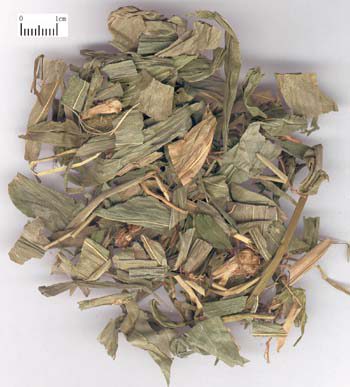 Zhu Ye (Common Lophatherum Herb)
Dan Zhu Ye (Herba Lophatheri) — Bencao Gangmu The stem leaf of gramineae perennial herb lophathenum gracile Brongn
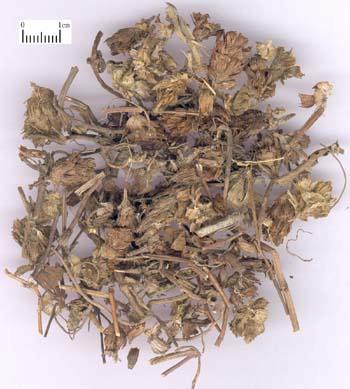 Xia Ku Cao (Selfheal Spike)
Xia Ku Cao (selfheal spike): clears liver fire, eases red sore eyes and dizziness, and is used for phlegm-fire lumps — dose 10–15 g.
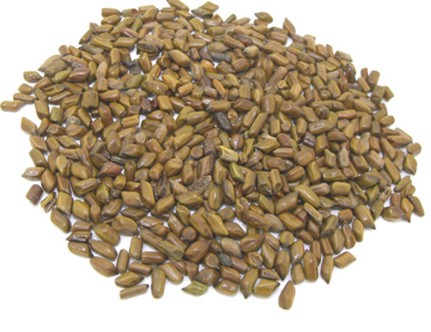 Cao Jue Ming (Sickle senna seed)
Name Jue Ming Zi (Semen Cassiae) — Shennong Bencao Jing Source and quality Plant The ripe seed of annual herb Cassia obtusifolia L. or C. tora L. of family Fabaceae.
Something this article did not cover?
Ask us directly. We reply within two days, and good questions become public articles.
Ask a question →