
Cold-Phlegm-Warming and Resolving Herbs
Bai Jie Zi (White Mustard Seed)
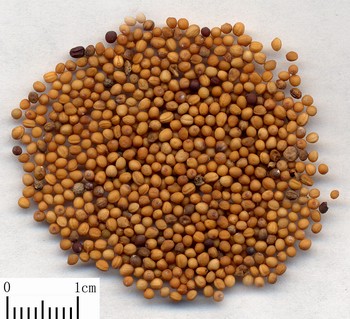
Name
Bai Jie Zi (Semen brassicae), from Ming Yi Bie Lu (Miscellaneous Records of Famous Physicians)
Source and quality
The dry ripe seed of the annual or perennial herbaceous plant Sinapis alba L. or Brassica juncea (L.) Czern. et Coss. of the family Cruciferae. It is produced in Anhui, Henan and Sichuan provinces, and collected at the end of summer and the beginning of autumn once the fruit has ripened.
It has a slight odor and a pungent taste. The best grade is regular and full.
It is used raw or stir-baked.
Nature and action
Pungent and warm. It enters the lung and stomach meridians.
It warms the lung and dispels phlegm, promotes the flow of qi and dissipates nodulation, resolves swelling and alleviates pain.
Indications
Cough and dyspnea due to cold-phlegm, with chest fullness and hypochondriac pain
This herb can dispel cold from the lung, promote the flow of qi and resolve cold-phlegm.
- For cough, dyspnea and profuse, clear expectoration caused by accumulation of cold-phlegm in the lung with unsmooth flow of qi, it is usually combined with herbs that direct qi downward and resolve phlegm, and with antiasthmatic herbs, such as Su Zi and Lai Fu Zi in Sanzi Yangqin Tang from Han Shi Yi Tong (Han's Experience Collection).
- For cough, dyspnea, chest fullness and hypochondriac pain, together with a strong constitution and abundant qi, it is combined with herbs that eliminate phlegm and drive out retained water, such as Gan Sui and Da Ji.
- For chest wheezing with copious sputum, it is combined with Xi Xin, Gan Sui and She Xiang, ground into a powder and applied to the acupoints Feishu (B13) and Gaohuang (B43).
Deep-rooted carbuncle of the yin type and multiple abscesses, numbness of the body, swollen and painful joints
This herb warms and dredges the meridians and collaterals, resolves swelling, dissipates nodulation and alleviates pain.
- Ground into a powder on its own and mixed with vinegar for external application, it warms and dredges the meridians and vessels, eliminates phlegm and dispels cold. It is indicated for deep-rooted carbuncle of the yin type and for multiple abscesses caused by damp-phlegm obstructing the meridians and collaterals.
- It is usually combined with herbs that activate blood and dredge the meridians, and with analgesics that promote the flow of qi, to strengthen the action when treating numbness of the body and swelling and pain of the joints caused by phlegm and dampness obstructing the meridians and collaterals. For instance it is combined with Mu Bie Zi, Mo Yao, Rou Gui and Mu Xiang, and the powder is taken with wine in Bai Jie Zi San from Fu Ren Da Quan Liang Fang.
- It is commonly combined with herbs that warm yang, dispel cold and nourish blood. For instance, in order to warm yang, remove stagnation, resolve phlegm and dissipate nodulation, it is combined with Lu Jiao Jiao, Rou Gui, Pao Jiang and Shu Di in Yanghe Tang from Wai Ke Quan Sheng Ji (Life-Saving Manual of Diagnosis and Treatment of External Diseases).
Dosage and administration
Decoct 3~6 g. Make it into a powder; a proper dose is used for external application.
Cautions
This herb is strongly irritating to the skin and mucous membranes and readily causes redness, swelling and blistering, so it is contraindicated in anyone with digestive tract ulcer or bleeding, and in those with skin allergy. Do not use overdose.
Sources and further reading
We cite classical materia medica and modern reference works. This article is health education, not medical advice.
- Shennong Bencao Jing (The Divine Farmer's Materia Medica), Han dynasty.
- Bencao Gangmu (Compendium of Materia Medica), Li Shizhen, 1578.
- Chinese Pharmacopoeia, current edition — identity, quality and safety monographs.
- NCCIH and WHO reference material on traditional medicine safety.
Spotted an error or a better source? Tell us — corrections are logged on our editorial policy page.
Did this article help you?
Your answer shapes what gets rewritten next.
Keep readingRelated entries
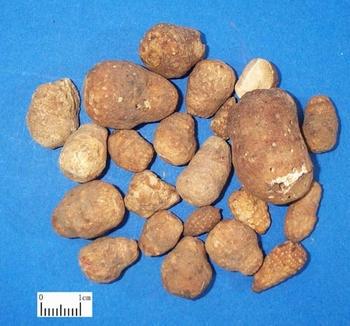 Yu Bai Fu (Giant Typhonium Rhizome)
: dispel wind-phlegm, dry damp-phlegm, stop spasms, alleviate pain, relieve toxicity and dissipate nodulation.
Bai Fu Zi (Giant Typhonium Rhizome)
Yu Bai Fu: dispel wind-phlegm, dry damp-phlegm, stop spasms, alleviate pain, relieve toxicity and dissipate nodulation.
Bai Jie Zi (White Mustard Seed)
Bai Jie Zi: warm lung and dispel phlegm, promote qi flow and dissipate nodulation, resolve swelling and alleviate pain.
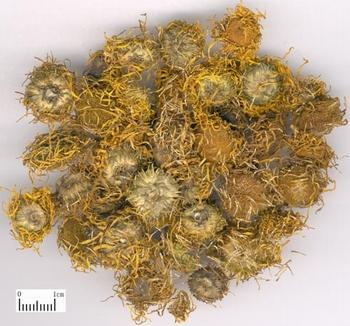 Xuan Fu Hua (Inula Flower)
Xuan Fu Hua: direct qi downward and resolve phlegm, check adverse flow of qi and stop vomiting.
Something this article did not cover?
Ask us directly. We reply within two days, and good questions become public articles.
Ask a question →