
Culture Origin of TCM
Con***ianism: TCM Concept Guide
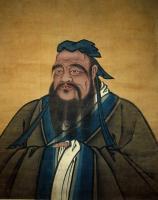
Con***ianism (rujia, also called Kongjiao) grew from the teaching of Con***ius (Kong Qiu). Together with Buddhism and Daoism it is one of the three traditions that framed Chinese religious and ethical life. It is a system of morals, politics, social order and ritual, not a single church, and it has shaped Chinese culture for more than two millennia.
Origins
In the Spring and Autumn period, Kong Qiu was a scholar who wanted order restored in a fractured world. Later generations called him Con***ius or Kongzi. He edited older documents associated with earlier kings and added his own teaching; those texts became the core of the Con***ian canon.
In the Western Han, Dong Zhongshu recast Con***ius for the imperial state. From then on, honoring Con***ianism as the official teaching marked a new phase: it was the doctrine of government, not only of a school. Under the Sui, ritual and ceremony were systematized. In the Five Dynasties and Song, Mencius, the Great Learning and the Doctrine of the Mean rose in status. Zhu Xi grouped Mencius with the Analects as the Four Books, which became required reading. From the Han onward this teaching functioned as the state’s moral religion.
Ideas people still quote
Courage is meant to aim high without cruelty. Loyalty is meant to train public duty. Justice is meant to check the chase for profit. Humaneness (ren) is care for other people. Integrity is self-respect that does not depend on rank.
The books
Con***ius is said to have transmitted six works: the Songs (Shi), Documents (Shu), Rites (Li), Changes (Yi), Music (Yue) and Spring and Autumn Annals. From the Eastern Han to the Song, the set grew to thirteen, adding the Analects, the Classic of Filial Piety, the Rites of Zhou, the Record of Rites, the Gongyang and Guliang commentaries, Erya and Mencius.
Basic teaching
The highest conduct is humaneness: treating others as people, not as tools. Heaven is respected, but the work is inward. A famous program is the eight steps: investigate things, extend knowledge, make the will sincere, rectify the mind, cultivate the person, regulate the family, govern the state, bring peace to the realm. In plain English: if you want a well-run country, start with a well-run self.
Influence on Chinese medicine
Humanism
Because medicine is a social act, Con***ian ethics governed how doctors were supposed to behave. Filial piety also sent many scholars into medicine: caring for parents required medical skill. That raised the social standing of physicians and pushed medical morals. The same ethic, though, slowed anatomy. The Classic of Filial Piety says the body is received from one’s parents and must not be harmed. Dissection looked like injury. Anatomy in China was therefore constrained, and medicine developed along functional, non-morphological lines — one root of the difference from Western medicine.
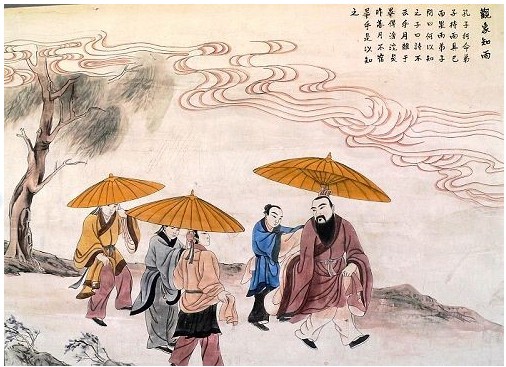
People first, spirits second
Doctors were taught to look at the body, the family and the environment, not to blame ghosts or pray the illness away. That bias helped medicine grow as a practical craft.
Results over speculation
Con***ius favored teaching that could be used. Under that pressure, medical writers stayed close to clinic. Most of the old books are clinical treatises, not abstract systems, which is why the tradition still prizes case experience and workable formulas.
Sources and further reading
We cite classical materia medica and modern reference works. This article is health education, not medical advice.
- Shennong Bencao Jing (The Divine Farmer's Materia Medica), Han dynasty.
- Bencao Gangmu (Compendium of Materia Medica), Li Shizhen, 1578.
- Chinese Pharmacopoeia, current edition — identity, quality and safety monographs.
- NCCIH and WHO reference material on traditional medicine safety.
Spotted an error or a better source? Tell us — corrections are logged on our editorial policy page.
Did this article help you?
Your answer shapes what gets rewritten next.
Keep readingRelated entries
 I Ching: TCM Concept Guide
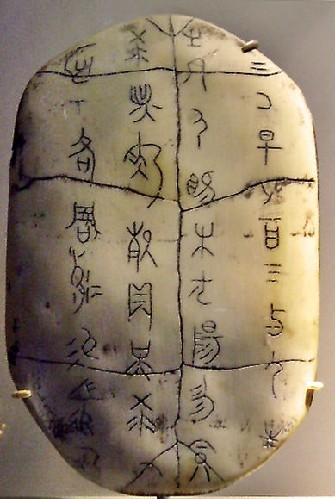
The I Ching (Book of Changes), the best known of the Five Classics, is the foundation of yin-yang thinking that later runs through Chinese medicine, from.
 Taoism: TCM Concept Guide
Origins Daoism (Taoism) grows out of older Chinese religion: reverence for nature and spirits, divination, and the ancestral and heavenly sacrifices of.
Ru Jiao (儒教): TCM Concept Guide
Con***ianism also names as Kong Jiao. It was founded by sage Con***ius(Kong Qiu), along with Buddhism and Taoism, together known as the three Chinese Religions.
 Daoism: TCM Concept Guide
Origins Taoism can be traced back to ancient time when people admired nature and spirits, existing divination forms such as communicating with god.
Something this article did not cover?
Ask us directly. We reply within two days, and good questions become public articles.
Ask a question →