
Culture Origin of TCM
Taoism: TCM Concept Guide
Origins
Daoism (Taoism) grows out of older Chinese religion: reverence for nature and spirits, divination, and the ancestral and heavenly sacrifices of Shang and Zhou. In the Spring and Autumn period those cults met a more reasoned culture. The Hundred Schools — especially Daoist, Con***ian and Mohist thought, together with the yin-yang specialists — supplied ideas the later religion would use.
By the Eastern Han the dynasty was failing, war was common, Con***ianism itself had taken on a religious face, and Buddhism had arrived. In that setting Zhang Daoling joined spirit cults, immortality lore, yin-yang arts and Huang-Lao teaching. That synthesis is usually treated as the founding of religious Daoism.
History
Formation (third to fifth centuries). Two markers are the spread of the Taiping Jing and the rise of the Celestial Masters (Tianshi Dao). Alchemy and its theories grew with them.
High point (Tang to Song). Daoism was often a state religion, traveled with migrants, and reached other parts of Asia.
Later development (Yuan to Ming). In the north, Wang Chongyang founded Quanzhen; Wudang lineages had Ming court support. Daoism still sat near the center of Chinese religious culture.
Decline under the Qing. Rulers favored shamanic and Tibetan Buddhist cults and squeezed a tradition identified with the Han majority. After 1949, practices that clashed with new law were banned. The China Taoist Association was founded in 1957. Recovery came only after the Cultural Revolution. Many people follow Daoist customs without becoming monks; in Taiwan it remains one of the largest religious currents.
Teaching
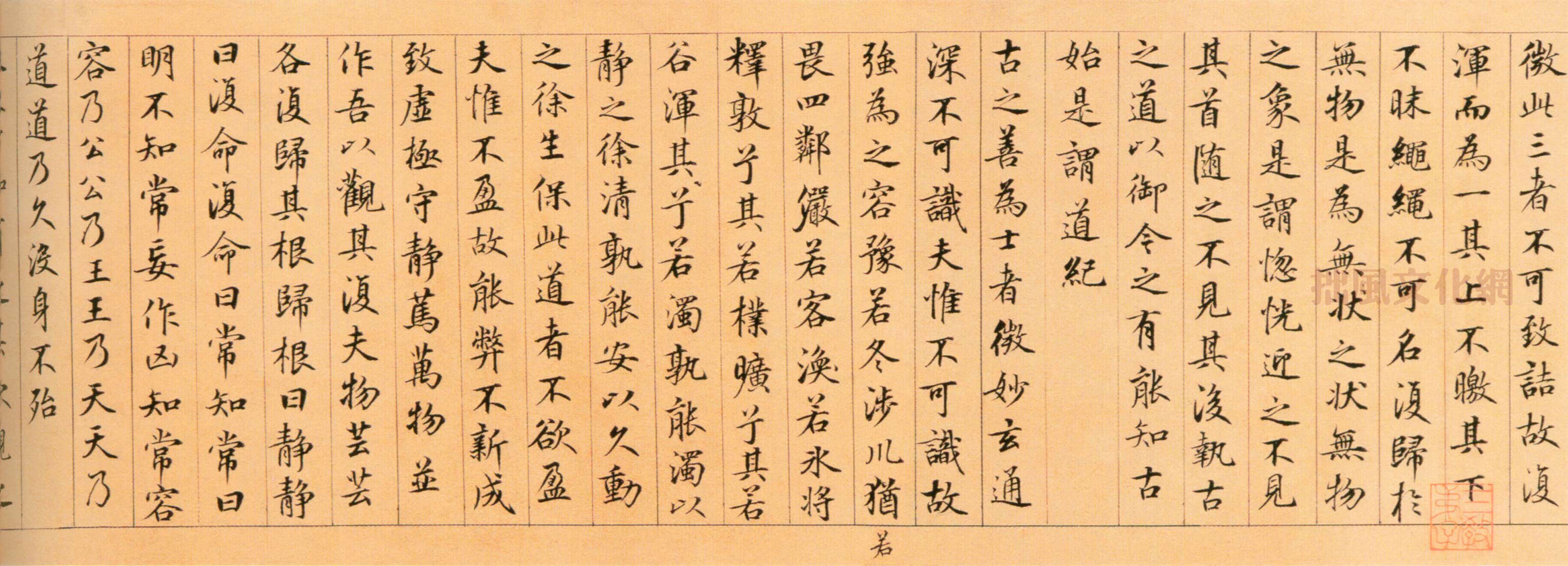
The Daodejing of Laozi puts Dao and De first. Dao is “the way,” but in this tradition it is the one reality that is natural, spontaneous, lasting and hard to name. It is the nature of things and is present everywhere. De is Dao as it shows in a particular life or thing.
Daoism matches Chinese medicine on one point especially: it values birth and long life and treats death as something to push back. Length of life is not left only to heaven; cultivation and health practice matter. Methods include inner and outer alchemy (the making of elixirs), massage and recitation. “When nothing is forced, nothing is left undone” means: things already have a grain; do not shove them off it.
Arts associated with Daoism
Five headings are often listed: mountain practice (meditation, martial training, diet); medicine (formulas, acupuncture and moxibustion, and work with spirit and emotion — an ancestor of what we now call psychotherapy); life calculation (fate as a way to live with the grain); physiognomy; and divination.
Wider influence
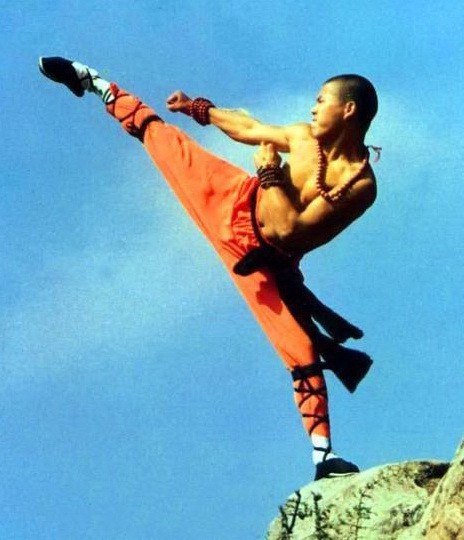
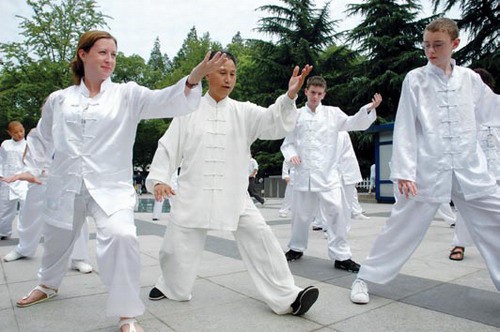
Some lineages practice martial arts and qigong. Daoist boxing prefers circles, yielding and using the other person’s force — taiji is the form most people know, useful at any age as exercise, not as a cure-all.
Health practice also drew on the meridian teaching of the Huangdi Neijing. Physician-Daoists such as Ge Hong, Sun Simiao and Tao Hongjing left a large mark on the medical record.
Influence on Chinese medicine
Daoist thought is about life, so it sits next to medicine. The idea that heaven and the human being form one pattern is one reason Chinese medicine did not develop along the same lines as Western anatomy. Breath work (tuna), guiding and stretching (daoyin) and massage entered yangsheng, the art of nourishing life. Acupuncture absorbed some of the same logic. Inner alchemy (the “elixir” work) is a religious practice; it is not a license to swallow unidentified pills.
Sources and further reading
We cite classical materia medica and modern reference works. This article is health education, not medical advice.
- Shennong Bencao Jing (The Divine Farmer's Materia Medica), Han dynasty.
- Bencao Gangmu (Compendium of Materia Medica), Li Shizhen, 1578.
- Chinese Pharmacopoeia, current edition — identity, quality and safety monographs.
- NCCIH and WHO reference material on traditional medicine safety.
Spotted an error or a better source? Tell us — corrections are logged on our editorial policy page.
Did this article help you?
Your answer shapes what gets rewritten next.
Keep readingRelated entries
 Con***ianism: TCM Concept Guide
Con***ianism (rujia, also called Kongjiao) grew from the teaching of Con***ius (Kong Qiu).
 I Ching: TCM Concept Guide
The I Ching (Book of Changes), the best known of the Five Classics, is the foundation of yin-yang thinking that later runs through Chinese medicine, from.
Ru Jiao (儒教): TCM Concept Guide
Con***ianism also names as Kong Jiao. It was founded by sage Con***ius(Kong Qiu), along with Buddhism and Taoism, together known as the three Chinese Religions.
Daoism: TCM Concept Guide
Origins Taoism can be traced back to ancient time when people admired nature and spirits, existing divination forms such as communicating with god.
Something this article did not cover?
Ask us directly. We reply within two days, and good questions become public articles.
Ask a question →