
Wind-Damp-Dispelling and Tendons-Bone-Strengthening Herbs
Wu Jia Pi (Slenderstyle Acanthopanax Bark)
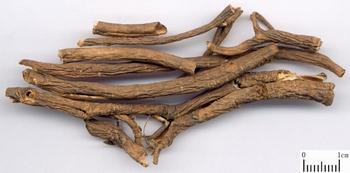
Naming
Wu Jia Pi (Cortex Acanthopanacis)——Shen Nong Ben Cao Jing (Shen Nong’s Herbal)
The Processing of Cortex Acanthopanacis
Origin
The root bark of shrubby plant Acanthopanax gracilistylus W. W. Smith of family Araliaceae.
Location
Hubei, Henan, Anhui provinces, etc. of China
Harvest
Collected in summer and autumn.
The actual smell and taste
Slightly fragrant, slightly spicy and bitter.
Best quality
Long and thick root with thick bark, fragrant smell and no duramen.
Processing
Dried in sunlight, cut into thick pieces, and unprocessed.
The Effect of Cortex Acanthopanacis
Property
Pungent, bitter and sweet, warm; liver and kidney meridians entered.
Actions
Dispel wind-damp, tonify liver and kidney, strengthen tendons and bones, induce diuresis.
Indications
A. Arthralgia syndrome due to wind-damp
Its nature of pungent can dispel wind, bitter can remove dampness and warm can expel cold. It is suitable for treating arthralgia syndrome due to wind, dampness and cold, pain of joints and difficulty in flexing and extending. Since the combined actions of tonifying liver and kidney and strengthening tendons and bones, it is rated as tonic antirheumatics and suitable for old and weak patients with chronic diseases. It can be used alone or combined with liver-kidney tonics, and blood-activating and collaterals-unblocking herbs, for example, Niu Xi and Dang Gui, as in Wu Jia Pi wine from Ben Cao Gang Mu.
B. Deficiency of liver and kidney, paralysis and weakness of tendons and bones
With the actions of warming and tonifying, it can tonify both liver and kidney, strengthen tendons and bones, and is often indicated for deficiency of liver and kidney, paralysis and weakness of tendons and bones, weakness of feet and waist pain; and other liver-kidney tonics are often used in coordination, such as Du Zhong and Niu Xi, as in Wu Jia Pi San from Wei Sheng Jia Bao (A Precious Manual for Home Use). For congenital deficiency of child with weak bone and walk retardation, it can be combined with Gui Jia, Niu Xi and Mu Gua, etc.
C. Edema
It can warm kidney and induce diuresis to further alleviate edema. For edema and difficulty in micturition, it is often combined with diuresis-inducing and edema-alleviating herbs, for example, Chen Pi, Da Fu Pi and Sheng Jiang Pi, as in Wu Pi San from Tai Ping Hui Min He Ji Ju Fang.
Dosage and Administrations
Decoct 5~10 g; or soaked in wine, made into pill or powder.
Sources and further reading
We cite classical materia medica and modern reference works. This article is health education, not medical advice.
- Shennong Bencao Jing (The Divine Farmer's Materia Medica), Han dynasty.
- Bencao Gangmu (Compendium of Materia Medica), Li Shizhen, 1578.
- Chinese Pharmacopoeia, current edition — identity, quality and safety monographs.
- NCCIH and WHO reference material on traditional medicine safety.
Spotted an error or a better source? Tell us — corrections are logged on our editorial policy page.
Did this article help you?
Your answer shapes what gets rewritten next.
Keep readingRelated entries
Wu Jia Pi: Chinese Herb Guide
Wu Jia Pi: dispel wind-damp, tonify liver and kidney, strengthen tendons and bones, promote urination.
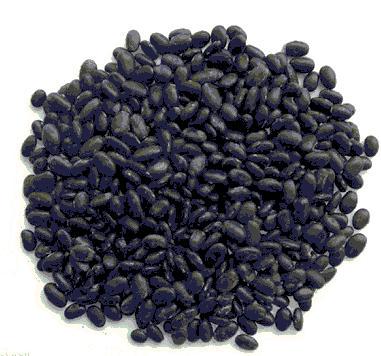 Wild groundnut seed: Chinese Herb Guide
Wild groundnut seed: tonify the kidney and liver, expel wind and remove toxicity.
Wild groundnut seed: Chinese Herb Guide
Wild groundnut seed: tonify the kidney and liver, expel wind and remove toxicity.
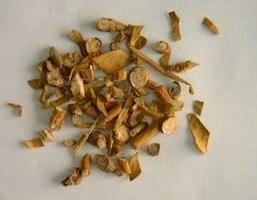 Sang Ji Sheng (Chinese Taxillus Twig)
Sang Ji Sheng: dispel wind-damp, tonify liver and kidney, strengthen tendons and bones, prevent miscarriage.
Sang Ji Sheng (Chinese Taxillus Twig)
Sang Ji Sheng: dispel wind-damp, tonify liver and kidney, strengthen tendons and bones, prevent miscarriage.
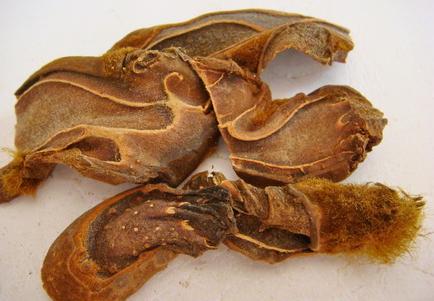 Gou Ji (East Asian Tree Fern Rhizome)
: dispel wind-damp, tonify liver and kidney, strengthen waist and knees.
Gou Ji (East Asian Tree Fern Rhizome)
Gou Ji (East Asian Tree Fern Rhizome): dispel wind-damp, tonify liver and kidney, strengthen waist and knees.
Something this article did not cover?
Ask us directly. We reply within two days, and good questions become public articles.
Ask a question →