
Di Yu (Garden Burnet Root)
Name Di Yu (Radix Sanguisorbae) — Shennong Bencao Jing Source and quality Plant The root of perennial herb Sanguisorba officinalis L. or root of S. officinalis L. var.

Name
Di Yu (Radix Sanguisorbae), recorded in the Shennong Bencao Jing.
Source and quality
Plant
The root of the perennial herb Sanguisorba officinalis L., or the root of S. officinalis L. var. longifolia (Bert.) Yu et Li, family Rosaceae.
Where it is grown
The first grows throughout China; the second is conventionally called Mian Di Yu and grows in Anhui, Zhejiang and Jiangsu provinces.
Harvest
In spring before the shoots appear, or in autumn after the plant has withered.
Smell and taste
Faint smell; slightly bitter and astringent.
Better grade
Hard and large, with a pink cross-section.
Processing
The fibrous roots are cut off, the root is cleaned and dried in the sun; used raw or dry-fried to charcoal.
Nature and action
Bitter, sour and astringent; enters the liver and large intestine channels. Cools the blood to stop bleeding, relieves toxicity and heals wounds.
When it is used
Bleeding from blood heat
Di Yu is cold and bitter, and enters the blood system, so it cools the blood to stop bleeding. Being sour and astringent as well, it is used for the various bleeding syndromes driven by blood heat. Its descending and lowering nature also suits bleeding from the lower burner.
For blood in the stool from exuberant heat it is combined with other herbs that clear heat and cool the blood to stop bleeding, such as Sheng Di Huang, Huang Qin and Huai Hua in Yue Ying Jian from Jing Yue Quan Shu. For bloody hemorrhoids of bright red color it is combined with herbs that clear heat, descend and purge, such as Huai Jiao, Huang Qin and Zhi Qiao in Huai Jiao Wan from Taiping Huimin Heji Jufang. For red, profuse vaginal bleeding from uterine bleeding due to blood heat, with dry mouth and lips, it is combined with herbs that clear heat and cool the blood to stop bleeding: there is an empirical formula for severe metrorrhagia in Nu Ke Yao Zhi, combining it with Sheng Di Huang, Huang Qin and Mu Dan Pi.
It clears heat and relieves toxicity, cools the blood and astringes the intestines to stop dysentery, which makes it good at treating dysentery where blood lingers, as with Gan Cao in Di Yu Tang from Shen Ji Zong Lu.
Burns, eczema, sores and abscesses
Bitter and cold with the actions of purging fire and relieving toxicity, and sour and astringent with the action of healing wounds, it is a key herb for treating burns. Because it not only clears heat and cools the blood but also relieves toxicity and reduces swelling, it is used for sores and abscesses both before and after pus forms.
Its powder can be mixed with sesame oil and applied externally, or combined with powders of herbs that purge fire and relieve toxicity, such as Da Huang and Huang Lian. For eczema and cutaneous ulceration it is applied externally by washing the affected area with its concentrated decoction, or by laying gauze soaked in the decoction on the area, or by applying a mixed powder with herbs that heal wounds and promote tissue regeneration, such as calcined Shi Gao and Ku Fan.
For sores and abscesses, before pus forms the decoction is used to wash or apply to the affected area; once pus has formed, use a paste made by pounding it, or mixed with other herbs that clear heat and relieve toxicity.
Dose
Decoction 10~15 g, or 30 g as a large dose. Use externally in pills and powder as appropriate. Use the dry-fried charcoal form to stop bleeding, and the raw form to relieve toxicity and heal wounds.
Cautions
It is cool, sour and astringent. Use with care in cold conditions with deficiency of spleen and kidney.
Did this article help you?
Your answer directly shapes how this article gets rewritten. Several sections on this site exist because readers asked for them.
Keep readingRelated for you
Di Yu
Name Di Yu (Radix Sanguisorbae) — Shennong Bencao Jing Source and quality Plant The root of perennial herb Sanguisorba officinalis L. or root of S. officinalis L. var.
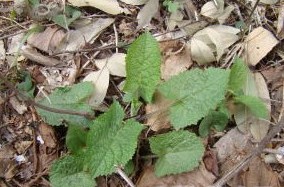 Dan Ye Xue Pen Cao (Unileaf Sage)
Dan Ye Xue Pen Cao (unileaf sage): slightly bitter and cool; used to stop bleeding and clear damp-heat.
Dan Ye Xue Pen Cao (Unileaf Sage)
Dan Ye Xue Pen Cao (unileaf sage): slightly bitter and cool; used to stop bleeding and clear damp-heat.
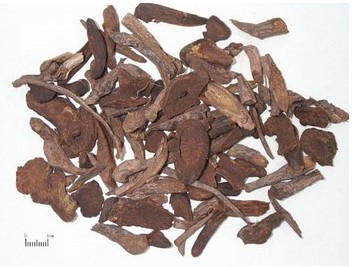 Di Yu (Garden Burnet Root)
Name Di Yu (Radix Sanguisorbae) — Shennong Bencao Jing Source and quality Plant The root of perennial herb Sanguisorba officinalis L. or root of S. officinalis L. var.
Di Yu (Garden Burnet Root)
Name Di Yu (Radix Sanguisorbae) — Shennong Bencao Jing Source and quality Plant The root of perennial herb Sanguisorba officinalis L. or root of S. officinalis L. var.
Something this article didn't cover?
Ask us directly — we reply within 2 days. Great questions become public articles.
Ask a question →