
Su Zi (Perilla Fruit)
Su Zi: direct qi downward and resolve phlegm, relieve cough and wheezing, moisten intestines for relaxing bowels.
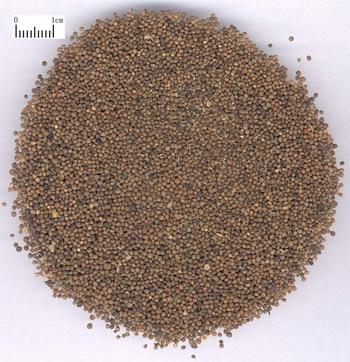
Name
Su Zi (Fructus Perillae), recorded in Ming Yi Bie Lu.
Source and quality
Plant
The dried ripe seeds of the annual Perilla frutescens (L.) Britt., family Lamiaceae.
Where it is grown
Jiangsu, Zhejiang and Hebei provinces, among others.
Harvest
Ripe seeds are collected in autumn: the whole plant or its ear is cut to obtain the fruit, and impurities are removed.
Smell and taste
Aromatic when crushed; slightly pungent.
Better grade
A yellowish-white kernel rich in oil, lightly fragrant, large, full and evenly shaped, grayish-brown, and free of impurities.
Processing
Dried in the sun; used raw or lightly dry-fried, then smashed.
Nature and action
Acrid and warm; enters the lung and large intestine channels. Directs qi downward and resolves phlegm, relieves cough and wheezing, and moistens the intestines to relax the bowels.
When it is used
Cough and wheezing with copious phlegm
Su Zi excels at directing qi downward and resolving phlegm. Cough and wheezing respond when adverse rise of qi is checked and phlegm is resolved, which makes it effective for cough and wheezing caused by adverse rise of qi with phlegm retained in the lung. It is combined with other herbs to treat cough and wheezing from both external contraction and internal injury.
For cough and wheezing from adverse rise of qi with phlegm obstruction, with chest oppression and poor appetite, it is often combined with Bai Jie Zi and Lai Fu Zi in San Zi Yang Qin Tang from Han Shi Yi Tong. For chronic cough and wheezing from excess above and deficiency below, it is combined with herbs that warm the kidney, disperse cold, resolve phlegm and drive qi downward, such as Rou Gui, Dang Gui and Ban Xia in Su Zi Jiang Qi Tang from Taiping Huimin Heji Jufang. For cough and wheezing from wind-cold with phlegm-heat congesting the interior, it is combined with herbs that ventilate and clear the lung, such as Ma Huang and Sang Bai Pi.
Constipation from intestinal dryness
Because it is moist and rich in oily contents and moistens dryness to relax the bowels, it also directs qi downward to improve the conduction function of the large intestine. It is good at constipation caused by intestinal dryness, and is usually combined with lubricant laxatives such as Huo Ma Ren, Gua Lou Ren and Xing Ren.
Dose
Decoction 5~10 g. Taken in powder or pills.
Cautions
Use carefully for cough and wheezing from yin deficiency, or loose stool from spleen deficiency.
Did this article help you?
Your answer directly shapes how this article gets rewritten. Several sections on this site exist because readers asked for them.
Keep readingRelated for you
Su Zi (Perilla Fruit)
苏子: direct qi downward and resolve phlegm, relieve cough and wheezing, moisten intestines for relaxing bowels.
Zi Su Zi (Perilla Fruit)
Su Zi: direct qi downward and resolve phlegm, relieve cough and wheezing, moisten intestines for relaxing bowels.
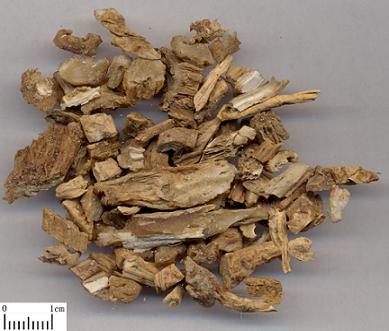 Tuber Stemona Root (Japanese Stemona Root)
Name Bai Bu (Radix Stemonae) — Mingyi Bielu Source and quality Plant The dry root tuber of perennial Stemona sessili folia (Miq.) Miq., Stemona japonica (BI.) Miq.
Tuber Stemona Root (Japanese Stemona Root)
Name Bai Bu (Radix Stemonae) — Mingyi Bielu Source and quality Plant The dry root tuber of perennial Stemona sessili folia (Miq.) Miq., Stemona japonica (BI.) Miq.
Something this article didn't cover?
Ask us directly — we reply within 2 days. Great questions become public articles.
Ask a question →