
Essence-Securing, Urination-Reducing and Leukorrhagia-Stopping Herbs
Jin Ying Zi (Cherokee Rose Fruit)
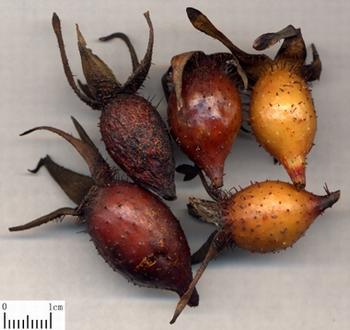
Name
Jin Ying Zi (Fructus Rosae Laevigatae), from Lei Gong Pao Zhi Lun (Lei's Treaties on Preparation of Drugs)
Source and quality
The ripe fruit of the perennial woody plant Rosa laevigata Michx. of the family Rosaceae. It is produced in Guangdong, Sichuan and Yunnan provinces, and collected from September to October. The thorns and core are removed and it is dried in the sun.
It has a slight odor and is sweet and slightly astringent. The best grade is large, yellow-red and lustrous, and free from thorns.
It is used unprocessed.
Nature and action
Sour, astringent and neutral. It enters the kidney, bladder and large intestine meridians.
It secures essence, reduces urination and stops leukorrhagia, and astringes the intestines to check diarrhea.
Indications
Seminal emission, spermatorrhea, enuresis, frequent urination and leukorrhagia
It enters the kidney and bladder meridians, its main action being astringency, and it can secure essence, reduce urination and stop leukorrhagia.
- For seminal emission, spermatorrhea, enuresis, frequent urination and leukorrhagia due to kidney deficiency, it may be decocted on its own or combined with Qian Shi so that the two reinforce each other's astringency, as in Shuilu Erxian Dan from Ren Chun Tang Jing Yan Fang (Experiential Prescriptions from the Renchun Clinic).
- For a stronger effect it may be combined with kidney-tonifying herbs and astringents, such as Tu Si Zi, Bu Gu Zhi and Hai Piao Xiao.
Chronic diarrhea and dysentery
It enters the large intestine meridian and can astringe the intestines to check diarrhea.
- For chronic diarrhea and dysentery due to spleen deficiency, it may be decocted on its own in thick tea, or combined with herbs that astringe the intestines and check diarrhea, such as Ying Su Qiao.
- It may also be combined with herbs that tonify the spleen and astringe the intestines, treating both the branch and the root of the condition, such as Dang Shen, Bai Zhu, Qian Shi and Wu Wei Zi in Mi Yuan Jian from Jing Yue Quan Shu.
Because of its astringent action it can also be applied for metrorrhagia, metrostaxis, anal prolapse and prolapse of the uterus.
Dosage and administration
Decoct 6~12 g.
Sources and further reading
We cite classical materia medica and modern reference works. This article is health education, not medical advice.
- Shennong Bencao Jing (The Divine Farmer's Materia Medica), Han dynasty.
- Bencao Gangmu (Compendium of Materia Medica), Li Shizhen, 1578.
- Chinese Pharmacopoeia, current edition — identity, quality and safety monographs.
- NCCIH and WHO reference material on traditional medicine safety.
Spotted an error or a better source? Tell us — corrections are logged on our editorial policy page.
Did this article help you?
Your answer shapes what gets rewritten next.
Keep readingRelated entries
Jin Ying Zi: Chinese Herb Guide
Jin Ying Zi: secure essence, reduce urination and stop leukorrhagia, astringe intestines to check diarrhea.
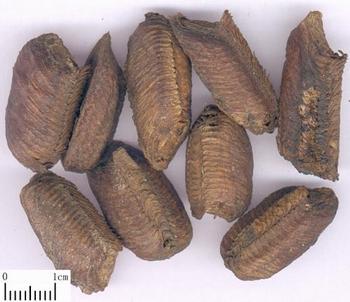 Sang Piao Shao (桑螵蛸): Chinese Herb Guide
Sang Piao Xiao (Ovum of Mantis). The egg case of Tenodera sinensis Saussure, Statilia maculate (Thunberg) or Hierodula patellife
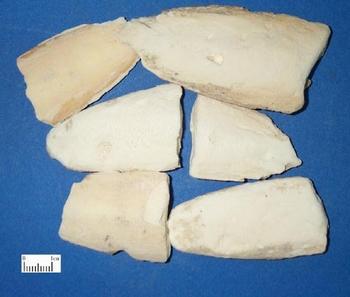 Hai Piao Xiao: Chinese Herb Guide
Hai Piao Xiao (Os Sepiae) secures essence and stops leukorrhagia, astringes to stop bleeding, and restrains acidity to alleviate pain. Used externally it.
Hai Piao Xiao (Os Sepiae)
海螵蛸: secure essence and stop leukorrhagia, astringe to stop bleeding, restrain acidity and alleviate pain. Dry dampness and cure the sores and ulcer when.
Something this article did not cover?
Ask us directly. We reply within two days, and good questions become public articles.
Ask a question →