
Essence-Securing, Urination-Reducing and Leukorrhagia-Stopping Herbs
Hai Piao Xiao: Chinese Herb Guide
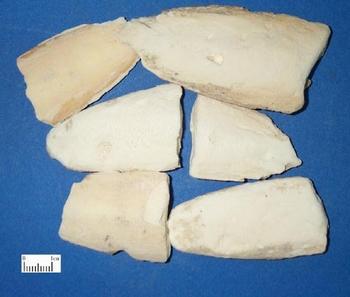
Name
Hai Piao Xiao (Os Sepiae), from Shen Nong Ben Cao Jing (Shen Nong's Herbal)
Source and quality
The internal shell of the animal Sepiella maindroni de Rochebrune or Sepia esculenta Hoyle of the family Sepiidae. It is produced in coastal regions such as Jiangsu, Zhejiang and Liaoning provinces. The internal shell is collected, cleaned and dried.
It is used unprocessed.
Nature and action
Salty, astringent and slightly warm. It enters the kidney and liver meridians.
It secures essence and stops leukorrhagia, astringes to stop bleeding, restrains acidity and alleviates pain. Used externally, it dries dampness and cures sores and ulcers.
Indications
Seminal emission and leukorrhagia
It secures essence and stops leukorrhagia, and it is especially good at astringing leukorrhea.
- For leukorrhagia due to kidney deficiency with insecurity of the Dai Mai, it is combined with herbs that tonify the kidney and astringe, such as Shan Yao, Qian Shi and Lu Jiao Shuang.
- For vaginal discharge, it is combined with other herbs that stop leukorrhagia, such as Qian Shi and Bai Zhi.
- For seminal emission and spermatorrhea due to insecurity of the kidney, it is combined with herbs that tonify the kidney and secure essence, such as Shan Zhu Yu, Tu Si Zi and Sha Yuan Zi.
Hemorrhage syndromes
It astringes to stop bleeding and is applied to many kinds of bleeding.
- For metrorrhagia and metrostaxis, it is combined with herbs that stop bleeding, such as Qian Cao, Zong Lv Tan and Wu Bei Zi in Gu Chong Tang from Yi Xue Zhong Zhong Can Xi Lu.
- For hematemesis and hematochezia, it may be smashed into a powder together with Bai Ji in a ratio of 1:1.
- For bloody stranguria, it may be smashed into a powder and taken with the juice of Sheng Di Huang.
Stomachache and acid regurgitation
It is a good herb for stomachache and acid regurgitation because it restrains acidity and alleviates pain. It is combined with Zhe Bei Mu, as in Wu Bei San, or with herbs that strengthen its ability to restrain acidity and relieve pain, such as Yan Hu Suo, Bie Jia and Wu Bei Zi.
Eczema, and sores and ulcers that will not heal
Used externally, it dries dampness and cures sores and ulcers.
- For eczema, it may be smashed into a powder for external use, combined with herbs such as Huang Bai, Qing Dai and calcined Shi Gao.
- For sores and ulcers that will not heal and produce a lot of pus, it may be smashed into a powder for external use on its own, or combined with calcined Shi Gao, Ku Fan and Bing Pian.
Dosage and administration
Decoct 6~20 g. As a powder, 0.5~1 g per dose. A proper dose is used for external application.
Sources and further reading
We cite classical materia medica and modern reference works. This article is health education, not medical advice.
- Shennong Bencao Jing (The Divine Farmer's Materia Medica), Han dynasty.
- Bencao Gangmu (Compendium of Materia Medica), Li Shizhen, 1578.
- Chinese Pharmacopoeia, current edition — identity, quality and safety monographs.
- NCCIH and WHO reference material on traditional medicine safety.
Spotted an error or a better source? Tell us — corrections are logged on our editorial policy page.
Did this article help you?
Your answer shapes what gets rewritten next.
Keep readingRelated entries
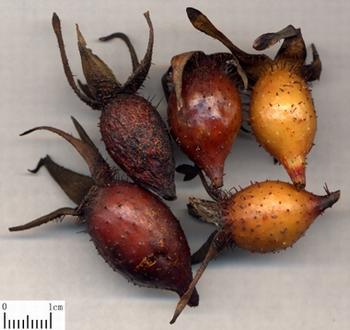 Jin Ying Zi (Cherokee Rose Fruit)
 secures essence, reduces urination and stops leukorrhagia, and astringes the intestines to check diarrhea. It is used for.
Jin Ying Zi: Chinese Herb Guide
Jin Ying Zi: secure essence, reduce urination and stop leukorrhagia, astringe intestines to check diarrhea.
Hai Piao Xiao (Os Sepiae)
海螵蛸: secure essence and stop leukorrhagia, astringe to stop bleeding, restrain acidity and alleviate pain. Dry dampness and cure the sores and ulcer when.
Hai Piao Xiao (Cuttlebone)
Hai Piao Xiao (Cuttlebone): secure essence and stop leukorrhagia, astringe to stop bleeding, restrain acidity and alleviate pain. Dry dampness and cure the sores and ulcer when used externally.
Something this article did not cover?
Ask us directly. We reply within two days, and good questions become public articles.
Ask a question →