
Fundamental Theory of TCM
Improper Diet: TCM Concept Guide
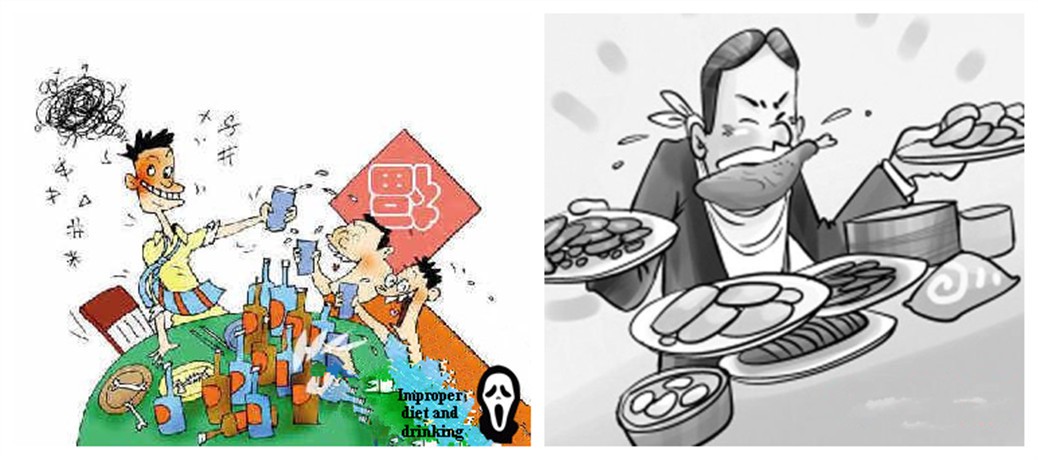
Food is how the body takes in nourishment. It still has to follow a rhythm. When it does not, diet itself becomes a cause of illness. TCM groups that under three headings: too little or too much, unclean food, and a one-sided appetite.
Starvation and overeating
Starvation here means going without food for a long time, or eating too little for too long. Without enough raw material, qi and blood are under-produced, organ function falls, and people feel dizzy and weak in the limbs; in the extreme, they die. Long-term under-eating also lowers resistance, so external pathogens get in more easily.
Overeating includes a single binge and years of eating past what the spleen and stomach can transform. A binge sits as distension, sour belching, no appetite, vomiting or diarrhea. In severe cases it injures intestinal and stomach vessels — pain, or bleeding. Years of excess do not become more qi and blood; they become phlegm that blocks flow: overweight, dizziness, palpitations, chest oppression; or damp-heat in the vessels, with sores and abscesses.
Unclean food
This is spoiled food, food carrying infection or parasites, or food that is actually poisonous. Spoiled food: abdominal pain, nausea, vomiting, rumbling diarrhea or dysentery. Parasites: intermittent pain, odd cravings, thinness and a sallow face. Epidemic toxin in food can start an infectious illness. Ordinary food poisoning is the acute form.
A one-sided diet
1. Always cold or always hot
Too much cold food damages spleen and stomach yang; cold-damp collects, with abdominal pain and diarrhea. A diet of spicy, heating food can pile heat in the stomach and intestines and consume stomach yin: thirst, bad breath, distension, constipation.
2. Always one of the five flavors
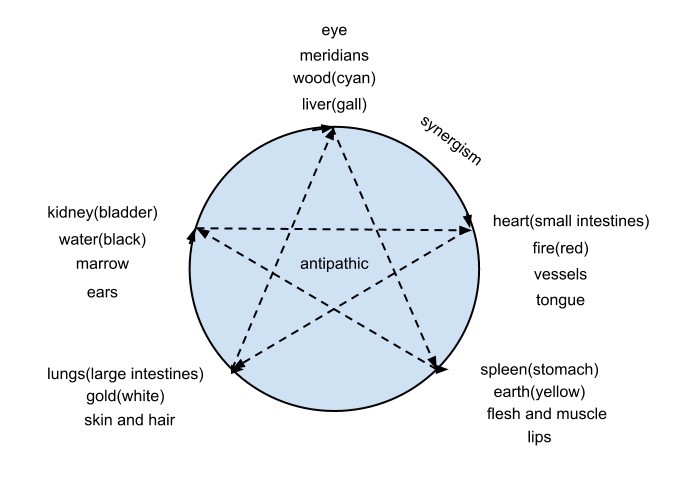
Sour, bitter, sweet, pungent and salty are said to enter liver, heart, spleen, lung and kidney first. Living on one taste for years can over-strengthen that organ’s tendency and throw the set out of balance. This is a pattern idea, not a reason to fear ordinary seasoning.
3. Too much alcohol
Grain liquor is classed as hot. A little can move blood and ease the sinews. A lot damages spleen and stomach and breeds damp-heat: fullness, no appetite, a bitter greasy mouth, a thick greasy tongue coating.
4. Only a few foods, or none of the foods you need
A long stretch of rich food breeds phlegm-heat: overweight, vertigo, wind-stroke patterns, wasting-thirst. A long lack of particular nutrients — vitamin A, calcium, iodine in modern terms — shows as night blindness, rickets, goiter and the like. Chinese medicine and nutrition are describing the same hole from two sides.
Sources and further reading
We cite classical materia medica and modern reference works. This article is health education, not medical advice.
- Shennong Bencao Jing (The Divine Farmer's Materia Medica), Han dynasty.
- Bencao Gangmu (Compendium of Materia Medica), Li Shizhen, 1578.
- Chinese Pharmacopoeia, current edition — identity, quality and safety monographs.
- NCCIH and WHO reference material on traditional medicine safety.
Spotted an error or a better source? Tell us — corrections are logged on our editorial policy page.
Did this article help you?
Your answer shapes what gets rewritten next.
Keep readingRelated entries
 Pathogenesis: TCM Concept Guide
Pathogenesis studies how pathogenic factors affect the human body and cause disease as well as how disease develops and changes. Disease means the damage of.
 Yin-Yang: TCM Concept Guide
The theory of yin-yang originated in antiquity . It is a theory dealing with the origination of the universe as well as the motion and variation of all.
 Zang Xiang Theory: TCM Concept Guide
It is first appeared in the chapter of six Sections of Discussions on Visceral Manifestation in Su Wen.
 The Eight Principles (Ba Gang Bian Zheng)
Exterior (biao) and interior (li) Exterior means the illness sits in skin, flesh and channels.
Something this article did not cover?
Ask us directly. We reply within two days, and good questions become public articles.
Ask a question →