
Digestant Herbs
Malt (Fructus Hordei Germinatus)
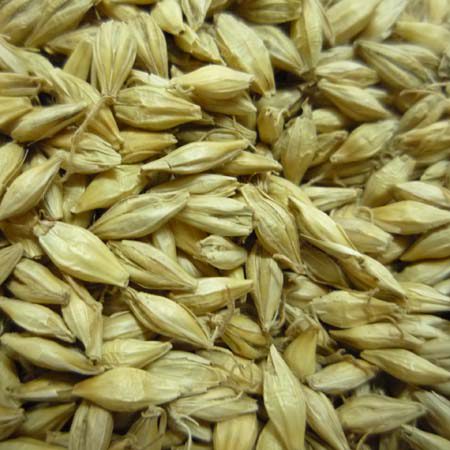
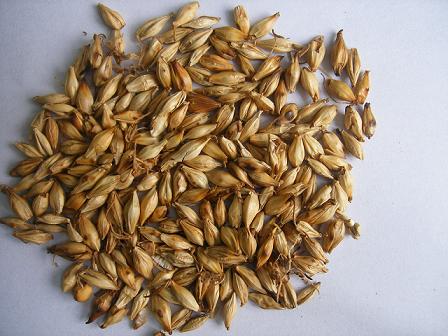
Name
Mai Ya (Fructus Hordei Germinatus), recorded in Yao Xing Lun.
Source and quality
Plant
The germinated fruit of Hordeum vulgare L., family Poaceae.
Where it is grown
All regions.
Smell and taste
Slightly sweet.
Better grade
Dry, pale yellow and large, with the embryo intact.
Processing
After cleaning, it is soaked in water for four to six hours, then lifted out and kept at a suitable temperature and humidity until the plumule has grown to 0.5 cm, then dried in the sun. Used raw, dry-fried until yellow, or charred.
Nature and action
Sweet and bland; enters the spleen, stomach and liver channels. Promotes digestion and invigorates the spleen, stops lactation and releases distension.
When it is used
Food stagnation
It is sweet and bland, and is used to promote digestion and invigorate the spleen, especially helping to digest starchy food. For stagnation from starchy food it is combined with Shan Zha, Shen Qu and Ji Nei Jin. For infantile indigestion it can be decocted alone or ground into powder and taken by mouth. For poor appetite and fullness after meals based on spleen deficiency it is combined with herbs that move qi and invigorate the spleen, such as Bai Zhu and Chen Pi in Jian Pi Wan from Ben Cao Gang Mu.
Stopping lactation and breast distension
It stops lactation. Taken by mouth to stop lactation, or for breast distension and pain caused by milk accumulating, 120 g of the raw or dry-fried Mai Ya (60 g of each) may be decocted alone.
It also carries a secondary action of soothing the liver. For hypochondriac pain, or gastric and abdominal pain, caused by stagnation of liver qi or disharmony between liver and stomach, it is combined with Chuan Lian Zi and Chai Hu.
Dose
Decoction 10~15 g; the large dose can be increased to 30~120 g. The raw form leans toward promoting digestion and invigorating the spleen, while the dry-fried form is used to stop lactation and release distension.
Cautions
Avoid during breastfeeding.
Sources and further reading
We cite classical materia medica and modern reference works. This article is health education, not medical advice.
- Shennong Bencao Jing (The Divine Farmer's Materia Medica), Han dynasty.
- Bencao Gangmu (Compendium of Materia Medica), Li Shizhen, 1578.
- Chinese Pharmacopoeia, current edition — identity, quality and safety monographs.
- NCCIH and WHO reference material on traditional medicine safety.
Spotted an error or a better source? Tell us — corrections are logged on our editorial policy page.
Did this article help you?
Your answer shapes what gets rewritten next.
Keep readingRelated entries
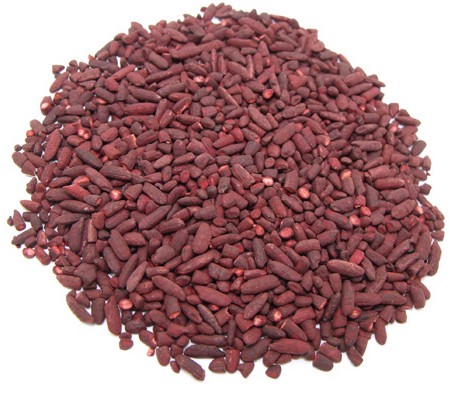 Red Yeast Rice: Chinese Herb Guide
Red Yeast Rice: activate blood and resolve blood stasis, tonify the spleen and promote digestion.
Hong Qu: Chinese Herb Guide
Hong Qu: activate blood and resolve blood stasis, tonify the spleen and promote digestion.
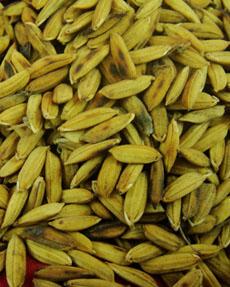 Gu Ya (Fructus Oryzae Germinatus)
Dao Ya: promote digestion and harmonize middle burner, invigorate spleen and increase appetite.
Gu Ya (Rice-grain Sprout)
Gu Ya (Rice-grain Sprout): promote digestion and harmonize middle burner, invigorate spleen and increase appetite.
Something this article did not cover?
Ask us directly. We reply within two days, and good questions become public articles.
Ask a question →