
Fundamental Theory of TCM
Overwork and Too Much Rest

Work and rest are both necessary. Ordinary work helps qi and blood move and keeps the body capable. Rest clears fatigue and restores strength. Too much of either becomes a cause of disease.
Overwork
Three forms are described: physical overstrain, mental overwork, and excessive sexual activity.
Physical overstrain is hard labor or sport continued until qi and blood are spent and not replaced: long standing, long walking, long talking. The result is fatigue, little desire to speak, sweating on slight effort, and in time injury to sinew and bone.
Mental overwork is thinking that never stops. It consumes heart blood and also burdens the spleen. Typical signs are palpitations, poor memory, insomnia and vivid dreaming from a poorly nourished heart-spirit, plus poor appetite, abdominal fullness and loose stool from a spleen that cannot transform.
Ordinary sexual life is said to help qi and blood and to regulate yin and yang. Excess consumes kidney essence, weakens qi and blood, and under-nourishes the five zang: sore weak low back and knees, dizziness, tinnitus, low spirits, or impotence, seminal emission and premature ejaculation in the classical lists.
Too much rest
This means not moving enough. Qi and blood slow, organs under-perform: poor appetite, fatigue, low mood, heavy limbs, or overweight with poor stamina, palpitations and shortness of breath on effort.
A short comparison
Physical overstrain consumes qi and wears the body. Mental overstrain injures heart and spleen. Sexual excess consumes kidney essence and qi. A life of ease without movement leaves qi and blood sluggish and the organs idle. The clinical pictures above are patterns to discuss with a practitioner, not a diagnosis from a webpage.
Sources and further reading
We cite classical materia medica and modern reference works. This article is health education, not medical advice.
- Shennong Bencao Jing (The Divine Farmer's Materia Medica), Han dynasty.
- Bencao Gangmu (Compendium of Materia Medica), Li Shizhen, 1578.
- Chinese Pharmacopoeia, current edition — identity, quality and safety monographs.
- NCCIH and WHO reference material on traditional medicine safety.
Spotted an error or a better source? Tell us — corrections are logged on our editorial policy page.
Did this article help you?
Your answer shapes what gets rewritten next.
Keep readingRelated entries
 The Eight Principles (Ba Gang Bian Zheng)
Exterior (biao) and interior (li) Exterior means the illness sits in skin, flesh and channels.
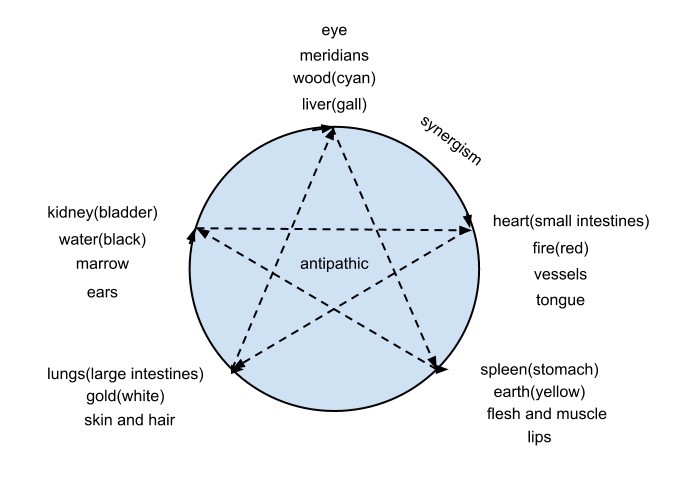 Zang Xiang Theory: TCM Concept Guide
It is first appeared in the chapter of six Sections of Discussions on Visceral Manifestation in Su Wen.
 Imbalance between yin and yang
Relative predomination and decline of yin and yang directly cause excess syndrome and deficiency syndrome.
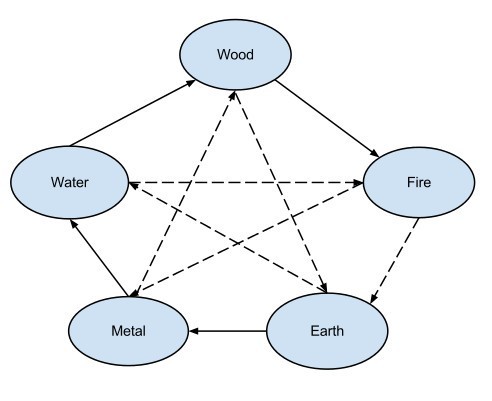 The Five Elements: TCM Concept Guide
The theory of the five elements, along with the theory of yin and yang, originated from ancient China.
Something this article did not cover?
Ask us directly. We reply within two days, and good questions become public articles.
Ask a question →