
Yang Tonics
Xu Duan (Himalayan Teasel Root)
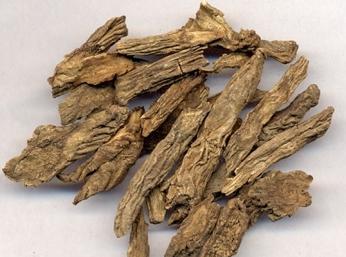
Name
Xu Duan (Radix Dipsaci), from Shen Nong Ben Cao Jing (Shen Nong's Herbal)
Source and quality
The root of the perennial herbaceous plant Dipsacus asperoides C. Y. Cheng et T. M. Ai of the family Teasel. It is mainly produced in Hubei, Sichuan and Yunnan provinces, and is plucked in autumn.
It is slightly fragrant, bitter, slightly sweet and slightly astringent. The best grade is coarse and soft, with a green-black cross section.
It is sliced and used raw, or stir-baked with salt solution or with liquor.
Nature and action
Sweet, pungent and slightly warm. It enters the kidney and liver meridians.
It tonifies the liver and kidney, strengthens the tendons and bones, promotes blood circulation, continues the physique and prevents abortion.
Indications
Deficiency of the liver and kidney with weak tendons and bones
It is a common herb for soreness and pain in the lumbar region and knees, and for atrophy, flaccidity and limpness of the lower limbs caused by deficiency of the liver and kidney, because it tonifies the liver and kidney, strengthens the tendons and bones, and is in addition tonifying without being greasy.
- For soreness and pain in the lumbar region and knees, and atrophy, flaccidity and limpness of the lower limbs, it is used with other herbs that tonify the liver and kidney and strengthen the tendons and bones: Du Zhong, Niu Xi and Bu Gu Zhi in Xu Duan Wan from Fu Shou Jing Fang (Essential Prescriptions for Preserving Health and Longevity).
- Because it tonifies the liver and kidney, strengthens the tendons and bones, and promotes blood circulation to relieve pain, thereby strengthening flaccid limbs and easing arthralgia, it is indicated for lumbar pain, flaccidity of the feet, spasm and pain due to deficiency of the liver and kidney with stagnation of cold and blood, and for chronic arthralgia of the wind-damp type accompanied by deficiency of the liver and kidney.
- It can also be used for impotence, seminal emission, spermatorrhea, enuresis and frequent urination due to deficiency of kidney yang. These are not its primary indications, so it serves as an auxiliary herb for them.
Falls and blows, hematoma, swelling and pain, injury of the tendons and fracture
It is a common herb in traumatology because it activates blood and removes stasis to relieve pain, tonifies deficiency and promotes the flow of qi to continue the physique.
- For falls, blows and other injuries with hematoma, swelling and pain, it is combined with herbs that activate blood and relieve pain, such as Ru Xiang, Mo Yao, Tao Ren and Hong Hua.
- For injury of the tendons and for fracture, it is combined with herbs that activate blood and continue the physique, such as Tu Bie Chong, Zi Ran Tong and Gu Sui Bu.
Threatened abortion, vaginal bleeding during pregnancy and habitual abortion
It is a common herb for threatened abortion, vaginal bleeding during pregnancy and habitual abortion due to deficiency of the liver and kidney with insecurity of the Chong Mai and the Ren Mai, because it tonifies the liver and kidney and regulates and strengthens those two vessels so as to prevent abortion.
- It should be combined with herbs that tonify the kidney and liver and prevent abortion: Sang Ji Sheng and Tu Si Zi in Shou Tai Wan from Yi Xue Zhong Zhong Can Xi Lu.
- For threatened abortion and vaginal bleeding during pregnancy due to external injury, it is combined with herbs that activate blood, move qi and prevent abortion, such as Dang Gui, Chuan Xiong and Sha Ren.
Dosage and administration
Decoct 10~15 g. Stir-baking it with salt water strengthens its liver- and kidney-tonifying action and its ability to strengthen the tendons and bones; stir-baking it with liquor activates the blood and unblocks the collaterals.
Sources and further reading
We cite classical materia medica and modern reference works. This article is health education, not medical advice.
- Shennong Bencao Jing (The Divine Farmer's Materia Medica), Han dynasty.
- Bencao Gangmu (Compendium of Materia Medica), Li Shizhen, 1578.
- Chinese Pharmacopoeia, current edition — identity, quality and safety monographs.
- NCCIH and WHO reference material on traditional medicine safety.
Spotted an error or a better source? Tell us — corrections are logged on our editorial policy page.
Did this article help you?
Your answer shapes what gets rewritten next.
Keep readingRelated entries
Chuan Duan (Himalayan Teasel Root)
Xu Duan: tonify liver and kidney, strengthen tendons and bones, promote blood circulation, continue the physique, and prevent abortion.
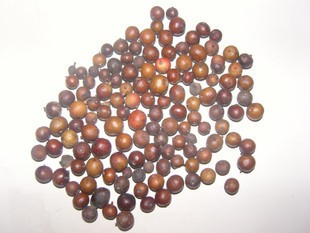 Nan Zhu Zi: Chinese Herb Guide
Nan Zhu Zi: tonify the kidney, secure essence and strengthen the tendons and bones.
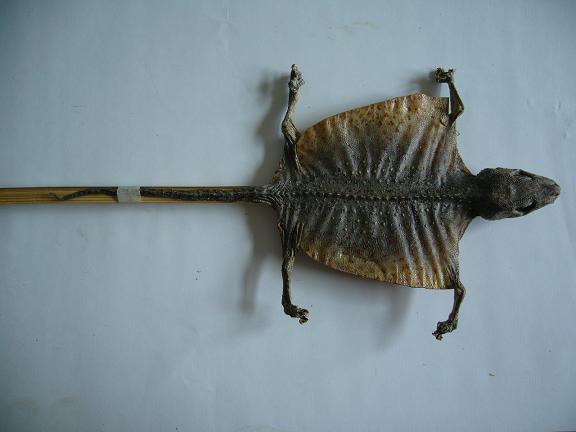 Ge Jie: Chinese Herb Guide
Ge Jie: tonify kidney yang, nourish kidney essence, tonify lung qi, and relieve cough and wheezing.
Ge Jie (Gecko) in TCM
蛤蚧: tonify kidney yang, nourish kidney essence, tonify lung qi, and relieve cough and wheezing.
Something this article did not cover?
Ask us directly. We reply within two days, and good questions become public articles.
Ask a question →