
Wind-Heat-Dispersing Herbs
Ge Gen (Kudzu Root): Fever, Stiff Neck, Thirst and Diarrhea
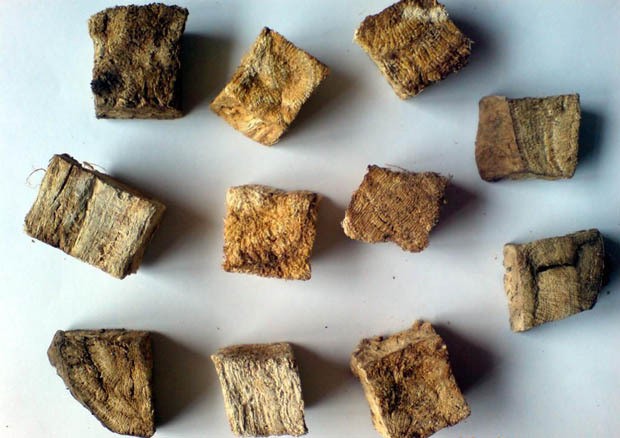
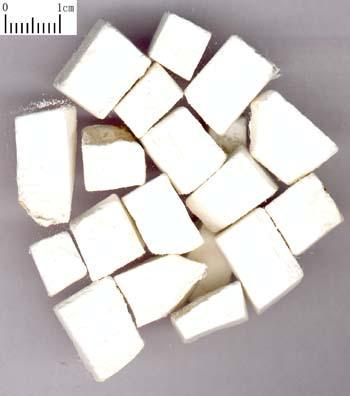
Name
Ge Gen (kudzu root, Radix Puerariae; also Gan Ge), recorded in the Shennong Bencao Jing.
Source and quality
Plant
The root of the perennial vine Pueraria lobata (Willd.) Ohwi or Pueraria thomsonii Benth., family Fabaceae.
Where it is grown
P. lobata: mainly Hunan, Henan, Guangdong. P. thomsonii is mostly cultivated, mainly Guangxi and Guangdong.
Harvest
Autumn or winter.
Smell and taste
Almost no smell; slightly sweet.
Better grade
Large, firm, white, powdery, with little fiber.
Processing
Used raw or roasted.
Nature and action
Sweet, acrid, cool; enters lung, spleen and stomach. Releases the exterior and reduces fever; vents rashes; generates fluid and eases thirst; raises yang to check diarrhea.
When it is used
Exterior fever, especially stiff nape
It sweats wind from the surface in both wind-cold and wind-heat. Wind-cold: with Ma Huang, Qiang Huo, Fang Feng. Wind-heat: with Bo He, Jin Yin Hua. When an exterior pathogen is turning to interior heat — worse fever, chills, dry nose, sore eyes, slight thirst — it is used in Chai Ge Jie Ji Tang with Chai Hu, Bai Zhi, Qiang Huo and Huang Qin.
It is the usual herb for a stiff, tight neck and upper back from an exterior pattern. Exterior excess, no sweat: Ge Gen Tang (with Ma Huang Tang). Exterior deficiency with sweat: Gui Zhi Jia Ge Gen Tang.
Early measles when the rash is incomplete
It both releases the exterior and vents the rash, classically with Niu Bang Zi and Sheng Ma (Sheng Ma Ge Gen Tang). That is a pediatric formula use, not home measles care.
Thirst in warm disease and wasting-thirst
Sweet and cool, it generates fluid. For thirst from heat consuming fluid: with Zhi Mu and Shi Gao. For dryness from yin deficiency: with Tian Hua Fen and Shan Yao. For spleen qi failing to raise fluid: with Ren Shen and Huang Qi.
Diarrhea from spleen deficiency, and hot dysentery
Raising spleen-stomach clear qi, roasted Ge Gen is used with qi-tonics to check diarrhea from sinking qi. For dysentery with fever it is paired with Huang Lian and Huang Qin to clear damp-heat while still releasing the exterior.
Dose
Decoction 3–10 g (some clinics use more for stiff neck; stay inside a practitioner’s range). Raw: exterior and heat. Roasted: raising yang and checking diarrhea.
Sources and further reading
We cite classical materia medica and modern reference works. This article is health education, not medical advice.
- Shennong Bencao Jing (The Divine Farmer's Materia Medica), Han dynasty.
- Bencao Gangmu (Compendium of Materia Medica), Li Shizhen, 1578.
- Chinese Pharmacopoeia, current edition — identity, quality and safety monographs.
- NCCIH and WHO reference material on traditional medicine safety.
Spotted an error or a better source? Tell us — corrections are logged on our editorial policy page.
Did this article help you?
Your answer shapes what gets rewritten next.
Keep readingRelated entries
 Sheng Ma (Black Cohosh Rhizome)
This is the Chinese medicinal species group, not a substitute for every Western “black cohosh” product.
 Chai Hu (Bupleurum): Shaoyang, Liver Qi and Sinking Qi
Chai Hu (bupleurum root, Radix Bupleuri ), recorded in the Shennong Bencao Jing . The root of Bupleurum chinense DC
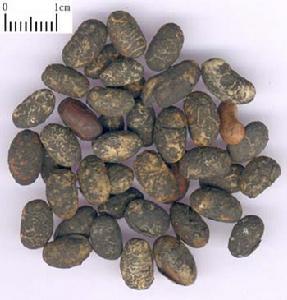 Dan Dou Chi (Fermented Soybean)
Disperse external pathogens. Pungent, bitter and cool; lung and stomach meridians entered. This herb has action of dispersing external pathogen and releasing
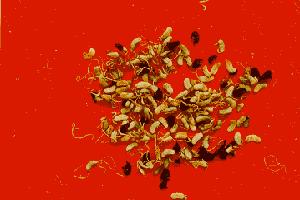 Da Dou Huang Juan (Soybean Germinated)
: promote urination and ease edema, drain dampness and clear heat.
Something this article did not cover?
Ask us directly. We reply within two days, and good questions become public articles.
Ask a question →