
Qi Tonics
Bai Zhu (Largehead Atractylodes Rhizome)


Name
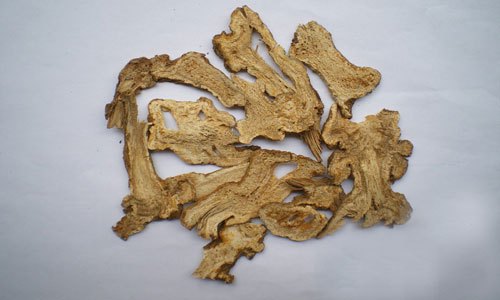
Bai Zhu (Rhizoma Atractylodis Macrocephalae), from Shen Nong Ben Cao Jing (Shen Nong's Herbal)
Source and quality
The rhizome of the perennial herbaceous plant Atractylodes macrocephala Koidz. of the family Compositae. It is mainly produced in the Zhejiang, Hubei and Hunan provinces; the product from Yuqian in Zhejiang province is the best, and is also called Yu Zhu. It is plucked in winter.
It has a sweet odor and a sweet, slightly pungent taste. The best grade is large and firm, without hollow, strongly fragrant, with a white-yellow cross section, and sticky.
It is sliced and used raw, or stir-baked with bran or with earth.
Nature and action
Sweet, bitter and warm. It enters the spleen and stomach meridians.
It tonifies spleen qi, dries dampness, promotes urination, checks sweating and prevents abortion.
Indications
Spleen qi deficiency syndrome
It is praised as "the most important herb for tonifying spleen qi and invigorating the spleen", because it can tonify qi and invigorate the spleen. It is especially indicated in poor appetite, loose stool, diarrhea, phlegm-fluid, edema and leukorrhagia due to spleen deficiency with stagnation of dampness, because it also dries dampness and promotes urination.
- For poor appetite, loose stool and diarrhea due to spleen deficiency with dampness, it is commonly combined with herbs that tonify qi and the spleen, and herbs that promote urination and eliminate dampness, such as Ren Shen and Fu Ling in Si Jun Zi Tang from He Ji Ju Fang.
- For phlegm-fluid stagnating internally due to deficiency of middle yang and the spleen, it is combined with herbs that warm yang, generate qi, promote urination and eliminate dampness, such as Gui Zhi and Fu Ling in Ling Gui Zhu Gan Tang from Jin Kui Yao Lue.
- For edema due to spleen deficiency, it is combined with herbs that tonify the spleen and promote urination, such as Ren Shen, Fu Ling and Yi Yi Ren in Shenling Baizhu San from He Ji Ju Fang.
- For thin, watery leukorrhagia due to damp-turbidity pouring downwards, caused by spleen deficiency, it is combined with herbs that tonify the spleen, dry dampness and stop leukorrhagia, such as Shan Yao and Cang Zhu in Wandai Tang from Fu Qing Zhu Nv Ke.
- It can also be used with Ren Shen and Huang Qi for bleeding due to spleen deficiency and failure of the spleen to control the blood, or for collapse of the middle qi due to spleen deficiency.
Spontaneous sweating due to qi deficiency
It is indicated in spontaneous sweating due to qi deficiency, because it strengthens the superficies and checks sweating by tonifying qi. It is effective on its own, or combined with herbs that tonify qi, strengthen the superficies and astringe sweating.
- For spontaneous sweating, it is used with Huang Qi and Fu Xiao Mai.
- For spontaneous sweating with susceptibility to wind pathogen due to exterior deficiency caused by deficiency of lung and spleen qi and insecurity of the defensive qi, it is combined with herbs that tonify the lung and spleen and disperse wind, such as Huang Qi and Fang Feng in Yu Ping Feng San from Dan Xi Xin Fa.
Threatened abortion, and vomiting with poor appetite in pregnancy due to spleen deficiency
It is a key herb for preventing abortion, and is particularly indicated for threatened abortion due to spleen qi deficiency, because it prevents abortion by tonifying qi and invigorating the spleen.
- For threatened abortion due to spleen qi deficiency, it is combined with herbs that tonify qi and the spleen and nourish yin and blood, such as Ren Shen and Fu Ling.
- For vomiting with poor appetite, and heaviness and swelling of the limbs during pregnancy, due to stagnation of damp-turbidity caused by spleen deficiency with dysfunction of transportation, it is combined with herbs that tonify qi, invigorate the spleen and eliminate dampness, such as Ren Shen, Fu Ling and Chen Pi.
Dosage and administration
Decoct 6~12 g, or 30~60 g in a large dose. Stir-baking it with bran strengthens its spleen-tonifying and dampness-drying action; stir-baking it with soil strengthens its spleen-tonifying and diarrhea-relieving action.
Cautions
Use with caution in yin deficiency with injury of fluids by a dryness-heat pathogen.
Sources and further reading
We cite classical materia medica and modern reference works. This article is health education, not medical advice.
- Shennong Bencao Jing (The Divine Farmer's Materia Medica), Han dynasty.
- Bencao Gangmu (Compendium of Materia Medica), Li Shizhen, 1578.
- Chinese Pharmacopoeia, current edition — identity, quality and safety monographs.
- NCCIH and WHO reference material on traditional medicine safety.
Spotted an error or a better source? Tell us — corrections are logged on our editorial policy page.
Did this article help you?
Your answer shapes what gets rewritten next.
Keep readingRelated entries
Bai Zhu: Chinese Herb Guide
Bai Zhu: tonify spleen qi, dry dampness, promote urination, arrest sweating and prevent abortion.
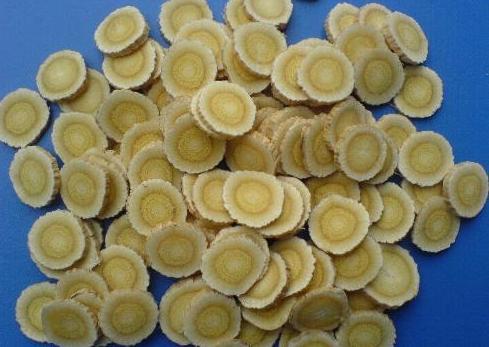 Bei Qi (Membranous Milkvetch Root)
: tonify qi, raise yang, tonify defensive aspect to secure superficial, relieve edema through diuretic, dispel toxin to.
 Chinese Yam (Wingde Yan Rhizome)
Shan Yao (Rhizoma Dioscoreae). The rhizome of the perennial herbaceous trailing plant Dioscorea opposita Thunb
Shan Yao (Wingde Yan Rhizome)
Shan Yao (Wingde Yan Rhizome) tonifies qi, nourishes yin and tonifies the spleen, lung and kidney. It suits use both as food and as medicine, and is neither.
Something this article did not cover?
Ask us directly. We reply within two days, and good questions become public articles.
Ask a question →