
THERAPY
Gua Sha (Skin Scraping): What It Is and How It Is Used
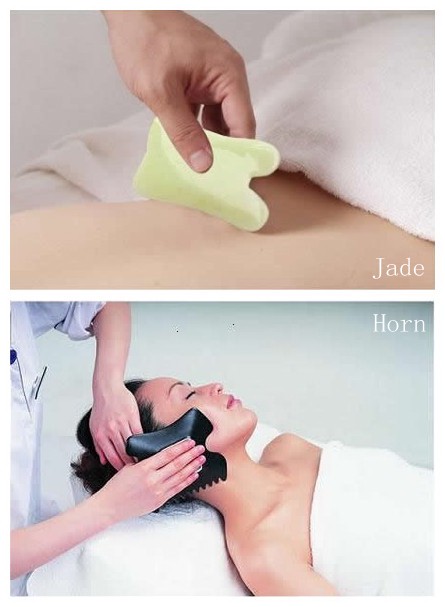
Gua sha (often translated as skin scraping) is a traditional bodywork method. A smooth edge — commonly horn, jade or a purpose-made scraper — is drawn over oiled skin along chosen areas. The aim in TCM language is to move qi and blood that have stalled, ease fatigue, and leave the surface looking and feeling less congested.
Origins and the name
Rubbing a sore spot with the hand or a smooth stone is older than any textbook. Over time that folk habit was organized into a therapy. The character sha (痧) is related to sha (沙), “sand”: after scraping, the skin often shows a stippled flush of red, purple or brown, like grains of sand. That look is the “sha.”
Those marks usually fade over two to four days. If they linger much longer, a practitioner may look for weak blood, qi or yang, or for another reason the surface is slow to clear — not as a home diagnosis, but as a clinical clue.

How TCM explains it
Scraping along channels is treated as a strong surface stimulus: it is said to help stagnant points move, support circulation, and make the person less likely to stay stuck in a heavy, blocked pattern. That is a traditional account, not a laboratory proof of “detox.”
In the Ming dynasty, Zhang Fengkui wrote about sha as a picture of pathogenic factors entering through the mouth, nose or pores and concentrating as they go deeper. In clinic, the colored stippling is treated as the sha being brought to the surface. Sweating after a session is classically described as part of that release.
Modern clinics also market gua sha for weight, skin and “sub-health.” Tools are more specialized than a soup spoon, and the method is often combined with massage. Easy and cheap does not mean risk-free: broken skin, blood-thinning drugs, pregnancy, and unexplained bruising are reasons to stop and ask a trained person, not to scrape harder.
Gua sha is sometimes compared with massage, acupuncture or cupping because it can leave a similar surface response. It is still a physical treatment. It is not acupuncture without a needle, and it does not replace medical care for fever, trauma or sudden illness.

Sources and further reading
We cite classical materia medica and modern reference works. This article is health education, not medical advice.
- Shennong Bencao Jing (The Divine Farmer's Materia Medica), Han dynasty.
- Bencao Gangmu (Compendium of Materia Medica), Li Shizhen, 1578.
- Chinese Pharmacopoeia, current edition — identity, quality and safety monographs.
- NCCIH and WHO reference material on traditional medicine safety.
Spotted an error or a better source? Tell us — corrections are logged on our editorial policy page.
Did this article help you?
Your answer shapes what gets rewritten next.
Keep readingRelated entries
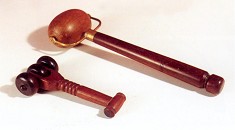 Massage: TCM Therapy Guide
Brief introduction Massage is a general term for pressing, rubbing and manipulating your skin, muscles, tendons and ligaments.
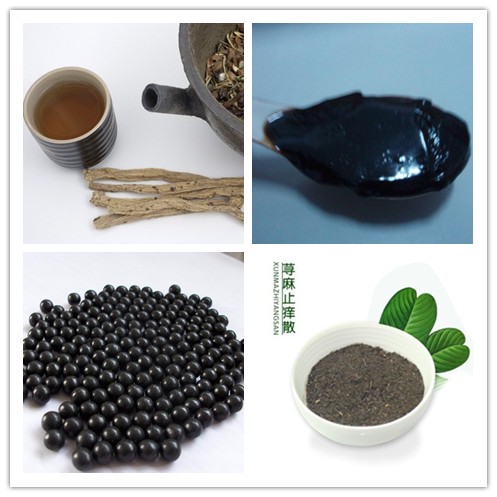 Chinese Herbal Medicine: An Introduction
What Chinese herbal medicine is, how practitioners think about balance, and how it differs from Western diagnosis.
 Cupping: TCM Therapy Guide
Cupping therapy is a treatment in which a cup sucked to the skin to create local stimulation for disease treatment and prevention.
 Qigong: TCM Therapy Guide
Qigong is an ancient Chinese health care system that integrates physical postures, breathing techniques and focused intention. The word Qigong is made up of.
Something this article did not cover?
Ask us directly. We reply within two days, and good questions become public articles.
Ask a question →