
Laxatives
Yu Li Ren: Chinese Herb Guide
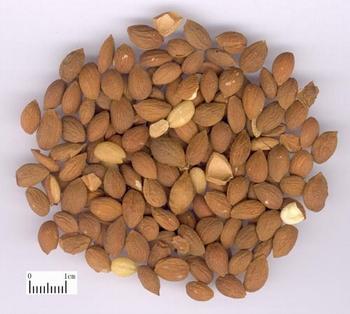
Naming
Yu Li Ren(Semen Pruni)——Shen Nong Ben Cao Jing (Shen Nong’s Herbal)
The Processing of Yu Li Ren
Origin
The seeds of the deciduous shrub Prunus humilis Bge., P. japonica Ipedurzculata Maxim of family Rosaceae.
Location
Inner Mongolia, Hebei, Liaoning provinces, etc.
Harvest
Collected in summer and autumn.
The actual smell and taste
Light smell and slightly bitter taste.
Best quality
Yellowish white with full kenel, well-arranged without broken bits and oily seeping.
Processing
Peeled before pounded into pieces.
The Effect of Yu Li Ren
Property
Bitter, pungent, mild; large intestine, spleen and small intestine meridians entered.
Actions
Moisten intestines for relaxing bowels, induce diuresis to alleviate edema.
Indications
A. Constipation due to intestinal dryness
It has the action of moistening intestines for relaxing bowels which is similar but better than that of Huo Ma Ren, and removing qi stagnation in large intestine as well. For constipation due to intestinal dryness and abdominal distention due to qi stagnation, it is often combined with intestine-moistening and bowels-relaxing herbs, such as Huo Ma Ren, Bai Zi Ren and Xing Ren, as in Wu Ren Wan from Shi Yi De Xiao Fang (Effective Formulae Handed Down for Generations).
B. Edema
It can induce diuresis to alleviate edema. For edema and difficulty in micturition, it is often combined with herbs for inducing diuresis to alleviate edema such as Sang Bai Pi and Chi Xiao Dou, as in Yu Li Ren Tang from Sheng Ji Zong Lu.
Dosage and Administrations
Smash it and decoct 6~12 g.
Sources and further reading
We cite classical materia medica and modern reference works. This article is health education, not medical advice.
- Shennong Bencao Jing (The Divine Farmer's Materia Medica), Han dynasty.
- Bencao Gangmu (Compendium of Materia Medica), Li Shizhen, 1578.
- Chinese Pharmacopoeia, current edition — identity, quality and safety monographs.
- NCCIH and WHO reference material on traditional medicine safety.
Spotted an error or a better source? Tell us — corrections are logged on our editorial policy page.
Did this article help you?
Your answer shapes what gets rewritten next.
Keep readingRelated entries
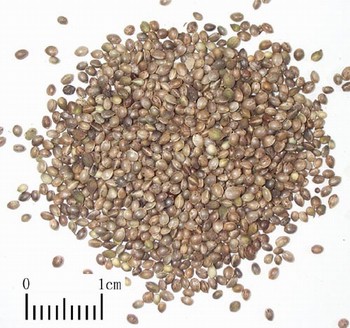 Ma Zi Ren (Hemp Fruit) in TCM
Huo Ma Ren (Semen Cannabis). The ripe fruit of Cannabis sativa L. of family Mulberry. Where it is grown All parts of China
Yu Li Ren (Dwarf Flowering Cherry Seed)
Yu Li Ren (Dwarf Flowering Cherry Seed): moisten intestines for relaxing bowels, promote urination to ease edema.
Ma Zi Ren (Hemp Fruit) in TCM
Huo Ma Ren (Semen Cannabis). The ripe fruit of Cannabis sativa L. of family Mulberry. Where it is grown All parts of China
Yu Li Ren (Dwarf Flowering Cherry Seed)
Yu Li Ren (Dwarf Flowering Cherry Seed): moisten intestines for relaxing bowels, promote urination to ease edema.
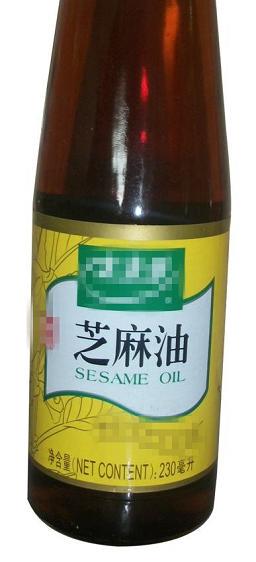 Ma You: Chinese Herb Guide
Ma You: remove toxicity, promote tissue regernation, moisten dryness and relax the bowel.
Ma You: Chinese Herb Guide
Ma You: remove toxicity, promote tissue regernation, moisten dryness and relax the bowel.
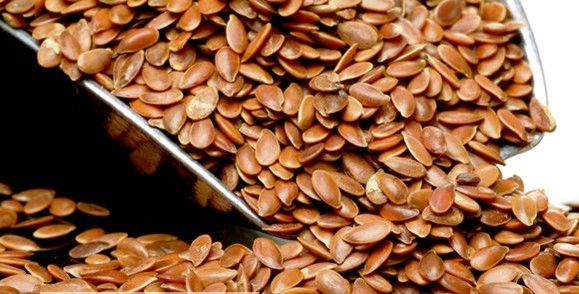 Da Hu Ma (Semen Lini) in TCM
Ya Ma Zi (Semen Lini) Sweet, neutral; lung, liver and large intestine channels
Da Hu Ma (Semen Lini) in TCM
Ya Ma Zi (Semen Lini) Sweet, neutral; lung, liver and large intestine channels
Something this article did not cover?
Ask us directly. We reply within two days, and good questions become public articles.
Ask a question →