
Emetics
Chang Shan (Antifeverile Dichroa Root)
Name
Chang Shan (Radix Dichroae), recorded in the Shennong Bencao Jing.
Source and quality
Plant
The root of the deciduous undershrub Dichroa febrifuga Lour., family Saxifragaceae.
Where it is grown
Mainly produced in the provinces south of the Yangtze River, and in Shaanxi and Gansu provinces.
Harvest
Lifted in autumn.
Smell and taste
Faint smell; bitter.
Better grade
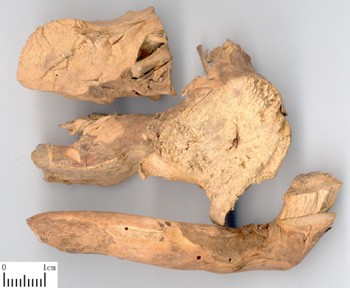
Firm and chicken-bone shaped, with a pale yellow surface and cross-section, and smooth.
Processing
Used unprocessed, or dry-fried with liquor.
Nature and action
Bitter, acrid, cold and toxic; enters the liver, stomach, spleen and lung channels. Induces vomiting and checks malaria.
When it is used
Phlegm-fluid retained in the chest
When used raw, Chang Shan can promote vomiting of phlegm-fluid because its emetic action is strong. It is combined with Gan Cao and Feng Mi to strengthen the emetic effect: for copious phlegm in the chest it is combined with Gan Cao, reduced, and taken with Feng Mi as in Qian Jin Fang.
For wind stroke, phlegm misting the heart, epilepsy, mania, shock, and other syndromes with excessive phlegm-fluid retained, it is combined with other emetic herbs, such as Li Lu in Dan Xi Xin Fa.
Malaria
It is good at checking malaria and is indicated for that disease. For the various forms of malaria it can be used alone, as in its alcoholic preparation from Zhou Hou Fang, or combined with other herbs that check malaria, such as Cao Guo and Bing Lang in the formula Jie Nue Qi Bao Yin from Yi Lian Fang.
Dose
Decoction 3~9 g. The raw herb is used to induce vomiting; the form dry-fried with alcohol is used to check malaria. Take the medicine half a day, or two hours, before the malaria attack begins.
Sources and further reading
We cite classical materia medica and modern reference works. This article is health education, not medical advice.
- Shennong Bencao Jing (The Divine Farmer's Materia Medica), Han dynasty.
- Bencao Gangmu (Compendium of Materia Medica), Li Shizhen, 1578.
- Chinese Pharmacopoeia, current edition — identity, quality and safety monographs.
- NCCIH and WHO reference material on traditional medicine safety.
Spotted an error or a better source? Tell us — corrections are logged on our editorial policy page.
Did this article help you?
Your answer shapes what gets rewritten next.
Keep readingRelated entries
Shu Qi Gen (Antifeverile Dichroa Root)
Chang Shan (Radix Dichroae). The root of the deciduous undershrub Dichroa febrifuga Lour. of the family saxifrage
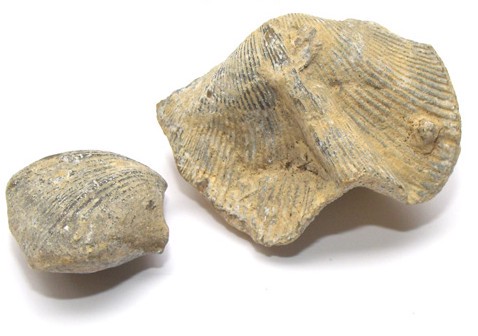 Fossilia Spiriferis (Spirifer’s fossil shell)
Shi Yan (Spirifer’s fossil shell) Salty, cool; kidney and bladder channels. Actions Clear damp-heat, promote diuresis and remove nebula
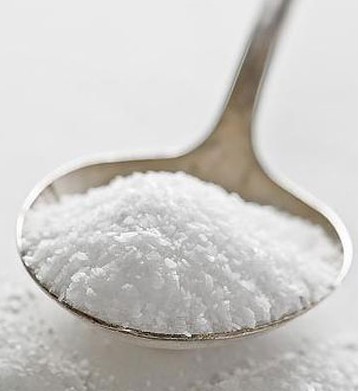 Salt: Chinese Herb Guide
Shi Yan (Salt) is cold and enters the stomach, kidney, small intestine and large intestine meridians. It clears fire, induces vomiting, cools the blood and.
E Xue (鹅血): Chinese Herb Guide
E Xie (Goose Blood) Salt, neutral; heart, liver and stomach channels. Actions Remove toxicity, eliminate hardness
Something this article did not cover?
Ask us directly. We reply within two days, and good questions become public articles.
Ask a question →