
Flos Magnoliae
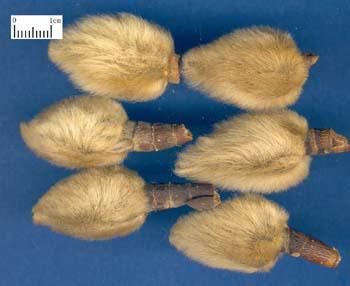
NameXin Yi (Flos Magnoliae)——Shen Nong Ben Cao Jing (Shen Nong’s Herbal)The Processing of Flos MagnoliaeOriginBud of magnoliaceae arbors including Magnolia biondii pamp, M. denudata Desr. and M. sprengeri Pamp of family Magnoliaceae.LocationHenan, Hubei and Sichuan provinces of China.HarvestCollecte
Name
Xin Yi (Flos Magnoliae)——Shen Nong Ben Cao Jing (Shen Nong’s Herbal)
The Processing of Flos Magnoliae
Origin
Bud of magnoliaceae arbors including Magnolia biondii pamp, M. denudata Desr. and M. sprengeri Pamp of family Magnoliaceae.
Location
Henan, Hubei and Sichuan provinces of China.
Harvest
Collected at the end of winter and beginning of spring before blooming.
The real smell and taste
Fragrant smell, pungent, cool and slightly bitter taste.
Best quality
Bud without blooming, dry and complete, firm inner valve, green color without twig and stalk, densely fragrant smell.
Processing
Unprocessed.
The Effect of Flos Magnoliae
Property
Pungent and warm; lung meridian entered.
Actions
Disperse wind-cold, relieve nasal obstruction.
Indications
A. Wind-cold exterior syndrome
It has similar action to that of Cang Er Zi and it also has inferior action to release exterior therefore it is not commonly used for common cold due to wind-cold without nasal stuffiness and discharge. But because of the action to relieve stuffy nose, it is often used for wind-cold syndrome, obstruction of lung orifice, fever and aversion to cold, nasal stuffiness and headache together with Cang Er Zi and Bai Zhi. For the common cold with nasal stuffiness and headache due to wind-heat, it can be used with wind-heat-dispersing herbs as Bo He and Jin Yin Hua to strengthen the effect of relieving nasal obstruction and dispelling exterior pathogens.
B. Nasal stuffiness and discharge
It has similar effect to that of Cang Er Zi to free nasal obstruction and relieve nasal stuffiness. It is the important herb to treat sinusitis, headache, nasal stuffiness and discharge. It assists wind-cold-dispersing herbs as Cang Er Zi and Bai Zhi to relieve wind-cold and free nasal cavity; it also goes with wind-heat-dispersing and lung-heat-clearing herbs as Bo He, Ju Hua, Shi Gao and Huang Qin. It's also frequently used for other rhinopathy such as acute rhinitis, chronic rhinitis and allergic rhinitis.
Dosage and Administrations
Decoct 3~10g. It has floss which stimulates throat, therefore it should be wrapped with gauze in decoction. Appropriate dosage should be applied for external application.
Did this article help you?
Your answer directly shapes how this article gets rewritten. Several sections on this site exist because readers asked for them.
Keep readingRelated for you
 Fructus Xanthii
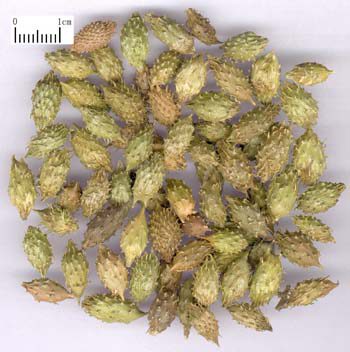
NameCang Er Zi (Fructus Xanthii) ——Shen Nong Ben Cao Jing (Shen Nong’s Herbal)The Processing of Fructus XanthiiOriginMature involucral fruit of annual herbaceous plant Xanthium sibiricum Patr. of family Compositae.LocationEvery place in China.HarvestCollect the mature fruit in autumn.The real smell
Fructus Xanthii
NameCang Er Zi (Fructus Xanthii) ——Shen Nong Ben Cao Jing (Shen Nong’s Herbal)The Processing of Fructus XanthiiOriginMature involucral fruit of annual herbaceous plant Xanthium sibiricum Patr. of family Compositae.LocationEvery place in China.HarvestCollect the mature fruit in autumn.The real smell
 Radix Angelicae Dahuricae
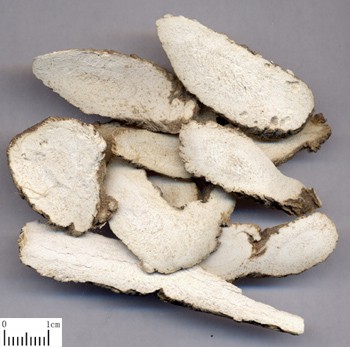
NameBai Zhi (Radix Angelicae Dahuricae)——Shen Nong Ben Cao Jing (Shen Nong’s Herbal)The Processing of Radix Angelicae DahuricaeOriginThe root of perennial herbaceous plant Angelica dahurica (Fisch. ex Hoffm.) benth. et Hook. f. or Angelica dahuriea (Fisch. ex Hoffm) Benth. et Hook. f. var. formosana
Radix Angelicae Dahuricae
NameBai Zhi (Radix Angelicae Dahuricae)——Shen Nong Ben Cao Jing (Shen Nong’s Herbal)The Processing of Radix Angelicae DahuricaeOriginThe root of perennial herbaceous plant Angelica dahurica (Fisch. ex Hoffm.) benth. et Hook. f. or Angelica dahuriea (Fisch. ex Hoffm) Benth. et Hook. f. var. formosana
 Qiang Huo
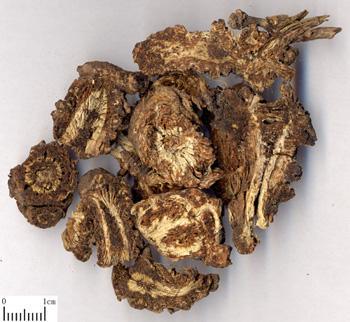
NameQiang Huo (Rhizoma seu Radix Notopterygii)——Shen Nong Ben Cao Jing (Shen Nong’s Herbal)The Processing of Qiang Huo OriginThe dry rhizome and root of perennial herbaceous plant Notopterygium incisum Ting. ex H. T. Chang or N. forbesii Boiss. of family Umbelli ferae.LocationNotopterygium incisum T
Qiang Huo
NameQiang Huo (Rhizoma seu Radix Notopterygii)——Shen Nong Ben Cao Jing (Shen Nong’s Herbal)The Processing of Qiang Huo OriginThe dry rhizome and root of perennial herbaceous plant Notopterygium incisum Ting. ex H. T. Chang or N. forbesii Boiss. of family Umbelli ferae.LocationNotopterygium incisum T
Something this article didn't cover?
Ask us directly — we reply within 2 days. Great questions become public articles.
Ask a question →