
Wind-Cold-Dispersing Herbs
Cang Er Zi (Xanthium Fruit)
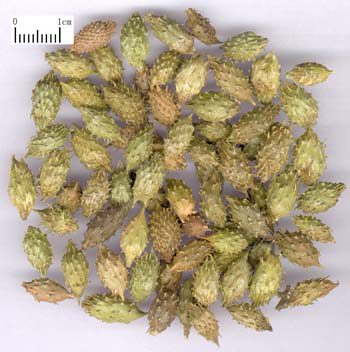
Name
Cang Er Zi (xanthium fruit, Fructus Xanthii), recorded in the Shennong Bencao Jing.
Source and quality
Plant
The ripe burr (involucre) of the annual Xanthium sibiricum Patr., family Asteraceae.
Where it is grown
Throughout China.
Harvest
Ripe fruit in autumn.
Smell and taste
Little smell; slightly bitter.
Better grade
Large, full, brownish-yellow burs.
Processing
Dry-fried and the spines removed.
Nature and action
Acrid, bitter, warm, toxic; enters the lung. Disperses wind-cold; opens the nose; eases pain.
When it is used
Wind-cold on the exterior
It is not a first-choice sweating herb for a plain cold. It is used when wind-cold comes with headache, body ache and a blocked, running nose, usually with Qiang Huo and Bai Zhi.
Blocked nose and turbid discharge
This is its main job: open the nose, dry the discharge, and ease forehead and sinus pressure. It has long been a lead herb for “bi yuan” (sinus-type obstruction), taken internally or used on the surface. With Xin Yi and Bai Zhi it is Cang Er Zi San. When the picture is more wind-heat or damp-heat, it is combined with Bo He, Ju Hua or Huang Qin. Modern clinic also uses the same logic for acute, chronic and allergic rhinitis — still as part of a pattern, not as an over-the-counter decongestant.
It can assist other herbs in wind-cold-damp bi, and in wind-cold itch or headache.
Dose
Decoction 3–10 g, or in pills and powders. Roast and grind, spines off: that is how the tradition reduces toxicity and frees the juice.
Cautions
Not for headache from blood deficiency. Overdose can poison. This is a toxic herb; do not self-dose above the monograph range.
Sources and further reading
We cite classical materia medica and modern reference works. This article is health education, not medical advice.
- Shennong Bencao Jing (The Divine Farmer's Materia Medica), Han dynasty.
- Bencao Gangmu (Compendium of Materia Medica), Li Shizhen, 1578.
- Chinese Pharmacopoeia, current edition — identity, quality and safety monographs.
- NCCIH and WHO reference material on traditional medicine safety.
Spotted an error or a better source? Tell us — corrections are logged on our editorial policy page.
Did this article help you?
Your answer shapes what gets rewritten next.
Keep readingRelated entries
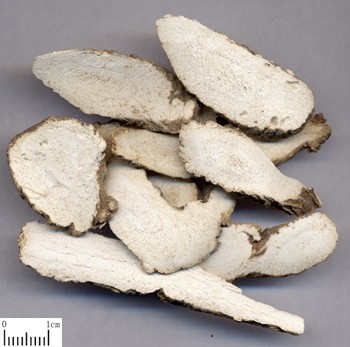 Bai Zhi (Dahurian Angelica): Headache, Nose and Leukorrhea
Bai Zhi (dahurian angelica root, Radix Angelicae Dahuricae ), recorded in the Shennong Bencao Jing . The root of Angelica dahurica (Hoffm.) Benth
 Fresh Ginger (Sheng Jiang)
Sheng Jiang (fresh ginger, Rhizoma Zingiberis Recens ), recorded in the Mingyi Bielu: Acrid, warm; enters lung, spleen and stomach. Disperses wind-cold; warms
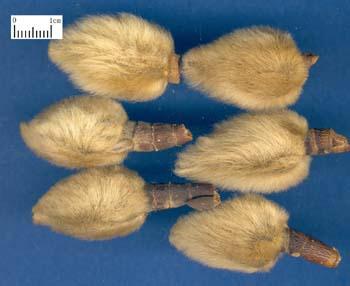 Xin Yi (Biond Magnolia Flower)
Xin Yi (Flos Magnoliae). Bud of magnoliaceae arbors including Magnolia biondii pamp, M. denudata Desr. and M
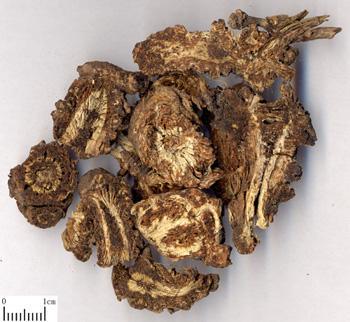 Qiang Huo (Incised notopterygium rhizome and root)
Qiang Huo: release exterior and disperse cold, expel wind-damp and alleviate pain.
Something this article did not cover?
Ask us directly. We reply within two days, and good questions become public articles.
Ask a question →